How to create a sensory garden at school
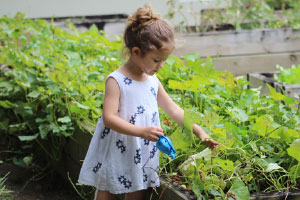
With their interesting sights and smells, sensory gardens are perfect additions for schools to aid with the sensory development of children. Nicky Roeber, Online Horticultural Expert at Wyevale Garden Centres, has given us his easy guide to growing a sensory garden at school. Sensory gardens are carefully planned to invoke all five senses with their plants and décor. They’re perfect for children, especially those with autism, as it provides a safe space to explore each stimulus and promotes sensory development. With National Children’s Gardening Week fast approaching, what better time to start planning your school’s sensory garden? I’ll be giving you my best tips for creating a garden to invoke all the senses. Sight There’s no doubt that gardens are a real treat for the eyes, but did you know that there’s so much more you can do visually than just adding some flowers? I’d recommend planting different types of shrubs and trees with a mixture of flowers and berries, as well as bark, lichen and moss. When it comes to blooms, pick colours on the opposite side of the colour wheel for a contrasting look. For a more complementary style, pick a main colour and build on it with similar tones. For example, pick some nice purple flowers and complement them with pinks and blues. Consider patterns and shapes of paths and flowerbeds and add ornaments to create an interesting display. Plants aren’t the only way to bring colour to your garden, though: you could also paint benches and walls, or try adding mirrors, which will reflect sunlight and make the space brighter. If you’re using large ornaments and mirrors, make sure they’re fixed to walls and floors securely to avoid anyone being hurt. Touch Gardens are perfect places to explore interesting natural textures. Tightly-wound flowers such as houseleek are rather hard to the touch, whereas silver sage has cotton wool-like leaves which are a lot softer. For more rough textures, tree bark is perfect. Paper birch has lovely peeling bark which is scratchy and interesting for children to remove. Lamb’s ear has lovely smooth leaves covered in soft hairs which gives the leaf surface a silky feel. And don’t forget sticky plants like the carnivorous African sundew, which has sticky alien-like leaves to catch prey. Smell Who doesn’t love a sweet-smelling garden? Your plot will really benefit from sweet peas, which have a strong sweet smell. Chocolate cosmos plants have striking dark red petals and are a hit with kids because of their chocolatey vanilla scent. Lavender plants are strong smelling and are perfect for providing a sense of peace in your garden, ideal for calming over-stimulated children. It wouldn’t be a sensory garden without some herbs, which provide some lovely smells as you brush past or get close to them. Peppermint is great for kids because of its sweet minty aroma, along with lemon thyme and rosemary. Taste When creating a sensory garden for children, it’s best to go for more familiar edible plants to avoid any confusion and the possibility of them eating anything that isn’t edible. Fruit such as strawberries are small and perfect for children to pick, as well as cherry tomatoes like ‘Sweet Million’ or the interesting ‘Tigerella’ variety. Carrots, potatoes, radishes and runner beans are great for gardening with children and are a good opportunity to encourage them to eat more fruit and vegetables. Don’t forget about those lovely smelling herbs you planted, all of which are edible, too. Sound Using the right plants, you can create some interesting sounds in your garden. Try planting some birch trees which have fine leaves that rustle together in the breeze. Tall grasses, such as greater quaking grass, make some relaxing swishing sounds in the wind. Alternatively, the long tube-like stems of bamboo blow together to create a hollow knocking sound. You can even turn bamboo into windchimes and hang them up on windy days. For a more unusual sound, the small pods of love-in-a-mist contain seeds, which create an interesting rattling when the pods are shaken. Add bee and bird houses to encourage them to visit your garden, providing lovely buzzing and chirping sounds in the summer. This also presents a great opportunity to talk to children about the importance of insects and birds, and why we should protect them. Growing a sensory garden is a fun and easy way to provide a safe space for children to explore their senses. By following my simple guide, and with the help of some little assistants, you’ll have the perfect sensory garden right in your school grounds.
Computershare helps Edinburgh resident with learning disabilities realise dream

Computershare, a leading financial services provider, is helping an Edinburgh resident with learning disabilities to achieve his dream job. Karl Levy, who has Asperger syndrome and dyslexia, is working as an apprentice operations analyst at Computershare’s city-based Leven House. Computershare supports Karl with specialist equipment and training, while his co-workers are being taught how to communicate effectively with people with Asperger syndrome and dyslexia. Mark McDougall, Global CIO at Computershare, said: “Computershare is an equal opportunities employer that takes its responsibility to nurture all talent extremely seriously, and we are delighted that Karl is progressing well.” Karl said: “The team is very supportive of my needs and how I work. I know I can ask my team leads for support and help if I need it. “I have dreams of becoming an experienced analyst in years to come, so have a great opportunity with Computershare.” Karl was recruited with the support of leading disability, employment and skills specialist Remploy, which Computershare has been working with since 2017 to attract people with disabilities. Computershare’s Leven House deals with IT operations and investor services. Its employees, along with those at a second temporary site at St Andrew Square, are due to move to a new, purpose-designed office in the city in the Spring. Find out more
OXSIGHT’s smart glasses for visually impaired shortlisted for National Technology Awards

OXSIGHT’s range of cutting-edge smart glasses which enhance the remaining vision of blind and visually impaired people have been shortlisted for the Technology for Good award at the National Technology Awards. The National Technology Awards celebrate the pioneers of new technology and excellence in the UK’s technology industry. The Technology for Good award is a new award for 2019, and celebrates organisations which are using technology to improve people’s lives. OXSIGHT’s smart glasses help people with peripheral vision loss, also known as ‘tunnel vision’, by using augmented reality and image interpretation technology to enhance their remaining vision. Peripheral vision loss can be caused by a number of sight conditions, including glaucoma, and retinitis pigmentosa. OXSIGHT user David Quigley was one of the first people in the UK to have an OXSIGHT device. His sight has been seriously reduced for more than 20 years, and he currently only has a very small portion of his central vision remaining. He describes the difference that the glasses have made to his life, “One of my best moments was sitting in the church and being able to see my niece’s face on her wedding day, which I never would have been able to do without my OXSIGHT glasses.” The OXSIGHT glasses are fitted with a camera which streams a live feed into two high resolution video displays. These screens are projected directly in front of the user’s eyes and the images displayed are manipulated to fit into the user’s area of useable vision. This can allow someone with peripheral sight loss to experience a full 68 degrees field of view. The glasses have seven modes, with features including: increased image contrast, super colour mode, textmode, edge enhancement, and a digital zoom to allow users to magnify the image seen. OXSIGHT was founded by a team at the University of Oxford, including Dr Stephen Hicks, a leader in the field of augmented reality and computer vision for the enhancement of sight. The founders set out with the aim of finding a way of using the new developments in augmented reality and computer vision to make a real difference to the lives of blind and visually impaired people. OXSIGHT launched its first two smart glasses devices, OXSIGHT Prism and OXSIGHT Crystal, in the UK in 2018. Both OXSIGHT Prism and OXSIGHT Crystal are registered medical devices and are dispensed by qualified Opticians following a detailed assessment and product demonstration. Funding is available through Access to Work, as well as through a 0% finance plan. About OXSIGHT: OXSIGHT is a leader in image interpretation technology and has developed a range of low vision glasses for people with sight loss. The Company was founded in 2016 by a team at Oxford University; whose research was into how the brain manages visual information. OXSIGHT has since established partnerships with globally recognised partners from both the sight impaired and technology communities including, Google, The Royal National Institute of Blind People (RNIB), Guide Dogs Association, RETINA UK, The University of Oxford, NIHR i4i, and The Royal Academy of Engineering. The first device, the OXSIGHT Prism smart glasses, were launched in 2018, and OXSIGHT is in the process of developing clinical partnerships with a number of Opticians across the UK and Europe. At present OXSIGHT is already providing assessments, fitting, and clinical support at their clinics in London, Oxford, Durham and Scotland through several clinical partners. Funding support for OXSIGHT devices is available through the Government’s Access to Work scheme, as well as through a 0% finance plan. Contact OXSIGHT for more information. Tel: 01865 580255 Web: www.oxsight.co.uk
Poor nutrition hampers traumatic brain injury recovery

Poor nutrition can hamper Traumatic Brain Injury (TBI) recovery, yet its role is still viewed as insignificant compared to physical rehabilitation techniques. According to Chroma, the UK’s leading national provider of arts therapy services, nutrition needs to be considered an integral part of the rehabilitation process. Fatigue, gut health, weight management and tissue viability can all be adversely affected by inadequate nutrition, and as a result Chroma has started to work with Specialist Nutrition Rehabilitation dietitian, Sheri Taylor to ensure nutrition is fundamental in the recovery treatment plan. Sheri Taylor, director of Specialist Nutrition Rehab states: “Those recovering from a brain injury need to eat foods with a high nutritional value, including lean protein, vegetables, fruit, calcium-rich foods and healthy fats, to help the brain and body heal and recover. “Consider the body like a house and a brain injury like a hurricane which has come though and caused a considerable amount of damage. To repair this damage, you need high quality supplies, such as lean protein, vegetables, fruit, calcium-rich foods and healthy fats, which are the nutritional equivalent of bricks and mortar. Takeaways, ready meals, toast, biscuits and sandwiches are the nutritional equivalent of duct tape and cardboard, with less ability to support significant lasting repairs.” Fatigue following a brain injury, known as Pathological Fatigue, severely impacts on the ability to carry out activities especially those associated with rehabilitation. Causes of pathological fatigue vary from depression and anxiety to poor nutrition and cognitive difficulties. Nutrition and hydration should be the starting point for recovery. According to Taylor a deficiency in iron/b12/folate/vitamin D, dehydration, blood sugar fluctuations, thyroid problems or electrolyte imbalance can all increase fatigue. “Some foods such as refined grain products do not maintain energy levels for prolonged periods of time compared to other foods such as porridge and legumes, which contain fibre to help slow down the release of sugar and so maintain energy levels for longer. Drinking plenty of water also helps keeps the brain and body hydrated which is another important factor to help everything work effectively.” Gut issues such as constipation, diarrhoea, abdominal distension and bloating are also very common after a brain injury. Animal studies have found brain trauma can make the intestine more permeable, potentially allowing harmful microbes to migrate from the intestine to other areas of the body, causing infection or inflammation which may impair their overall recovery progress. Adjusting the diet in ways to nourish the bowel by consuming foods rich in probiotics (such as yogurt with live bacteria), as well as prebiotic-rich fruits and vegetables can help improve overall gut health. Additionally, consuming foods high in nutritional value ensure that their skin stays healthy and that wounds heal quicker, particularly after any type of surgery. Vitamins, minerals and protein-rich foods such as nuts, eggs, chicken, soy or plant-based protein have been shown to support skin healing. Chroma is encouraging clinicians to add nutrition to the patient assessment process. Daniel Thomas, joint managing director of Chroma, adds: “Nutritional assessment is a simple yet effective way to help educate the client, family and friends on the benefits of healthy eating during recovery as weight gain or loss can adversely affect the recovery progress. “Clients should be assessed for malnutrition at their initial assessment as a client’s weight could prevent them from having surgery that they need. The assessments will also help clients understand the consequences of their food choices. “We cannot expect the brain and body to heal and recover consuming foods with poor nutritional value. To facilitate TBI recovery, patients must consume a highly nutritional, varied, healthy balanced diet to effectively improve recovery time and help progress rehabilitation outcomes.”
Taking the dis- out of disability through extreme sports

David Heard, the founder of Sportability, spoke to UCan2 editor Victoria Galligan about why he decided to set up a charity which helps people with paralysis to take part in extreme sports, and the range of activities now available… Paralsis needn’t stop a person from living life to the full. But back in the late 80’s when David Heard’s friend Richard, a ski instructor, was injured in a motoring accident, there weren’t a lot of options available in sport for people with disabilities. David says: “To help Richard literally get back on his feet we tried going skiing. But that didn’t work. Sadly, it made him feel ‘disabled’ and highlighted how things were different before the accident. But when we tried scuba- diving, which he had never done before, it was a huge success.” David and Richard had a revelation: by organising sporting events for people with paralysis they could get them to not only experience again the adrenaline rush, have some fun and boost their mood; but also restore their self-belief, rebuild their confidence and help make the future look brighter. In 1989 they formed the charity, Sportability. Sportability’s first event was sailing on the Norfolk Broads. Then they set up a centre in Gloucestershire, which offered activities on-site and in the surrounding area. But receiving calls from all over the country – and even overseas – made the Sportability team realise one location wasn’t enough. The charity relies on fundraising, and David took to cycling up the spine of Vietnam, from Saigon to Hanoi to raise seed-corn funding for some regional development. So, their second regional programme was launched in the East Midlands. From those humble beginnings the charity has developed a year-round programme of events almost nation-wide. These include quad-biking, falconry, sailing, gliding, microlight flying, shooting, canoeing, wheelchair tennis, 4×4 off-road driving, powered flying, BloKart sailing, indoor skydiving and more. Sportability is now in 14 regions of the UK with over 800 free places a year available for people who have some form of paralysis – typically spinal cord injury, stroke and MS. And the impact which the Sportability days out have is huge. David explains: “We work with a lot of spinal injury units and they encourage people to see life beyond the hospital. “They realise that it is not enough to tell someone they can carry on living after paralysis. They need to know how.” He gives the example of a middle-aged man, who had come to a Sportability event straight from the spinal injury unit, where he was being treated since his accident. “He came to one of our quad-biking events and was understandably as nervous as hell to begin with. We are asking people to go well outside of their comfort zone. “But the four-wheel motorbikes are stable and operate with a thumb throttle and hand-only controls. We start on a simple circuit at a walking pace. The professional instructors then take the ridersout in groups with the more confident riders in one, and those who are maybe a bit slower and need more support in another. “Our new recruit was one of the more confident. As soon as he began riding his body language changed and after five minutes he started to relax. By the end, he was tackling the big stuff, the rugged terrain and he came back punching the air with delight! He’d spent the last six months in hospital and had gone from there to quad-biking. “Two weeks later he joined us on a gliding event. He was in tears that day and said to me, ’You’ve got no idea what this means. Now I’ve got hope. Now I’m looking forward to my discharge.’ That is the power of sport.” A call for volunteers Local Area Organisers – volunteers who help to organise the sporting events – work alongside the established professional sport and activity providers. They ensure that a wide variety of events can take place in their areas. But David says: “We want to take it to the nation. Ideally, we’d like to get within an hour’s drive for most of the population.” His aim is to make Sportability events even more accessible. So the charity is now looking for people in the South Wales and Tyneside areas to step up as volunteer area organisers and help develop programmes there. Such is the appeal that Sportability has inspired some people to travel the country and take part in even more activities, and for one member, David even arranged quad-biking in Florida, USA. That man told David that he had done more things in his life since having MS, than before. He says: “With MS there are two ways you can go. Either switch off and wait for a cure. Or you can find a different way of living your life. Like a river finding a new course.” And this is the ethos at the heart of Sportability, as David says: “After paralysis a person’s life as they knew it is, in most cases, no longer available. Things have inexorably changed. “But Sportability is about taking the ‘dis’ out of disability and focussing on ability. Their life may be different, but there are still thrilling and exciting opportunities out there. And if we can leave people with the belief and the thought: If I can do this what else can I do? Then we have done our job.” Find out more
How driverless cars can assist people with disabilities

With driverless cars gearing up to hit the roads in the months and years to come, the motoring world looks set to experience one of its biggest shifts very shortly. Autonomous car technology is already being looked at by big-name vehicle manufacturers like Lexus and Mercedes, while Tesla has already begun to trial its driverless Autopilot system on UK roads. Google is testing its own automated technology as well, while there are rumours that Apple has teamed up with German car maker BMW to create its own vehicle — there’s speculation that this set of wheels will be automated too. The opinions of the public when it comes to autonomous vehicles are split though. In an independent survey of 10,000 drivers conducted by the RSA Insurance Group, for instance, almost six in ten motorists were excited about the development of driverless cars. However, more than a quarter of respondents raised concerns about whether these types of vehicles can be hacked and would be vulnerable to crashing. Researchers based at Cambridge University’s Engineering Department and the Department of Psychology found feelings to be split when they carried out their own online survey involving 2,850 UK residents too. This is because while 10 per cent of those involved in the survey said that they would definitely use a fully driverless vehicle, another 15 per cent of respondents replied that they definitely would not use this type of automobile. There is the potential for various groups in society to find driverless cars useful though, including the disabled and elderly people. Here, award-winning straight stairlift supplier Acorn Stairlifts goes into further detail about how autonomous vehicles may soon be assisting people with disabilities… Why Waymo’s approach to driverless cars should catch the eye Waymo is certainly gathering some momentum when it comes to the development of autonomous vehicles. A company which started out as the autonomous car division at Google, the firm’s driverless cars have already been driven at least 3.5 million miles in 22 test cities — with one test seeing a blind man successfully being able to complete a test ride by himself. Several design elements have been incorporated by Waymo while they’ve been working on autonomous vehicles. These features have the intention to help the elderly, as well as individuals with disabilities, when they are heading out on a road trip. For example, there are screens in the cabin of the driverless cars which are approximately the size of a laptop computer’s screen and sure to prove handy to individuals on-board the vehicle who are hearing-impaired. This is because these screens allow individuals to follow a route, as well as view selected information such as any traffic signals, crosswalks, pedestrians, cyclists and other road users encountered while getting from A to B. We must also mention the buttons found on the dashboard of a Waymo driverless car. People who are familiar with cars which have rolled off production lines over the past few years are likely to have already come across a ‘Start’ button. However, Waymo vehicles also come complete with a ‘Pull Over’ button and a ‘Help’ button that will begin a two-way voice communication connection with a control center when pressed. The time until you’re enjoying a ride aboard a driverless car may not be long away either. After all, Waymo launched the world’s first commercial driverless car service recently! The general vibe about driverless cars So, we could be just weeks if not only a few days away from beginning to share the road with autonomous vehicles. What is the general vibe around this technology? Chris Grayling, Britain’s Transport Secretary, believes that the lives of the elderly and the disabled can both be transformed once self-driving cars begin rolling off production lines. Promoting the benefits of this new form of transport on both the economy and society in a speech made at the Association of British Insurers’ annual conference in London, Mr Grayling said: “The potential benefits of these new technologies for human mobility — and for wider society — are tremendously exciting. “Many who can’t currently drive will be able to take to the road. Elderly people or people with disabilities which prevent them from travelling today will discover a new sense of freedom and independence.” Another benefit of driverless cars acknowledged by the British Transport Secretary is that “self-driving cars should make road travel far safer by eliminating the biggest contributory factor in accidents today — human error”. Across the Atlantic earlier this year, the executive vice president of the American Association of Retired Persons (AARP) Nancy LeaMond stated that elderly people must remain in mind during the design stages of autonomous vehicles. “This is a critical part of livable communities as we talk to mayors and other officials around the country,” Ms LeaMond explained while speaking as part of a AARP panel discussion at the North American International Auto Show. “To be successful, people of all ages will need to trust the machine to do the driving and right now there is a very significant trust gap. A full three-quarters of U.S. drivers of all ages report feeling afraid to ride in a self-driving car.” Elizabeth Macnab, from the Ontario Society of Senior Citizens’ Organizations, was also part of the same AARP panel discussion. She pointed out that there are a few considerations which must be made to ensure driverless cars are indeed appealing to people with disabilities and the elderly, including: 1. The vehicles should be affordable to people on a fixed income. 2. The vehicles should be accessible to people who need to use mobility aids and walking devices to get around. 3. The manufacturers of autonomous vehicles should commit to providing training about how to correctly use a driverless car. The introduction of autonomous vehicles certainly seems to be a change in the motoring world that we should all back, especially if they do indeed help the elderly and people with disabilities. Sources: washingtonpost.com dailymail.co.uk autotrader.com cbc.ca drivesweden.net alphr.com ukautodrive.com rsagroup.com
Into the Frame – new wheelchair fencing book promotes sport

We caught up with author of a new book, Into the Frame, to chat about his love for wheelchair fencing. Jonathan David Collins spoke to our editor and is keen to promote the sport as it helps boost physical and mental health and wellbeing – yet few people know it even exists. Jonathan said: “I was born with Spina Bifida and Hydrocephalus and I have been in a wheelchair since I was 18 months old. “I used to do a bit of swimming but due to an operation I had, it was advised I gave it up. “A friend of mine who was a wheelchair fencer fenced at a club near me, so I went to the club and became hooked on it when I started to learn.” The book gives an insight into the sport of wheelchair fencing, and charts Jonathan’s experiences as he takes up the sport – giving advice from etiquette to what to wear, and hearing from those who have competed at a national and even a global level including Piers Gilliver (Paralympic silver medallist) and Dimitri Coutya (double World Champion in 2017). In the book Alan Sheriff, who is the British Disability Fencing board member for development, says: “It’s a sad fact that few people have heard of wheelchair fencing; despite it enjoying the most successful period in its history in Great Britain over the last few years. “How – when we have a double World Champion, Paralympic silver medallist, dozens of World Cup medals and two No.1-ranked fencers in the world – does no-one know of ‘our’ sport?” So what would Jonathan say to anyone thinking of taking up the sport? “I would say come and join in and have a go – it is good for your mental state and for your physical health,” he says. Jonathan credits wheelchair fencing with changing his life, and says it is a suitable sport for most disabilities. He recommends finding a local club by contacting the BDF (British Disability Fencing) website. As for the future, Jonathan says he is looking forward to entering more fencing competitions, as well as promoting his book Into the Frame, which is available from Amazon priced £13.74 (or £9.99 on Kindle). Find Jonathan on social media: Facebook Instagram Twitter Youtube Photo caption: Jonathan after winning in Mixed Sabre, Novice Challenge at the BDF National Championships. Jonathan also won joint bronze in the Mixed Foil at the same event in June of 2018.
Bluebird Care Bristol is one of the best care providers in the region

Bluebird Care Bristol has been rated ‘Outstanding’ by the Care Quality Commission (CQC), the independent regulator of health and social care services in England. Only 1% of home care providers receive this rating. The CQC rating was awarded following a comprehensive inspection in November 2018 and is a significant achievement, making Bluebird Care Bristol one of the best home care providers in the area. Bluebird Care Bristol provides flexible and high-quality homecare and support services to people living in their own homes in the community, including older people and those with mental health, physical disability or sensory impairment needs. The team provide a variety of services, including Dementia Care, Respite Care, End of Life Support, Live-in Care, Night Care & Support and Specialist Care services for a wide range of other medical conditions. The CQC’s report stated that customers, their relatives and healthcare professionals were “exceptionally happy with the care and support provided by Bluebird Care Bristol.” The report also mentioned that those working for or in some way involved with Bluebird Care Bristol felt “people were at the heart of the service”. The report also highlighted comments from relatives of customers, including: “I find them all absolutely wonderful without exception, they know what they are doing”. One customer said: “we are so happy, of course we feel safe, without exception”. The effectiveness of the service was also praised by inspectors, who felt that “people were supported by staff who had undergone a thorough induction programme, which gave them the skills to care for people effectively”. A customer said “I don’t know where they find [the staff], they are so well trained and so kind, each and every one of them, they are like family”. Staff members were also commended for ensuring other health and social care professionals were involved to “encourage health promotion whenever possible”. Additionally, the report found that the service provided ‘Outstanding’ quality of care. The service was found to be “exceptionally caring”, and across the board, staff, customers, relatives and health care professionals gave high praise. The report highlighted the implementation of a scheme to give additional care and support to people when they were admitted to hospital. Each person who was admitted to hospital received a free visit from their key carer, as well as being sent a get-well card and a small teddy bear to remind them that all the staff were thinking of them. The responsiveness of the service provided at Bluebird Care Bristol was also deemed to be ‘Outstanding’. Customers and relatives said where they had needed to make changes or improvements these had all been listened and responded to. Inspectors also pointed out that care was planned according to how care and support best fitted into each person’s lives, with people choosing how much support they required and when it was delivered. Fundamentally, the service was said to “play a key role in the community”. The inspectors felt the service had a strong, visible person-centred culture at all levels. The service ensured people were made to feel valued and that they mattered. Tim Rowland-Jones, Director of Bluebird Care Bristol, said: “I am immensely proud of this rating and I am so pleased that the CQC have seen all the hard work and dedication that the Bluebird Care Bristol team have been putting in. The team work so well together and always go above and beyond for their customers. “This is reflected in the individual ‘outstanding’ service ratings in the caring nature of our service, as well as the responsiveness of the staff and services at Bluebird Care Bristol. As the report has highlighted, we provide a personalised service, by supporting our customers with small, local teams that are given the chance to build personal and caring relationships. “The whole Bluebird Care Bristol team will continue to work every day to maintain this ‘Outstanding’ service and put our customers and their needs first. It is a great privilege to work with staff and customers who are such wonderful people and I am so grateful for their continued support and dedication to Bluebird Care Bristol.” Yvonne Hignell, Managing Director of Bluebird Care, said: “This is such wonderful news for the Bluebird Care Bristol team. They are such a hard working group of individuals and the leadership at this office has a lot to do with its strong success. “I would like to congratulate Tim and all the team at Bluebird Care Bristol and look forward to seeing what is to come for this franchise in the future.” You can read the report in full on CQC’s website at https://www.cqc.org.uk/location/1-722532285 For more information about Bluebird Care Bristol visit https://www.bluebirdcare.co.uk/bristol/home or call 0117 950 5855.
Charity Distributes 5,000 Items of Winter Clothing to Homeless and Vulnerable People

Charity Distributes 5,000 Items of Winter Clothing to Homeless and Vulnerable People in Birmingham, Glasgow and Manchester Human Appeal, a UK Muslim-faith based charity, have announced that they have distributed 5,252 items of winter clothing to homeless and vulnerable people across Manchester, Birmingham and Glasgow as part of their Wrap Up 2018 campaign. Human Appeal have asked members of the public across the three cities to donate unwanted coats for vulnerable people, such as rough sleepers and people living in shelters, and have collected a record breaking total. This is the third year that Human Appeal has run Wrap Up Manchester and the second year it has run Wrap Up Glasgow and Wrap Up Birmingham. The campaign is done in partnership with flexible volunteering focused charity Hands On London, who have been running Wrap Up London for eight years this year and are, at the time of writing, still sorting their coats collected in London. The campaigns were supported by Safestore, Collect Plus and Network Rail who provided venues and methods across the three cities for people to donate unwanted coats. The campaign ran from the November 12 until November 23. Now Human Appeal have sorted the coats and are distributed them to homeless shelters and other centres. From there people who need the coats go and collect them from professionals who can also provide advice and services to help beneficiaries. 2,767 items of clothing were collected and distributed in Manchester, 800 items were collected and distributed in Birmingham and 1,685 were collected and distributed in Glasgow. Samra Said, the UK Domestic Programmes Manager for Human Appeal, says: “We are touched that so many people across these three great cities have responded with such generosity and kindness this winter. These items of winter clothing won’t just warm a heart but they could change a life. Human Appeal are working with our partners to distribute these coats, gloves, hats and jumpers on these bitterly cold nights and hoping we can help them with advice whilst we distribute the items. We want to say a huge thank you to everyone in Manchester, Birmingham and Glasgow who has donated to Human Appeal’s Wrap Up 2018 campaigns.” Jon Meech, CEO of Hands On London, says: “2018 is the third year that Human Appeal has joined in Partnership with HandsOn London and have delivered the most heartwarming campaigns in Manchester, Birmingham and Glasgow. The generosity of people in these cities has been truly amazing. Everybody who has donated a coat or given their time as volunteers have helped change the lives of thousands of the most vulnerable people in these cities.”