New Film Launched To Celebrate Disability Football

The Football Association [The FA] has today released an inspiring new film to celebrate disability football ahead of the 2019 FA Disability Cup, which will take place at St. George’s Park on Saturday 15 and Sunday 16 June. The film shines a spotlight on five grassroots disability footballers telling the story of their own individual journey into the game, from those seeking a competitive environment in which to play the game to others simply finding fun, sociable ways of keeping active. Their stories are being shared to encourage anybody with a disability to give football a try, whether they are an elite sportsperson looking to compete in the structured game or a complete newcomer exploring new ways to be active. It is part of The FA’s continued drive to improve equality, diversity and inclusion across English football at all levels through its In Pursuit of Progress plan. The film can be watched here and downloaded in various formats here. The featured players – who also appear in associated imagery here – include: Bradley Newton, Partially Sighted Footballer Cameron Osburn, Cerebral Palsy Footballer Che Gray, Amputee Footballer Darren Harris, Blind Footballer Rosie Hodgson, Powerchair Footballer Each of the five players will be competing at The FA Disability Cup, now in its fourth year. The competition will be held at St. George’s Park this weekend, with five finals scheduled to take place in partnership with a range of impairment-specific organisations: Amputee Cup Final in partnership with England Amputee Football Association Blind Cup Final in partnership with the National Blind Football League Cerebral Palsy Cup Final in partnership with CP Sport Partially Sighted Cup Final in partnership with the National Partially Sighted Football League Powerchair Cup Final in partnership with the Wheelchair Football Association Bradley Newton, who became involved in Partially Sighted football after his eye sight was affected as a result of a stroke at the age of 16, explained his excitement, saying: “Playing at St. George’s Park is a special experience and to be able to share that with a brilliant group of team mates is fantastic. Since joining North West Scorpions I’ve not only been able to improve my own game, but I’ve made lifelong friends along the way. We’re now hoping we can take that spirit into the weekend to bring the trophy home.” Paul Elliott, Chair of The FA’s Inclusion Advisory Board, said: “This film is a great way of celebrating disability football by demonstrating the impact the game is having on the lives of those people who already play. By telling these stories, we hope to raise awareness of the opportunities that exist for all within grassroots disability football.” This year’s event will also showcase the exhibition of a new format of 2v2 blind football which The FA is developing as a beginner friendly-format of the standard 5v5 format currently adopted within blind football. To find out how to get involved in disability football, visit: www.thefa.com/disability. Click here for more information on The 2019 FA Disability Cup. Tickets for The FA Disability Cup are available from https://fa.ticketline.co.uk/ priced £2 for adults and £1 for juniors and concessions.
Adults with learning disabilities to compete at Bradford dragon boat festival

A team of adults with learning disabilities and their support workers are taking to the water this month for Bradford’s annual dragon boat festival. The Aim Higher group, supported by national learning disability charity Hft, is one of the first mixed ability teams to participate in the Multi Charity Championship on 23 June, which forms part of Bradford’s annual three-day dragon boat festival. The 20-strong team is made up of seven people supported by the charity and 13 members of staff. Together they hope to raise funds for new musical equipment for one of Hft’s day opportunities centres, The Learning Zone. The keen rowers meet weekly at the service, which hosts the Aim Higher scheme, enabling people with learning disabilities to learn new skills, try a range of sports and challenge themselves. After enjoying activities spanning from cycling and rock climbing to wheelchair basketball, the group was inspired to enter the race by team captain Anthony Woods. The support worker participated in the festival in 2018 and shared his experiences with the Aim Higher group, who immediately decided they wanted a dragon boat of their own. Hoping to raise £1000, the team have been busy training and fundraising since August last year. As well as doing regular supermarket collections and fundraising online, they are being sponsored by Snap Fitness Bradford, who have also been fundraising, and have provided free use of their gym and a weekly personal trainer to provide a boost ahead of the big day. The race coincides with this year’s Learning Disability Week, which takes place from 17 to 23 June, and is themed around sport and inclusion. Anthony Woods, Hft support worker and team captain, said: “We’re really looking forward to taking part in the dragon boat race. Opportunities like these give people we support the chance to try something new and improve their fitness, all while raising funds that allow us to support people with learning disabilities to live the best life possible.” Speaking on behalf of Aim Higher, Khawer and Lewis said: “We are very excited to join all the other teams at the festival and to raise money for Hft. We take part in many different sports but rowing is something we don’t get much opportunity to do, so this is a good chance for us to try something new.” Gary Foster, manager at Snap Fitness Bradford, said: “‘Snap Fitness Bradford is proud to be supporting the Hft mixed ability team in their first ever dragon boat race. At Snap Fitness we are always looking to support our local community and were provided with a great opportunity with Hft to provide a training facility as well as tips and guidance for such a great cause.” Hft currently supports more than 2,900 people with learning disabilities to live the best life possible. Services range from supporting people with learning disabilities to live independently in their own homes to providing employment services to help people develop skills and experience for work and helping people to pursue hobbies, make new friends and get involved in their local communities. To sponsor the Aim Higher group, visit their fundraising page: https://www.justgiving.com/fundraising/hftmixedabilityteam
Charity donations harvested at Farm Fun Day

A residential care service in Leeds gathered a rich harvest of donations for charity when staff and residents held a farm-themed Fun Day in support of Kidney Care UK. Farm Fun Day hosted by Heathcotes Morley The Fun Day was hosted at Heathcotes Morley, a specialist service that supports adults with learning disabilities, Asperger’s Syndrome, Down Syndrome, sensory impairments, mental health needs and challenging behaviour. It combined agricultural fancy dress, live music from a country singer and various rural features, including straw bales, a milkshake barn and scarecrows made by the staff and service users. Prizes were awarded for the best scarecrows by special guest judges, Councillor Roger Bell and Christine Bell, the Mayor and Mayoress of Morley for 2018/19. Lynsey Clark, Service Manager at Heathcotes Leeds, said: “It was a fantastic day and the farm theme came together really well. We also set up a food stall, cake stall, tombola, raffles and bouncy castle for everyone to enjoy. We were delighted to welcome visitors from Heathcotes’ other three residential services in Leeds and we were very grateful for the support of the Mayor and Mayoress of Morley. Seven Heathcotes staff took part in a sponsored hair dye in unicorn colours to help the fundraising and we’ve raised over £300 for Kidney Care UK, the charity nominated by our service users.” Gemma Hollingsworth, Head of Heathcotes Services Northern, said: “Well done to everyone involved in making the day such a great success. These kinds of events are encouraged at Heathcotes services nationwide as they are very much in keeping with the core aims of our approach to care – they engage the people we support, involve them in activities and promote greatersocial inclusion and community integration. They also enable our service users to develop their skills and confidence, assisting the transition from a care environment to a more independent life which is the ultimate goal for many of our residents.” Kidney Care UK is the UK’s leading kidney patient support charity. It provides practical, financial and emotional support for kidney patients and their families and campaigns to improve care services across the UK. With a head office in Chesterfield, care provider Heathcotes Group has over 62 services nationwide including numerous services in the Yorkshire region. The company been a trusted partner to over 50 local authorities and Clinical Commissioning Groups since 2004. For other inspiration charity stories why not take a look at our features section.
Legoland Windsor offers superb accessibility – review
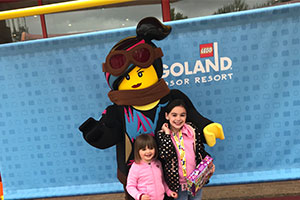
If your family has accessibility issues, finding a day out can be somewhat of a nightmare at times – so UCan2 editor Victoria Galligan visited Legoland Windsor to see how accessible the park is, and how scary the rides are, too! Read her review of the park here… Although Legoland Windsor’s latest attraction has a horror theme, you won’t be left trembling when trying to organise your day out there. I went along with my family to see how staff at the block-built wonderland have been working with the Business Disability Forum to ensure they are meeting the needs of disabled customers and delivering the best customer experience possible. You can hire a wheelchair or mobility scooter at the park for a fee (reserve online to ensure you don’t miss out!) and all main pathways, shops and restaurants are accessible. The Hill Train allows families to avoid huffing and puffing up the steep slope and it’s wheelchair-accessible. Assistance animals are welcome too – but cannot go on the rides. If you prefer the challenge of tackling the hill, there is a winding path all the way from the Welcome area, where there are shops, toilets and cafes in one base near the entrance, down to the Ninjago area. This path is pretty wide and many people were pushing buggies and wheelchairs up and down on our visit. And if queueing is an issue, the Ride Access Pass allows you to book a place on a ride via an app, then when your slot comes up, you just make your way to the ride, walk straight to the front of the queue and a member of staff will help you onto the ride. Like all parks, there are restrictions on physical impairments for certain rides – check on the Accessibility Guide before you go to avoid disappointment. The Lego creations are amazing and you can spend ages walking around the world which has been painstakingly built – from the Taj Mahal to the London Eye, you’ll recognise landmarks which are built with meticulous detail and many display feature moving parts too. You can even race trains and racing cars there! Live shows at various areas across the park also keep the crowds entertained – we saw the pirate show by the lake which saw actors splashing the crowds and carrying out some daring acrobatics. There is a plethora of exciting rides at Legoland Windsor – this year’s big new attraction is the Haunted House Monster Party and is billed as the most Fang-Tastic Ride Ever! This indoor ride has two rows of benches facing each other at either side of a huge party table. But when the ride starts and the lights go out, you end up spinning around as the walls seem not to move – very unnerving! We loved it, and another highlight was the LegoCIty Driving School, where my eldest daughter got to pass her driving test! Not bad for a seven-year-old. The Fire Academy pits families against each other in a race to extinguish a “fire”, while Balloon School takes you soaring to see the park from up on high. Duplo Valley is an area especially for younger children, and our three-year-old wondered at the Fairy Tale Brook, where we passed the likes of Goldilocks and the Three Bears and the Three Little Pigs. From tiny tots all the way up to hard-to-impress teens, there are rides for everyone at Legoland and the park really does go the extra mile to make people with any mobility needs welcome and safe. ACCESSIBILITY GUIDE A full accessibility guide is available on the Legoland website but here we compile a rundown of facilities: • You can register for reasonable adjustments at the Legoland Windsor Resort by completing the Accessibility Enquiries Form online • The Ride Access Pass allows you to queue virtually – just choose the ride you’d like to go on next and you’ll be told when to go to the front of the queue via a separate Q-Bot lane • For those needing some chill-out time, a sensory room is located in Heartlake City with soft seating, soft lighting and multi-sensory equipment. • All toilet blocks have a disabled toilet which can be accessed with a RADAR key, and Heartlake City also has a Changing Place. • A hearing loop is available and mobile units are placed at key points in the park. See Legoland’s website for details on tickets and hotel stays here.
Dr Warren to cycle from Land’s End to John O’Groats Event Mobility charity

On the 24th July, Dr Mark Warren, aged 49 from Bredon near Tewkesbury, will be attempting to cycle 1173 miles to raise funds for Event Mobility – the Pershore-based charity that loans mobility scooters and wheelchairs at nationwide events. As Mark has just turned 50, he has decided to attempt a significant challenge on his bicycle to remember the occasion. As a serious amateur, Mark has ridden on and off road for many years and has a passion for cycling in general. He has completed charity rides in the past but has never attempted anything as extreme as this challenge. Mark will be cycling over 100 miles each day, back-to-back, with the aim of reaching John O’Groats within 11 days. By choosing to ride north he has the extra challenge of tackling over 60,000ft of cumulative elevation as he negotiates multiple ascents and descents. Aiming to arrive at the most northerly point in the UK on 3rd August, Mark plans to raise over £5,000 for Event Mobility with the help of its partner scooter supplier, TGA Mobility. Event Mobility is a registered national charity, established in 1999 which provides access to shows and events for disabled, elderly and mobility impaired people through the short-term loan of electric scooters and manual wheelchairs. The charity was founded by Bryan Lupton who was diagnosed in 1995 with MS and could no longer enjoy ‘walking the cross-country course’ at Badminton Horse Trials. With the use of a loaned mobility scooter he was once again able to enjoy this experience and which sparked the idea for Event Mobility. The charity now provides a fleet of 300 mobility scooters and 100 manual wheelchairs for well-known events such as The British Grand Prix, The Ryder Cup and Glastonbury. The majority of scooters available are supplied by the product specialist TGA Mobility, including the Breeze S4 which is famous for winning the extreme scooter challenge on BBC’s Top Gear programme. Mark explains why he has chosen to raise funds for Event Mobility: “One of my local friends is the Chair of the Event Mobility Board of Trustees – Mike Harrison. I explained to him I was looking to raise funds for a smaller charity that still had a national impact. With its local connections to me Event Mobility was therefore the perfect choice. Their small team do an amazing job and deserve a boost, especially as they continue to push the boundaries of mobility. I see the work they do first hand and the huge difference it makes, without their services so many events would not be accessible for all. My end-to-end challenge aims to give the charity an injection of investment so they can expand their scooter fleet and provide independence to even more event and festival goers.” Mark will be using routes that are part of the National Cycle Network which is maintained by the charity Sustrans. This involves higher mileage however the benefits include cycling on quieter roads and designated paths, all enhanced by scenic views. He will be supported by his family in a motorhome who will meet him at the end of each daily stage so that he can prepare for the next 100 miles. Leaving Land’s End at 8am on day one, Mark’s itinerary will include: Churchtown, Dulverton, Berkeley, Bridgnorth, Bury, Kings Meaburn, Abingdon, Strathyre, Aviemore, Lairg and concluding at John O’Groats. This gruelling schedule is not being underestimated by Mark: “People have said to me that this challenge is like asking a runner to do back-to-back marathons for 11 days. Hence I have been putting some serious training so that I have the strength and stamina to successfully complete the distance on my Tifosi road bike. I’ll be collecting donations as I go but I would like to encourage everyone to donate to the Event Mobility Just Giving Page. Whatever can be spared will help Event Mobility continue to meet the growing demand for independent mobility.” Daniel Stone, TGA Mobility Managing Director adds: “We are delighted to be sponsoring Mark’s challenge with donations and free PR so that awareness and funds are maximised. It is a commendable effort by him and we wish him luck with this challenging endeavour. The availability of our quality TGA mobility scooters for loan at large events is essential in terms of accessibility and inclusion. Therefore, we are 100% behind Mark’s challenge that will help expand Event Mobility’s services so that more disabled and elderly people can experience events in comfort and without hassle.” Donations can be placed at: https://www.justgiving.com/campaigns/charity/event-mobility/landsendcycle2018
A tribute to disability activist Professor Mike Oliver

UCan2’s Jenni Meredith on the legacy of disability activist Professor Mike Oliver, and the future of disability rights in the UK under new Disabilities Minister Justin Tomlinson as Brexit looms… In March this year, Professor Mike Oliver, a fiery disabled activist and the man who changed mainstream attitudes with his social model of disability, sadly died.He was the person largely responsible for forcing the UK Government to adopt anti-discrimination legislation in the form of the Disability Discrimination Act (DDA), yet was disappointed with the Act when it finally appeared on the statue books. The DDA used the medical model to label each of us as a set of symptoms, but at least the “reasonable adjustments” part of the current Equality Act pays heed to the social model. However weak, unenforceable and divisive the DDA was, it was the foundation for current equality and anti- discrimination legislation and is the reason that today we can, if we have the stamina and the cash, challenge workplace discrimination in UK law courts. But despite the gains made by direct action campaigners such as Disability Action Network in the 1980s, we do seem to be almost back at square one with some private employers discriminating on a daily basis and recently even the DWP, a Governmental Organisation no less, forced one of their disabled employees to seek justice via litigation. It is a tragedy that the Government breaks its own legislation. But at least that puts us firmly in the non- discriminatory zone. After all, Governments regularly break their own rules in plenty of other areas too. The DWP lost a case brought against them by a staff member, a DWP case officer in fact, who claimed the DWP had not made reasonable adjustments concerning his mental health. This claimant was dismissed from his post in 2017 after several months of struggling with the conditions under whichhe was asked to work. He went through various legal procedures for two to three years and In the summerof 2018 the tribunal reserved Judgement on four counts, pending further investigation. Finally, this Spring, the judge ruledthat the DWP had not sufficiently taken into account their employee’s depression, and should have allowed him to work flexible hours to relieve the stress of having to arrive and leave at inflexible specified times. The employee was awarded £35,000, which sounds great, until you consider the stress this man was forced to endure fora prolonged period, theloss of income he suffered during that time and any legal costs he might have had to pay upfront, now that it is so hard to get Legal Aid. Money can never restore the damage done by disabling and discriminating attitudes. Additionally, how many of us would have the stamina to fight such drawn out court cases? Ironically back in 2017 the DWP was in the negative limelight yet again for telling their case officers to discriminate against people with mental health issues when assessing PIP payments. This official DWP guidance came just before their case worker with mental health issues was dismissed with unsatisfactory reasonable adjustments made, and just after a tribunal ruled that people needing mobility help due to psychological issues were entitled to the same help as those with physical issues. Back in the early 1990s Professor Oliver instigated a research project, which resulted in a book by Colin Barnes that used the Government’s own statistics to prove an urgent need for anti- discrimination legislation. Perhaps it’s now time to use the Government’s own statistics to prove an urgent need for stronger, more enforceable legislation and for increasing legal aid budgets. What effect is Brexit having on disabled people’s rights? One problem, of course, is that due to institutionalised prejudice, any laws adopted are also likely to be biased and prejudiced. So we have a situation where Governments adopt legislation that prohibits certain types of discrimination and yet those laws themselves are discriminatory. Take for example the issue of equal pay. There are changes in the pipeline as the Government consultation on ethnicity pay reporting closed this January. But all MPs and Whitehall officers are snowed under with the ever-evolving Brexit leave date, so we shouldn’t apportion too much blame if the responses to the consultation have so far been left without action. But it is interesting to note that the consultation was on the introduction of mandatory pay-gap reporting where ethnicity is concerned, yet gender inequality of pay and disability inequality of pay will remain with voluntary pay-gap reporting. These laws come under the heading of anti- discrimination legislation, yet they demonstrably discriminate. And despite being told late March that due to Brexit debates the vacant post of Disabilities Minister would be left unfilled, only eight days later another announcement gave us the new minister’s name; the replacement for Sarah Newton being arguably disablist, as demonstrated by his voting record. He has often, and usually, voted against laws to promote equality and has consistently voted against higher benefits for those unable to work due to illness or disability. Just the sort of minister we need? Find Jenni, who also writes health-related poetry, at wordsart.co.uk
Able2 expands their comprehensive range of rollators

June sees Able2 expand their comprehensive range of rollators with another string to their bow – the EZ Fold-N-Go. For many, a rollator is a great way to keep mobile as the years pass: it provides support when walking, is often somewhere to sit for minute and can on occasion handily store bits and bobs picked up during a trip to town. Nowadays, with space at a premium wherever we go, a rollator can seem a cumbersome piece of equipment when you’re trying to tuck it out of the way. The new EZ Fold-N-Go is different, folding both widthways and front to back this product measures just 33 x 25cm when folded and so is easy to tuck in a corner out of the way. “Crowded public transport, tightly squeezed in coffee shop tables and even small rooms at home mean that tucking your walking aid out of the way is nigh on impossible in many situations. It’s why Able2 have been on the lookout for a folding mechanism that enables a rollator to collapse down significantly smaller; reducing its impact when not in use” explains Able2 Managing Director Mark Diaj. At 6.1kg the EZ Fold-N-Go strikes the perfect balance – lightweight enough to be easy to use, yet with enough weight to ensure that it is sturdy and reliable. Like many of Able2’s products the EZ Fold-N-Go comes in a range of colours, enabling customers to express their personality through choice. Able2 are a national supplier to mobility retailers, pharmacies and the healthcare sector; supplying a huge range of aids that are designed to make life easier. For more information on where to purchase Able2 products, or to register as a retailer, please visit www.able2.eu.
How can I benefit from the Motability scheme?

The Motability scheme is great for those with a disability to be able to continue their everyday life. However, although many know they can get a car, not everyone knows to what extent they can alter it to suit their needs. Here, we look at what the Motability scheme is, how you qualify and how you can change a vehicle or choose an adapted vehicle under the scheme. How do I qualify for the Motability scheme? The scheme was set up in 1978 to allow disabled people to be able to move more freely so they aren’t confined to their home. Since then, over four and a half million cars, scooters and powered wheelchairs have been provided to those who require them. There are several ways in which you may qualify for the scheme. If you currently receive benefits due to a disability or illness that limits your movement, you can use this benefit to pay for certain Motabilityvehicles. These could include anything from a car, to a mobility scooter or a powered wheelchair. However, it’s important to remember that you will be leasing the vehicle and if your benefits stop, then you’ll need to return it. Other scenarios in which you could claim are: • If you have received Armed Forces Independence Payment (AFIP) or War Pensioners’ Mobility Supplement for at least 12 months. • If you’ve been awarded the enhanced rate mobility component of Personal Independence Payments (PIP) for a minimum of 12 months. • If you have received the higher rate mobility component of Disability Living Allowance (DLA) for at least one year. You can claim for a Motability vehicle for a child who is over three years old and requires transportation. You may also be able to claim and choose a car for someone else to drive if you don’t have a licence yourself. Altering your vehicle to fit your needs There are over 400 adaptations that you can choose from if you need to alter your car. These devices are fitted to help you get the most out of your travelling experience and make you as comfortable as possible. It’s normal that customers choose their adaptations before they lease the car, meaning that any required maintenance will be covered in the cost of your lease. However, it’s still possible to make changes after your lease begins, but you will then risk paying for maintenance as well as needing to seek authorization for any changes to your vehicle. Driving, stowage and access are the three types of adaptions you can choose from. They can vary from a simple attachment, to removing the existing controls and replacing them with a system that has been individually designed for you. Driving adaptations can include hand controls, electronic accelerators, left foot accelerators, pedal modifications, steering aids and remote-control devices. On the Motability scheme, you can adapt your car by introducing either a boot hoist or rooftop stowage unit. Both work via the touch of a button to easily store your equipment. These stowage systems are also transferrable if you change your vehicle. Also, if you aren’t mobile, getting into a vehicle can sometimes be a hard task. With transfer plates, electric person hoists and swivel seats, there are options available to aid you. All of these adaptations can be demonstrated before you choose the one that best suits your needs. You can also modify your car in the same way you could with a car outside of the Motability scheme. These optional extras include the likes of a spoiler, alloy wheels, parking sensors and a car stereo. Once you return you car, you don’t have to remove any modifications, but if you do, you’ll have to pay to restore the vehicle to its original condition. Motability vehicles are a great help to those who require them and by knowing that you can adapt them in ways to help you, the Motability Scheme is one that is definitely worth looking into if you’re disabled. To find a full list of adaptations and modifications, visit the Motability site here. To search for a suitable vehicle, click on the Lookers website here.
Fellowship award offered by children’s disability partnership

An exciting new funding disability partnership will see dedicated investment of £270,000 ring-fenced specifically to help children with disabilities across the UK. The Royal College of Paediatrics and Child Health (RCPCH) and Newlife the Charity for Disabled Children have joined forces to offer talented post- doctorial researchers the opportunity to compete for a pioneering three-year fellowship award. The partnership, launched earlier this week at RCPCH’s annual conference in Birmingham, will enable the chosen recipient to have a real impact on the lives and health of children with disabilities across the UK. Newlife, which has been investing in medical research for more than 10 years, will contribute £135,000 with RCPCH providing match funding. The successful researcher will receive a fellowship grant to the value of £250,000 to advance paediatric research in the field of childhood disability, while supporting them to progress their own career. Sheila Brown OBE, CEO of Newlife, said: “We are delighted to work with such a prestigious organisation on this ground-breaking project and hope other charities follow our lead.” Jo Revill, CEO of RCPCH, said: “Investing in paediatric research is vital if we’re to continue to improve the health and wellbeing of children.” For other disabled charity fundraising take a look at our Features page