Dame Vera Lynn Children’s Charity receives backing

Robert Walters Group UK has named the Dame Vera Lynn Children’s Charity as its official UK charity for 2019. The charity supports under 5s with cerebral palsy and other motor learning impairments – focusing on helping children to realise their full potential. The bulk of fundraising for the charity will take place on the Group’s annual Charity Day, taking place on Friday 11 October 2019. All 400 of Robert Walters Group UK employees – across London, the South East, Midlands and the North West – will be taking a break from work for the day and will be tasked with raising as much money as possible for the charity. Last year fundraising activities included a non-stop 24hr cycle, a walk from St Albans to London, bake sales, all the way through to leg waxing for gents, pie in the face, and a chicken nugget eating competition. £35,213 was raised and donated towards 2018’s chosen charity Cancer Research UK. Globally, across 28 countries, £145,984 was raised in one day for local charities and community projects. Over the last seven years, the Robert Walters Group has raised over £800,000 for causes globally. Richard Johnson, Principal at Robert Walters, shares why this year’s chosen charity means so much to him: “Everyone at Dame Vera Lynn work tirelessly to help each and every little hero realise their full potential. They have provided amazing support to our son Joshua, helping him toward taking his first step in spite of his quad cerebral palsy, global development delay, infantile spasms (severe epilepsy) and cortical visual impairment (registered blind). “When Louise and I were first told of Joshua’s complex needs and given a prognosis that he would not live beyond his teens, hopes and dreams for the future left us. Joshua is battle hardened from a complex start to life and takes everything in his developing stride. As Joshua has got older, gained strength and gained a wickedly awesome personality our hopes and dreams for the future have very much returned! “For each story you read, there are many more out there un-spoken. Charities like Dame Vera Lynn work to support as many children as possible. The support from Robert Walters Group UK will significantly help Dame Vera Lynn provide crucial support to other children such as Joshua – giving them and their families hopes and dreams for their futures.” On 14 September 2019 Richard will be walking 21 miles (35km) for Dame Vera Lynn Children’s Charity, an average of 42,000 steps – more steps than some children with cerebral palsy will walk in their lifetime. To donate click here. Chris Hickey, UK CEO at Robert Walters comments: “Our annual Charity Day is much looked forward to by everyone within Robert Walters. Each year it gets bigger, better and more creative – and most importantly we have consistently raised more money as each year passes. “As well as the effort that each and every Robert Walters employee puts into raising money, thanks must also go to our clients and partner organisations for the kind donations and support they lend on the day. “Given that the Dame Vera Lynn Children’s Charity rely entirely on the community to raise funds I have no doubt that Robert Walters Group UK will put in a stellar effort on this year’s Charity Day.” Pilar Cloud, Executive Manager at Dame Vera Lynn Children’s Charity comments: “We are thrilled to be the chosen charity of the UK employees of Robert Walters Group because we know the positive difference that they have made to any number of charities over the years and that they will make in this coming year to our charity in helping us to support even more families. “For a small charity like ours, having the support, enthusiasm, focus and determination of so many new supporters up and down the country will help us to raise awareness of the services we provide AND to ensure more families are able to benefit from our early intervention support. Thank you, Robert Walters Group.” Click here for more information on the work that the Dame Vera Lynn Children’s Charity do.
Visit Somerset website puts accessibility first!

Visit Somerset offers a wealth of information on exploring the county – from things to do, shopping and holiday accommodation. The newly launched site also puts the focus firmly on accessibility. It’s one of the UK’s first official tourism websites that features Browsealoud technology to give online users a little extra help whenever they need it. Visit Somerset offers a wealth of information on exploring the county – from things to do, shopping and holiday accommodation. The newly launched site also puts the focus firmly on accessibility. It’s one of the UK’s first official tourism websites that features Browsealoud technology to give online users a little extra help whenever they need it. Created by digital learning and accessibility experts Texthelp, Browsealoud assists visitors with visual impairments, cognitive disorders, learning difficulties and physical disabilities, in addition to those with limited English and who lack digital confidence. The software encourages site visitors to click on a friendly on-screen help button to hear information read aloud, text magnified for easier reading or translated into 40 different languages. Users with dyslexia can also use Browsealoud’s handy screen mask to help them focus on hard-to-read text. “Somerset is one of Britain’s best loved tourist destinations, attracting more than 25 million visits each year,” says John Turner CEO of Visit Somerset. “With around 1 in 10 of the UK population experiencing some form of disability, we’ve made it a big priority to make sure our new site is fully accessible to everybody who wants to know more about our beautiful county. It’s been brilliant working with Texthelp to make Visit Somerset an even more welcoming destination for all our digital visitors.” John went on to say: “We live, work and relax in the twenty first century, where we should all be accepting and accommodating of our varied visitors needs and requirements. The potential from becoming a more welcoming and inclusive county for our visitors and our businesses is extraordinary, we should all strive to do better for all. Adding Browsealoud to our website is a major part of our social inclusivity strategy and will help visitors browse our pages in line with their own needs. It is Visit Somerset’s intention to carry on working with TextHelp and Compass Disability, the County’s official disability agency in supporting our members to support disability on and off line, possibly becoming the first socially inclusive county in the UK” View the video here for more information on this new inclusive software supporting many of our customers needs throughout Somerset. Other developments will include signing video inserts on main video content distributed through digital channels together with off line training for Visit Somerset members starting in the Autumn of 2019.
Government To Introduce Natasha’s Law

A new law will require food businesses to include full ingredients labelling on pre-packaged foods, Environment Secretary Michael Gove announced today in a drive to protect the country’s two million food allergy sufferers. Following the tragic death of Natasha Ednan-Laperouse, the teenager who died after suffering an allergic reaction to a Pret a Manger baguette, the Environment Secretary confirmed legislation will be brought forward by the end of summer to strengthen allergen labelling rules. Under current laws, food prepared on the premises in which it is sold is not required to display allergen information in writing, meaning allergy sufferers sometimes lack confidence buying food out. The new legislation, known as Natasha’s Law, will tighten the rules by requiring foods that are pre-packed directly for sale to carry a full list of ingredients – giving allergy sufferers greater trust in the food they buy. Environment Secretary Michael Gove said: “Nadim and Tanya Ednan-Laperouse have been an inspiration in their drive to protect food allergy sufferers and deliver Natasha’s Law. “These changes will make food labels clear and consistent and give the country’s two million food allergy sufferers confidence in making safe food choices.” Natasha Ednan-Laperouse’s parents Tanya and Nadim said: “We are absolutely delighted that the Secretary of State has announced the government’s decision to go ahead with full allergen and ingredient labelling. While Natasha’s Law comes too late to save our beloved daughter, we believe that helping save other allergy sufferers and their families from the enduring agony that we will always bear is a fitting legacy for her life. “We would personally like to thank Michael Gove and Health Secretary Matt Hancock for their unflinching support in doing the right thing on behalf of all people with allergies, and their support in setting up the Natasha Allergy Research Foundation which we are launching today in Natasha’s memory.” The government will introduce legislation by the end of summer mandating full ingredients labelling for foods prepacked for direct sale, and the new laws will come into force by summer 2021 – giving businesses time to adapt to the change. The introduction of Natasha’s Law follows a consultation in January proposing four options, including full ingredient list labelling; allergen-only labelling; ‘ask the staff’ labels on products; and promoting best practice to businesses. The consultation received overwhelming support from consumers for full ingredients labelling, with more than 70 per cent of individuals backing this option. The Food Standards Agency’s recent advice also recommended government should implement full ingredients labelling. Chair of the Food Standards Agency Heather Hancock said: “We want the UK to become the best place in the world for people living with food hypersensitivities. “The impact of food allergy and intolerance on quality of life can be as great or even greater than almost all other foodborne diseases. “Whilst it’s impossible to eliminate the risks entirely, we believe this change will mean better protection for allergic consumers.” The reforms cover labelling requirements for foods that are prepared and packed on the same premises from which they are sold – such as a packaged sandwich or salad made by staff earlier in the day and placed on a shelf for purchase. Currently, these foods are not required to carry labels, and if asked by a consumer allergen information must be given in person by the food business. Allergy UK CEO Carla Jones said: “We are delighted with the news that Defra’s labelling review backs mandatory full ingredient labelling for pre-packed direct sale food. “This move towards full ingredient labelling for pre-packed direct sale food will improve the lives of the allergic customer and it is warmly welcomed here at Allergy UK.” Food businesses across the country have already taken steps to improve food labelling and outlets are being urged to do all they can ahead of the implementation date to help consumers make safe food choices. The Food Standards Agency (FSA) will continue to provide food businesses with guidance on allergens, and through its Easy to Ask campaign it works to empower young people to ask food businesses about allergens when eating out so they can make safe food choices.
PM launches disability policy overhaul

Prime Minister Theresa May has revealed plans to enhance the lives of those living with a disability in the UK, announcing the launch of disability policy Equalities Hub in Parliament. With around a fifth of the working-age population living with a disability, the Prime Minister also announced a new cross-government disability team which will sit alongside the Government Equalities Office and Race Disparity Unit in a new Equalities Hub. This team will work closely with disabled people, disabled people’s organisations and charities to develop a new approach to disability, with their views and experiences at the forefront of any new policy. Further measures will be set out later this year. The new package of measures ordered by the Prime Minister includes: • Higher accessibility standards for new housing • an overhaul of statutory sick pay • greater workplace support • a spotlight on companies’ delivery of services for the disabled • New research on disabled people and government policy Outgoing PM Mrs May said: “My determination to identify and tackle injustices, wherever they exist in society, remains as strong as ever. “So I am proud to announce new measures to break down barriers faced by disabled people, whether in employment, housing or elsewhere. “We all have a crucial role – businesses, government and civil society – in working together to ensure that disabled people get the support they need, and go as far as their talents can take them.” Disability focus widely welcomed Mark Hodgkinson, Chief Executive at disability equality charity Scope, said: “Continued action from government to tackle the barriers Britain’s 14 million disabled people face is welcome. “Making workplaces more flexible, improving market regulation and government coordination are positive steps in the right direction. “We know that half of disabled people feel excluded from society, and are too often shut out of work. Life also costs more if you are disabled, and Scope research shows that these costs add up to on average £583 a month. “We have long called for a concerted effort from government to improve the lives of disabled people in this country. It is therefore positive to see recognition from government that a joined-up approach is needed and necessary.” Responding to the announcement of a consultation on the accessibility of new homes, Sheron Carter, CEO of Habinteg housing association said: “Currently only 7% of homes in England have even the most basic access features so we really need all new housing to offer good levels of accessibility and adaptability if we’re to get anywhere near meeting the needs of our whole population. Too many disabled and older people are making do in homes that are just not suitable for them. “We’re not talking about grand designs for every home. The ‘accessible and adaptable’ standard that will be consulted on is purely an ordinary home with some thoughtful design features that make it easier to get around and more adaptable to the changing needs of households over time. “Our recent accessible homes forecast revealed that less than half of all planning authorities have set requirements for new homes to meet higher accessibility standards. Setting a national policy would not only create a level playing field and more certainty for developers, it would help shift the focus of planning at an authority level to ensure that a sufficient number of new homes are suitable for wheelchair users to live in.” Habinteg’s Insight Report revealed that just 1% of homes set to be built by 2030 outside London are set to be suitable for wheelchair users.
How accessible is the public transport system?

In England during 2017/2018, the Department of Transport found that a population of 9.8 million held older and disabled concessionary travel passes. With that in mind, is there enough being done to make the nation’s means of public transport accessible for disabled people and the elderly? With assistance from stairlift manufacturer Acorn Stairlifts, we’ve investigated this issue… Across the UK a lot of the population choose public transport to get from A to B. The Department for Transport’s Transport Statistics, Great Britain 2018: Moving Britain Ahead, reported that 4.85 billion local bus passengers were completed through the UK during 2017/2018 and National Rail completed 1.71 billion passenger journeys. During the same period, 270 million passengers used light rail and tram systems, which is a record since comparable records were documented. Issues being highlighted regarding accessible public transport UK-based poet and artist, Jamie Hale and voiced his disappointment towards the UK’s transport system and feels that it doesn’t cater enough for disabled passengers in an opinion piece for The Guardian, going as far as to state that London alone “has one of the best public transport systems in the world, yet only about a quarter of underground stations are fully accessible for me”. Being also an activist with groups like Disabled People Against Cuts, and Not Dead Yet UK, Mr Hale was keen to point out some positive feedback, regarding London’s public transport system. He accredited buses in the city for having wheelchair-accessibility and the pavements are passable, while a system entitled Turn Up & Go is designed to allow passengers who are disabled to travel spontaneously. However, Mr Hale does go on to express strongly that London’s rail network has a reliance on staff-assisted travel for many of disabled passengers. Using a real-life situation, Mr Hale had said that this means he must wait for a staff member to set up a ramp and then assist him with boarding the train – many times of which he ends up travelling within the vestibule of the transportation system. He added: “Even when the train has a wheelchair space, I’m rarely put in it. If I want to get off, I have to hope the staff remember me. They often don’t, leaving me either shouting at passengers to find platform staff or relying on friends. Otherwise, I have to eat into my care hours and bring a carer with me who can find staff when I’m inevitably forgotten. Of my last six journeys, I was only met correctly on two — the rest of the time, the ramp didn’t arrive, or it was sent to the wrong part of the train.” Mr Hale, had continued to point out potential solutions, if were to be implemented would make both London’s and the wider UK’s transport system more accessible by including: 1. Ensuring all trains have proper spaces for wheelchair users. 2. Improving how those requiring assistance to alight from public transport can alert staff members on a platform when the necessary help hasn’t arrived. 3. Increasing the number of dedicated assistance staff members available for those using public transport. 4. Introducing automated ramps which extend from trains to platform level. 5. Making it free for carers and assistants to use public transport. It’s not just Mr Hale, who feels aggravated by these issues too. Within its Independent. Confident. Connected report, disability equality charity Scope found that 40 per cent of disabled people often experience difficulties or issues when travelling via train across the UK. One in four also stated that negative attitudes from fellow passengers has led to them restricting their use of public transport. The head of policy and public affairs at Scope, James Taylor stated: “From airports to buses, we’ve heard too many horror stories of disabled people let down by poor infrastructure, bad service, or being treated as an afterthought. This urgently needs to change.” “A genuinely inclusive transport network would allow disabled people to be part of their community, work, and see family and friends. Progress towards fair and inclusive transport has been slow, and disabled people want to see change happening a lot faster.” The Legal rights for accessibility on transport The 2010 Equality act was introduced to cover the legality surrounding provision of accessible transport and completely replacing all prior equality legislation, such as Disability Discrimination Act. The premise of the act is to ensure that transport implements adjustments to provide a service for disabled people which is of the same standard to that of non-disabled people. Assistance measures should be put in place by those effected, to ensure that accessibility is met for disabled customers. The regulations mean that providers must do the following: 1. Not charge a disabled people extra or refuse to ravel to someone based on their ability 2. Refuse a disabled person from travel under genuine safety reasons 3. Must guarantee accommodation for disabled people where prior notice is given and provide extra assistance if no notice is made. 4. Provide basic assistance in the terminal, when loading/unloading luggage or boarding/alighting from the transport 5. Display information in accessible formats 6. Provide training for all staff members in disability awareness and handling associated equipment 7. Provide compensation for lost or damaged equipment 8. Must allow registered assistance dogs to travel on transport including buses and coaches Other methods of transport have slightly varying rules, for travel by sea and waterways: 1. Assistance dogs are permitted but must follow national rules 2. A temporary requirement should be provided if equipment is lost or damaged 3. Standards of assistance should be filed by large establishments The Equality Act also sets requirements for guidelines regarding public transport vehicles, such as trains, buses, coaches and taxis and there are to be outlined by the government. The standard allowance for travel is based on a ‘reference wheelchair, which measurements are a length of 1200mm, including extra-long footplates with a total width of 700mm. The sitting height from ground to top of head shouldn’t exceed 1350mm and the
DriveAbility’s Thetford centre to unveil new driving & scooter assessment facilities

East Anglian DriveAbility’s Thetford centre to unveil new driving and scooter assessment facilities for elderly and disabled locals East Anglian DriveAbility (EAD), one of Driving Mobility’s UK assessment centres for elderly and disabled drivers, will be officially opening its enhanced Thetford centre on 11th July, 10am-4pm. Official opening of new facilities at East Anglian Driveability at 2 Napier Place, Thetford, IP24 3RL. All press, healthcare professionals and public welcome. Free access to the TGA test drive course for safe mobility scooter driving awareness. Driving Mobility accredits twenty independent organisations which offer professional support and driving assessments to people who need to gain, or retain, the ability to drive following a diagnosis involving impairment or disability. EAD is part of this network with centres in Thetford and Colchester. In addition to driving assessments and guidance regarding adapted vehicles, its Occupational Therapists and Driving Advisors provide several additional services focused on suitable mobility scooter, powerchair and wheelchair provision. Service users at EAD either self-refer or are signposted by the DVLA, Motability, Police and healthcare professionals such as Occupational Therapists (OTs) and GPs. The EAD centres are managed by a team of specialist OTs, Approved Driving Instructors (ADIs) and administration staff who are focused on recommended solutions for independent mobility. Now with enhanced facilities at the Thetford centre, EAD has the ability to extend and diversify services further with a view to helping more East of England drivers to remain on the road. The new extension includes an impressive training room for drivers and professionals and a larger reception which is spacious and welcoming. EAD invites all healthcare professionals and members of the general public with an interest in adapted driving to attend the event. A vast range of adapted vehicles, WAVs (wheelchair accessible vehicles), specialist steering and driving controls will be on display and attendees will have the opportunity to try the vehicle simulator. Vehicle conversion companies will be supporting along with specialist suppliers such as Autochair car boot hoists and TGA mobility scooters. A scooter test drive course will be available so visitors can experience part of the EAD assessment process and determine which product is suitable for their needs. Yvette Bateman, CEO, East Anglian DriveAbility, comments: “The official opening of our new extension promises to deliver a successful day for all. We are proud of our new facilities and the enhancement to services on offer for all elderly and disabled drivers within East Anglia. Sue Rogers from the Department for Transport and Helen Dolphin MBE, our Chair and well known accessible transport campaigner, will be available throughout the day. They will be able to explain the latest developments in legislation and topics such as disabled parking and the extension to the Blue Badge scheme. The team and I invite everyone with an interest in independent mobility to attend.”
Flats for adults with complex autism open in Droitwich

On Wednesday 19th June Autism West Midlands in partnership with Fortis Living and Worcestershire County Council celebrated the opening of a new supported living scheme for autistic adults and adults with complex needs. The scheme was developed by Fortis Living – part of Platform Housing Group, with additional funding of more than £400,000 from Worcestershire County Council and Homes England. The Burrows is the first scheme of its kind in Worcestershire and consists of eight individual flats for adults with complex autism, giving them the opportunity to live in their own home with 24 hour support. All of the residents will have their own tenancies and support is to be provided by specialist provider Autism West Midlands. This exciting project for autistic adults was commissioned by Worcestershire County Council, speaking at the ceremony Adrian – Cabinet Member for Adult Social Care said: “This scheme is truly exciting for us because it really demonstrates our commitment to developing innovative ways to provide support that is person and empowers people to achieve their full potential.” Supported living offers an alternative to residential care, enabling people to rent their home and have more control over the support they receive. A lot of thought and consideration has also been given to the design of the build to make sure it meets the needs of autistic people. Further adaptations have been made to each flat to meet the needs of each individual who will be living at the scheme. Richard Grounds, Group Commercial Director at Fortis Living who have built and own the new housing said: “The Burrows is a fantastic example of organisationsworking together in partnership to produce housing and support of the highest quality. Fortis Living is proud to have played its part in the development of this landmark scheme.” Autism West Midlands, who are the support provider for the scheme, are offering new and innovative ways of working to provide support that is person centred and focuses on empowering individuals. As well as being an innovative design, the scheme will offer new and creative ways of receiving support through the use of assistive technology. This technology aims to enable people to receive support in the least restrictive way. Technology may include monitoring and alerting systems to support the management of health conditions such as epilepsy, adaptations to the environment to help reduce anxiety as well as offer opportunity for people to develop their independence skills. Also speaking at the event Phil Middlewood, Chief Executive of Autism West Midlands said: “We are delighted to be supporting people to move back to Worcestershire to live in their own homes, with their own front door and keys. We firmly believe that everyone has the right to lead fulfilling, engaging and active lives and we are proud to be part of this new project. Autism West Midlands has been supporting autistic adults for over 30 years and our staff and managers are passionate about making a difference for everyone we support.” Health and social care professionals alongside families of those who will be supported through the scheme had the opportunity to tour the building and speak to the specialist support team from Autism West Midlands, whilst enjoying some light refreshments.
Making accessible holidays easier to find
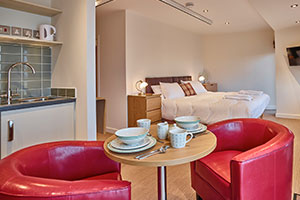
Moira Henderson has dedicated herself to making accessible holidays easier to find in Fife, for as many people as possible. And she’s doing such a great job, Prince Charles recently presented her with an MBE. Editor Victoria Galligan asked Moira about her crusade and her cottages The Rings, which can sleep up to 16 people. Q&A with accessible holidays champion Moira Henderson When did you first become involved in the hospitality industry? About 28 years ago we brought a second-hand residential caravan onto our farm, so I guess that was my start in hospitality. I became increasingly involved when we started to think about accessible tourism, although I didn’t know that was what it was called until a chance meeting with Chris McCoy of Visit Scotland. Chris helped me to network with those affected by disability and their feedback helped shape my “wish list”. I was then invited by Scottish Enterprise to join the group Planning to Succeed, designed to guide those involved in agriculture to diversify into tourism. This group was very educational and supportive. What is your role on the board of Fife’s Tourism Associations? I am Chair of the North Fife Local Tourist Association and I also have recently taken the Chair of The Fife Tourism Partnership. In these roles I try to encourage businesses to network and learn from each other. We keep an eye on changes in legislation – such as the attempt to introduce a Tourism Tax! We also put forward the views of those we represent. We look at the needs of businesses, such as staff requirements, and liaise with schools and colleges, encouraging them to consider the long-term needs of local business in their planning. Our aim is to keep the vibrant industry we have in Fife moving in the right direction. Marketing is of course vital and we are constantly reviewing how we are performing. Why did you decide to build The Rings – and why was accessibility at the heart of the project? My first thought was to build a two-bedroom cottage! We were affected by disability in our family and latterly I nursed my Mum who had a severe stroke which required her to be hoisted. How do you go on holiday when you have specialist beds, hoist and shower chair all to transport? And that is assuming the doors are wide enough to get in when you arrive! I realised there were very few properties available. My friend suggested we build something a little bigger than the two-bed I was considering. Both her brothers-in-law had muscular dystrophy and both were in wheelchairs, she needed four bedrooms and two of them wheelchair accessible. God had a big plan for us – but so as not to scare us witless took us slowly, with the right people at the right time to come alongside. This is why the title of my book is called The Journey To The Rings: You Couldn’t Make It Up! What makes The Rings so accessible? The cottages are designed specifically for wheelchair accessibility by architects who have a daughter who is a wheelchair user. Our award-winning building is all on one level, with low entry from the decking, and gravel is in a tray which allows wheelchairs to cross it without becoming stuck. Doors and corridors are wide, with plenty of turning circles. All en-suites are wet rooms, three have ceiling tracking and they also have baths, one of which has a seat on which you can transfer into a lovely deep “spa” bath, and feature colour contrasts for the visually impaired. There is clearance for knees under sinks and vanity units. Two of the four kitchens are wheelchair accessible, because when we were planning a lady said: “I am a wheelchair user and a single parent, will I be able to cook for my family if I come?” So, yes she can! We now have five profile beds and other equipment we hire out when required. I asked the architects for flexibility, I have 23 different configurations including one large cottage for a group of 16 guests. What accessible attractions are there nearby to keep families entertained? • The Scottish Deer centre is 15 minutes away, and there are lots of other farm parks locally. • All our swimming pools (except St Andrews) are accessible either by beach entry or hoist. • Beach wheelchairs at St Andrews, and more to come. • We have more Changing Places in Fife than any other area of the UK. • Lochore Meadows, has accessible sailing, and a boat accessed by a ramp. • Accessible bikes and play parks in some parts of Fife • We even have gliding which is accessible. We have encouraged the many leisure and tourist attraction businesses in our local area to produce Accessible Guides so potential guests can decide if the venue will work for them. We really are spoilt for things to see and do in this area! Tell us about your MBE… I was awarded the MBE for Services to Accessible Tourism in Fife. Prince Charles presented it at Buckingham Palace in February. He asked three very relevant questions about The Rings and I hope I answered appropriately! It went by in a flash but was a very moving moment. It was a lovely opportunity to speak with other award recipients who also had an interest in accessibility. To buy Moira’s book The Journey To The Rings: You Couldn’t Make It Up! (£10 including P&P with proceeds going to charity), or to book accessible holidays at The Rings, see therings.co.uk
SurreyIDEA Will Help Social Mobility as the First of its Kind in Europe

A ground-breaking initiative from the University of Surrey is launching an inspiring innovation and digital enterprise academy, SurreyIDEA, to welcome individuals denied the opportunity of attending university due to social mobility or those looking to deviate away from the traditional academic route. The pioneering academy is the first of its kind in Europe, providing a novel and progressive learning experience that enables students to gain valuable skills in an interactive format free from prohibitive entry requirements based on academic achievement – recruitment will be based on potential. With under and post graduate programmes, the academy will offer development as an entrepreneur and funded scholarships to students who will join as part-owner of the business and intellectual property that they create on the programme. With the fundamental objective of making higher education available to all, the faces behind SurreyIDEA are passionate about the fact that they are not an elitist platform closed off to large segments of society and thus further increasing the gap between rich and poor. Whereas the current education system prioritises academic achievement above all else, SurreyIDEA want to acknowledge the cornucopia of varied attributes possessed by so many other individuals which are essential in the workplace and welcome those without the ‘gold standard’ qualifications or CV. Instead of charging students tuition fees like a conventional university, SurreyIDEA will invest in students’ enterprises and take a percentage of the profits. With no other business school in Europe having built an entrepreneurship programme on such a model, the expert panel of teachers will showcase their own experiences which have led to their involvement with the academy. As well as helping to shape the future of business education, the students can be part of history, too. Founder and Head of the School, Andy Adcroft, says “We want to create a new generation of digital entrepreneurs that we call the Disrupters, the people that will transform the way we learn and get noticed in a less conventional way. University should be a life changing experience, if you leave the same person you were when you arrived, we have done it wrong. I know what it is to be met by a preconceived opinion based on my postal code, it’s an unfair judgement and doesn’t reflect the individual’s capabilities and strengths. This must change. Equality of opportunity should be a running theme in all areas of education and business to prevent the distance between the wealthy and poor from increasing further, and SurreyIDEA aims to help encourage this.” Gavin Whichello, Visiting Professor and Founder of leading training provider Qube Learning, says “I came from a background that didn’t present life changing opportunities. Growing up in south east London, I went to a grammar school but didn’t fit in. I went on to spend time working on building sites but it was ambition that drove me finally to gain a degree and pursue a career in the computer science industry. Having trained as a teacher and worked in schools in London for four years, I became frustrated that ‘brilliant’ pupils from poorer backgrounds were still leaving with no future. I’m passionate about supporting young people and giving them the chance to change the world. Our students, the Disrupters, will be active participants, not spectators passively sitting in a lecture theatre taking notes. SurreyIDEA is not here simply to impart knowledge; we aim to change lives. Great entrepreneurs are willing to take risks and learn from their mistakes. If you aren’t getting it wrong, you won’t know how to improve.” SurreyIDEA was inspired and developed from Surrey Business School’s highly successful Young Person’s University programme, which has run at the school every July since 2015. The 30-40 Year 12 and 13 students who attend each year are motivated and often incredibly entrepreneurial. Many don’t come from traditional university-going backgrounds so are dropping out of the system after A-levels. However, after a week with Surrey Business School, most go on to apply to university and usually get in. If you’re ready to get your entrepreneurial career under way and think we can help, SurreyIDEA would love to hear from you. Or, if you’re not sure whether the academy is right for you and you’d like to know more, here’s how to get in touch with us: Phone: 01483 686323 Email: surreyIDEA@surrey.ac.uk Twitter: @SurreyIDEA