Countryfile to Salute RDA in its 50th Anniversary Year

BBC Countryfile is to honour RDA in its 50th anniversary year with a programme dedicated to the charity and its work. The episode, which airs on Sunday 28 July, includes an interview by with RDA’s President, Her Royal Highness The Princess Royal, conducted by broadcasting legend and long-time Countryfile presenter John Craven. The interview was filmed on the opening day of the RDA National Championships at Hartpury College, Gloucestershire, where presenters John Craven and Anita Rani spent an enjoyable day with some of the events 500 competitors, as well as volunteers and family members. The Gloucestershire-themed episode features seven-year-old RDA rider Lily McKay and her mum, Alison. Lily rides at Patchwork RDA in Nailsworth. In an emotional interview, Alison explains how RDA has helped Lily and how proud she is of her achievements. Championships competitor, Tracey Thomas, who rides at Talland RDA in Cirencester, also features in the programme as she prepares for the competition. The crew then followed her to Hartpury to find out how she gets on in the Countryside Challenge competition. As well as featuring RDA’s golden anniversary, the episode also marks a milestone for John Craven, who is celebrating an astonishing 30 years of presenting the BBC’s flagship rural programme. RDA Communication’s Manager, Caroline Ward said: “We are delighted that the BBC have thrown their support behind RDA by giving us this opportunity to feature on Countryfile. We are also grateful to Her Royal Highness for agreeing to be interviewed as part of the programme. It was a joyful day at the Championships and I hope that viewers will enjoy celebrating our 50th anniversary with us.” The programme themed Gloucestershire airs on BBC 1 on July 28.
Beamish Museum, Making History More Accessible
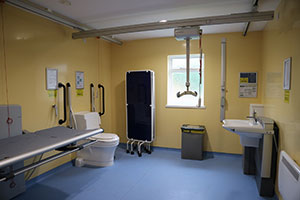
Beamish, The Living Museum of the North has made history more accessible to those who cannot use standard accessible toilets through the introduction of Changing Places facilities. Beamish is the North East’s most popular museum, bringing history to life, with the sights, sounds and tastes of the past at 1820s Pockerley, 1900s Town, 1900s Pit Village, 1940s Farm and 1950s welfare hall. The Changing Places facilities are part of the new 1950s welfare hall that has opened at the museum – the first building in a 1950s Town. More than a quarter of a million people need Changing Places facilities to enjoy a day out. They offer more space than a normal accessible toilet, providing adequate room for the extra equipment required, as well as room for two carers to easily help the user. The facilities include an overhead room coverage hoist system, a height adjustable changing bench with a shower, non-slip flooring, a height adjustable basin and a privacy screen. In addition, the facilities feature a Closomat wash/dry WC which enables greater independence and dignity for users. Wendy Wilshere, Beamish’s Volunteer & Access Co-ordinator, said: “Over a quarter of a million people need Changing Places toilets so they can get out and about and enjoy the day-to-day activities many of us take for granted. These facilities will make a massive difference for visitors who need them and we are delighted and proud to offer them in our new 1950s welfare hall at Beamish.”Beamish Museum has an Access Panel made up of museum staff and volunteers who are passionate about making the museum more accessible. The panel works with the museum to suggest and implement ways to ensure that people with a wide range of access needs can experience and enjoy the museum. Beamish Access Panel member, Daniel Miller said: “The Changing Places toilet is really spacious, it’s amazing in terms of the equipment it has got in. I think that it is really going to help people.” Daniel has been a member of the Access Panel at Beamish for a couple of years and has been involved in discussions around the new facilities. He added: “It’s nice to see that the Changing Places toilet has happened and that we’ve been able to implement it within this new building.” Fellow Access Panel member Christine Johnson, added: “I think it is fabulous. I think it’s going to meet people’s needs really well. The space is amazing, you can get people everywhere – from the bed to the toilet and to the sink.” More than a quarter of a million people require Changing Places facilities to enable them to get out and about and enjoy the day-to-day activities many of us take for granted. The Changing Places Consortium – co-chaired by Muscular Dystrophy UK – has campaigned for more than a decade for fully-accessible toilets for people with severe disabilities, who need extra equipment and space to use toilets safely and with dignity. More than 1,300 Changing Places facilities are now registered across the UK, but many areas still lack adequate provision. Clare Lucas, Head of Policy and Campaigns at Muscular Dystrophy UK, said: “A lack of Changing Places is no laughing matter for the quarter of a million people who need them to use the toilet safely and with dignity. Without enough Changing Places toilets, many people cut trips short, don’t leave their homes, or even consider options as extreme as surgery.” For more information about Beamish, The Living Museum of the North, visit www.beamish.org.uk.
Mental health charity helps Historic Northumberland Port with a green makeover.

A mental health charity has helped with an environmental makeover of the landscape around Northumberland’s largest port. Blyth Star Enterprises’ Stakeford Nurseries service users have been busy with planting trees and shrubs at the Port of Blyth’s South Harbour, thanks to a new landscaping maintenance contract. A contract forming part of the work which the mental health charity has carried out, thanks to their, ‘Next Steps’ project, provides users, who have taken part in a horticultural training programme at Stakeford Nurseries, with experience in community-based volunteer environments. “Blyth Star Enterprises has worked closely alongside the Port of Blyth for a number of years,” said Dan Hedley, horticultural services manager at Stakeford Nurseries. “For our service users, getting out into the local community to deliver projects like the one at the Port is really important as it helps them to develop their social and interpersonal skills, as well as provide them with a new outlet for what they have learned through the course of their training. In the past, we have helped to carry out general maintenance work around the Port of Blyth but this is the first, larger-scale landscaping project we have been involved with. The staff and service users thoroughly enjoyed the experience and we hope that this will be the first project of many.” Tom Chaplin, PR and communications manager at Port of Blyth, said: “The Port of Blyth has been an integral part of Blyth town’s history for hundreds of years, which is something we are very proud of. Supporting the community is really important to us and we like to ensure that we support local businesses as much as possible in our activities. The work carried out to help provide people living with learning disabilities and mental health issues with real work experience is fantastic and we value the services they provide to the Port.” Blyth Star Enterprises supports over 350 people living with severe and enduring mental ill health and or learning disabilities. As part of its unique pathway to independent living, the charity operates two social enterprises, The Woodfuel Centre and Stakeford Nurseries, which provide service users with real-life work experience in a sheltered environment where they can be supervised and cared for. To find out more about the mental health charity Blyth Star Enterprises, visit www.blythstar.org.uk.
Ardmaddy Estate & Cottages

Ardmaddy Estate sits in a quiet corner of Argyll, on the west coast of Scotland. Just half an hour from the fishing and ferry port of Oban it allows for easy access to shops, ferries, and exploration of the wider area – but at the end of the day you can return to your own little haven of peace and quiet. Many people don’t go far away when they are staying here, choosing instead to enjoy the peace, the views, the birds and wildlife. We have many species that thrive on the land and waters at and around Ardmaddy – golden eagles, sea eagles, ospreys, buzzards, herons, otters, seals, pine martens, red squirrels, roe deer, stoats, and much more thrive in the environment that is as unspoiled as possible. The wildflowers are in abundance with several species of wild orchid – many of them just beside the various tracks. In April, the bluebells give a lilac hue to parts of the landscape, and in May, the thrift on the shore creates a pink carpet. There are foxgloves dancing in the breeze, In the local area you will find boat trips that will take you to visit the world-famous Corryvreckan whirlpool or on whale watching trips. Or take a ferry and bus trip to visit Mull and Iona – or a longer day out to Colonsay. Many people come to visit the Gardens of Argyll – there are many that are open to the public, including the castle gardens here at Ardmaddy. Each season bring different plants, colours and scents. April is rhododendron time, and then the azaleas. In May you will see the clematis scaling the heights of the trees. Take your time going around and look carefully – whatever time of year you visit, who knows what you might see! Our cottages are warm and comfortable, and enjoy lovely views. Caddleton Farmhouse is wheelchair accessible on the ground floor, Forest Cottage and The Stables just have a couple of steps to get in and then everything is on the same level. Only Craiguillean has several steps to get in, but is on the level once you are inside. The cottages all have enclosed gardens enabling you to sit outside in the warmth of a summer’s day. Even if you have restricted mobility, or use a wheelchair or mobility scooter, there are several flat areas for you to explore and enjoy the scenery and flora and fauna – it is never far away. But most of all – come to Ardmaddy Estate to rest and renew, and de-stress.
Disabled people must have better access to public transport before London car-free day

A leading not-for-profit business and disability organisation is calling on the London Mayor disabled people to have better access to public transport, following the announcement that there will be a car-free day across London on 22 September to raise awareness of the air pollution crisis. Angela Matthews, Head of Policy and Research, at Business Disability Forum, said: “While Business Disability Forum agrees that air pollution is an urgent issue, we would ask the capital to consider how a car-free day to promote “walking, cycling, and use of public transport” would affect disabled people. Many disabled people are reliant on their own adapted vehicles, cars driven by a carer, or taxis, to get about in London because better access to public transport is needed for people with a range of disabilities. For these people using cars is a necessity not a choice. Disabled people care about the environment as much as anyone else. We would question whether disabled people were considered in the design of this campaign and what plans there are to ensure they everyone can take part on 22 September.” Sadiq Khan’s announcement comes amid heightened campaigning around the inaccessibility of public transport across the UK, the implementation of the Government Inclusive Transport Strategy, and reviewed guidance on the Blue Badge parking scheme in recognition that car transport is a necessity for many disabled people because public transport and crowded, inaccessible pavements fail them. Business Disability Forum is currently conducting its own research on the accessibility of public transport. To find out more and to take part, go to https://businessdisabilityforum.org.uk/media-centre/news/survey-on-accessible-transport-and-parking-opens/
New form of hallucination identified as psychological disease and public health concern
A new form of hallucination has been identified as a psychological disease and an emerging public health concern as part of an international research project led by the University of Derby. Conventional hallucinations typically involve seeing or sensing things which do not really exist. Now, researchers have come up with the theory of ‘inverted hallucinations’, which means not seeing or sensing things which do exist. If a person suffers from inverted hallucinations, it implies that their real-time awareness of psychological and sensory experiences is significantly impaired, and therefore they experience a distorted perception of reality and miss out on their life. Dr William Van Gordon, from the University of Derby, along with academics from the University of Exeter, CHU Montpellier, in France, and the Awake to Wisdom Centre for Meditation and Mindfulness Research Centre, in Italy, have come up with the new theory, which estimates that most people experience at least a mild form of the condition at some point in their life. Specific examples of behaviours likely to indicate the presence of inverted hallucinations would be: · Being inconsiderate or completely oblivious regarding the wellbeing and/or personal space of others – for example, not using headphones or disabling the loud speaker when using video networking applications (e.g., Whatsapp or Messenger) in a public place; · The conscious use of a mobile phone or social media in situations in which such usage poses a risk to the individual’s (or to other people’s) health (e.g. using a mobile phone when crossing the road); · Engaging in conversation with another person without fully or even partially listening to them; · Rushing to arrive somewhere (e.g. work) and then rushing to return home without noticing the journey. Dr William Van Gordon, Associate Professor of Contemplative Psychology at the University of Derby, and international expert in the research and practice of meditation and other contemplative approaches, said: “Inverted hallucinations appear to reflect a key overlooked public health concern that not only stunt human potential and quality of life, but also pose a risk to the wellbeing of the population more generally. “Another key feature of inverted hallucinations is that they appear to be communicable. This has far-reaching implications because, while scientific understanding of how certain biological diseases spread from one person to another is reasonably advanced, until now the possibility that there exist transmissible psychological disorders has largely been ignored.” In terms of health consequences, the new research states that inverted hallucinations can foster unhappiness, depressive thinking, problematic behaviours such as social media addiction, and increased susceptibility to other mental health problems. Inverted hallucinations are also understood to play an active role in the spread of some other key public health concerns, such as certain forms of mental illness, obesity and social media addiction. Dr Van Gordon added: “In addition to the need to understand more about inverted hallucinations along with what measures can be implemented to build up resilience, future research should focus on evaluating the adequacy of existing scientific assumptions in terms of precisely what constitutes a communicable disease.” Dr Van Gordon will be presenting his research at ‘Inverted Hallucinations: A Public Health Barrier to Healthy and Smart Communities’ – an event being held at the University of Derby on Thursday, July 11, 2019. The research has been published in the Journal of Concurrent Disorders.
Construction worker braved the shave for mental health charity

Stuart McEwan, 51, braved the shave and shaved off his much-beloved beard in aid of Blyth Star Enterprises after being inspired by his company’s own positive attitude towards mental health and wellbeing. “I’ve been growing my beard for the past decade!” said Stuart. “My wife and daughters had been nagging me to get rid of it, but the more they protested how much they hated it, the more resolute I was to keep it. It had gotten to the point where they were threatening to shave me in my sleep when I saw an email at work asking for employees to come up with ways of raising money as part of Mental Health Awareness Week. I figured that if I was going to have to lose my beard, I might as well do it for a good cause so I braved the shave!” Stuart, from South Ayrshire in Scotland, has just recently moved to the region to start a new role as site foreman for the building and civil engineering company, Farrans, which has been appointed to carry out phase one of development on the new Northumberland Energy Park in Cambois on behalf of Advance Northumberland. Not being familiar with the area, Stuart conducted some research online and came across local charity, Blyth Star Enterprises, which supports people living across Northumberland with severe and enduring mental health issues and or learning disabilities. Supported living, sheltered work placements and innovative day services Established as a registered charity by a group of parents and carers over 30 years ago, Blyth Star Enterprises has grown from humble beginnings into one of the county’s leading providers of supported living, sheltered work placements and innovative day services. “Farrans places a really high emphasis on mental health and wellbeing in the workplace,” Stuart continued. “Mental health awareness training is included as part of our induction process and a mental health first aider is assigned for each site, we also have a 24-hour helpline to provide support to staff should they need it. The work that charities like Blyth Star Enterprises does day-in, day-out to support people most in need is absolutely fantastic and really inspiring so I’m delighted to have been able to support them.” Jill Watkin, philanthropy manager at Blyth Star Enterprises, added: “As a not-for-profit organisation, Blyth Star Enterprises relies on the generosity of businesses and individuals to help subsidise our funding so that we can continue to deliver our all-important services to the people we support. On behalf of all of our staff and service users, I’d like to extend a huge thank you to the team at Farrans for their generosity and enthusiasm. Stuart did a great job in raising so much money in such a short space of time. The money raised has been added into our general fund to support the work of our staff and volunteers who work tirelessly to support over 300 people in the Northumberland area who live with severe mental ill health.” For more information about Blyth Star Enterprises, visit www.blythstar.org.uk.
Accessible holiday home now available at top Cornish holiday park
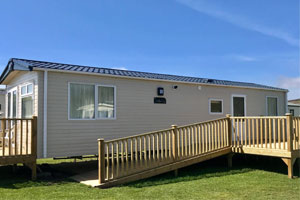
Pentewan Sands Holiday Park has just got more accessible thanks to a brand new wheelchair-friendly holiday home available to hire. The five-star family friendly holiday park based in Cornwall’s beautiful Mevagissey Bay, with stunning views across the park’s privately owned beach, now offers a completely accessible holiday home featuring all the latest home comforts for guests looking for a break by the sea. The new holiday home has been thoughtfully designed to ensure it is easy for wheelchair users to stay in, and offers accessible space and comfort with a sense of style. Roomy proportions and easy-to-access patio doors are featured alongside widened door frames throughout. The home also features a large wet room and 3ft divan beds in the bedrooms, sleeping up to six people. Nicole Murray, Marketing and Sales Manager at Pentewan Sands Holiday Park, said: “Our new accessible holiday home offers complete accessibility and that extra bit of room for manoeuvrability should it be needed. On top of that, it looks stylish and is the perfect spot for a getaway from it all. “We want to ensure that Pentewan Sands is accessible for everyone to enjoy a holiday on the Cornish coast, and are working hard to meet our guests’ needs. The new holiday home will be a great addition to our family-friendly park.” Accessibility is hugely important to Pentewan Sands. In addition to the new accessible holiday home, ramped decks have been added to 20 new holiday homes, and a new accessible toilet block available on site. A beach-friendly wheelchair is available, so that all visitors can enjoy the beautiful beach at Pentewan Sands, alongside a designated accessible van that is operated by the Scout Association. The site is on flat ground, making it easy to get around the park, and there are multiple disabled car parking spaces. Disabled access is available to the park’s leisure venue The Seahorse with a wheelchair-accessible lift to access the upper deck and main dining area, and extra wide doors, as well as modern disabled toilets. There is also ramp access to on-site supermarket Pentewan Stores, the reception area and the branch of Hubbox based on the beach. Pentewan Sands Holiday Park is home to a wide range of holiday homes and a large number of pitches for touring caravans, motorhomes and tents. It also has top-notch leisure, eating and entertainment facilities, including The Seahorse, which includes two swimming pools, soft play zone, a restaurant and an amusement arcade.
Line-up revealed for mental health arts festival

The full line-up for the All in the Mind Festival 2019 has been officially revealed. More than 30 exciting theatre, dance, visual art and musical acts from around the UK will descend on Basingstoke for one day only, to shine a light on mental health. Three stages will cover Eastrop Parkon Saturday 14 September – the Dance Space, the Spoken Word & Music Stage, and the Theatre Tent. Other acts and activities will also take place around the park. The free festival was started by Leigh Johnstone of Fluid Motion Theatre Company four years ago, to encourage performers and artists to explore mental health themes and to break the stigma that still surrounds many aspects of mental health and personal wellbeing. Leigh, from Bursledon, said: “I am delighted to announce the full line up for the festival – it is going to the most vibrant and exciting event we have put on. All of the acts are extremely talented and will provide fun, engaging and thought-provoking performances.” Performances will explore topics such as anxiety, abusive relationships, self-harm and the challenges of caring for people who experience mental health issues. Laura Greenway, from Basingstoke, will explore the physical and emotional effects of depression in an interactive performance. The audience will take up the role of ‘the illness’, constantly fuelling those afflicted with negative thoughts and intrusions. Laura said: “All in the Mind is such an important event as it encourages the public to be able to talk about issues surrounding mental illness, which in turn helps to dramatically reduce the stigma can surround mental health problems. Being an artist, whose work solely focuses on my own experiences of mental illness, I know how incredibly important the aim of this festival is, and I am delighted to have been a part of this unique festival since its first year. Talking about mental health problems can literally save lives, and so I am thrilled to be a part of this amazing and life-changing event.” Lots to do for children at mental health festival There will be many activities and performances suitable for younger audiences as well. Collar & Cuffs Co, who are based in Bedfordshire, will put on a musical sensory and play session for children up to the age of seven, that will explore the themes in William Shakespeare’s The Tempest. Julie Collar, Creative Director, said: “This is our second time at the festival: we are so passionate about what it stands for, and about having the opportunity of creating space for families to encounter topics relating to children’s emotional development. You’re never too young or have such complex needs that you can’t explore what mental health and wellbeing are, or to have a little toolkit of safe and healthy strategies you can use with your grown-ups or carers to feel soothed when feelings become overwhelming.” The All in the Mind Festival first started in 2016 with 79 visitors and last year’s event saw more than 1,300 people attend. The 2019 event promises to be the biggest and best yet and has received nearly £30,000 of funding from the Art’s Council. The festival is a culmination of a year-long programme of work by Fluid Motion, which includes working in schools and colleges to help young people build skills, increase confidence and self-esteem as well as working with adults with dementia using drama to help increase interaction, improve physical and mental wellbeing and reduce social isolation. The funding from the Arts Council is the largest amount of funding Fluid Motion has ever received. Fluid Motion has also recently become a partner of the Without Walls Creative Development Network; a network that supports arts organisations across England with peer learning, knowledge and skill sharing to organise and deliver new festivals. All in the Mind takes place on Saturday 14 September and people wanting to attend must register for their free tickets at aitmfestival.com