Gitcombe retreat offers accessible holidays in Devon
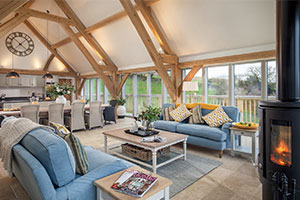
Gitcombe’s exclusive collection of nine 4* and 5* luxury self-catering properties now includes a ‘Retreat’ ideal for those with mobility needs to take accessible holidays. To mark its recent expansion, owners father and son, Rodney and Peter O’Brien, have partnered with national holiday letting agency cottages.com. The partnership will bring guests from across the UK to their luxurious holiday properties in South Devon, including its newly built Retreat for large gatherings. The Retreat is a stunning newly built property designed to emulate a restored barn, complementing the quintessentially British feel to the Georgian properties elsewhere on the estate. This latest addition recognises the need for a modern and accessible large property suitable for large parties and fully supportive of those with mobility issues. Prime location Gitcombe’s nine luxurious holiday properties are clustered in a private, south Devon valley, between Dartmouth and Totnes, close to an ‘Area of Outstanding Natural Beauty’. The “Gitcombe Retreat”, which accommodates eight adults and one infant, has been designed by award-winning architect, Roderick James and is a stylish and modern property in a commanding position on the Gitcombe Estate. Building work began in November 2017 taking ten months to transform the property into a stylish home full of charm and period features. The property has been built with a traditional oak frame design, which is fully glazed two sides and a private hot tub with spectacular far-reaching views across the majestic rolling countryside. Peter said: “Our vision which began in 2013, was to establish ourselves as a luxurious destination for those looking to explore South Devon. It’s been a real labour of love but we’re thrilled with the expansion and looking forward to tapping into the marketing expertise of cottages.com to encourage even more visitors from across the UK.” “We were keen to keep our focus on high level luxury, with sleek kitchens, elegant soft furnishings, luxury bathrooms, log fires, private patios, English pared down styling with a contemporary Scandi touch. We’re confident that holidaymakers will continue to appreciate the superior level of detail found in all of our properties.” The property benefits from modern luxuries with under floor heating throughout the property, designer bathrooms by award-winning Sapphire Spaces and a heat recovery system for the comfort of the guests. Disabled friendly One of the most important aspects for the owners when designing the property was to ensure that it catered for customers with mobility difficulties. Assessed by Visit England using the National Accessible Scheme, the property achieved ratings of Mobility One (older and less agile guests) and Mobility Two (part time wheelchair users). Access is directly through the main front door into the living area and the ground floor bedroom. There are flush thresholds throughout and the bathroom allows the wheel chair to access the shower and toilet. There is an inset hand rail leading to the shower and grab rails through out and a wheelchair on site for guests to use. The Retreat has four large bedrooms, accommodating eight guests and additional infants. With a stunning Fired Earth Limestone floor leading into a light, extremely spacious and impressive contemporary oak frame open plan living area, it’s a breath-taking space for special occasions and gatherings, with unspoilt views offering privacy and seclusion at the same time. Guests have exclusive use of the shared heated indoor and outdoor swimming pools, sauna and steam rooms, children’s indoor play area, outdoor hot tub and full size tennis court. Stunning surroundings Gitcombe near Totnes is close to a beautiful coastline, stunning beaches and the chic waterside towns of Dartmouth and Salcombe. Totnes has earned a reputation for eccentricity beyond the usual cream tea and antiques shop fare that characterises this part of the world. With its vintage clothing shops, independent shops, boutiques art galleries and interiors shops, over the years it’s attracted a boho crowd from London. Back in 2007 Time magazine tipped Totnes as the capital of New-Age chic. The Gitcombe Estate There are nine different self-catering properties at Gitcombe – including the very recent completion of Gitcombe Retreat which provides accessible holidays: Accessible holidays with real luxury Mark Warnes, Vice President of Property Services at cottages.com said: “This luxurious collection of properties, including the recent addition Gitcombe Retreat, offers an incredible line-up of stunning options for those looking to explore a pristine part of South Devon. The passion and dedication from father and son Rodney and Peter is evident in every property detail, making it a truly beautiful place to stay.” To book accessible holidays at Gitcombe Retreat (UKC3973), which sleeps eight in four bedrooms and costs from £1,224 for 3 nights, see cottages.com
Council Spending On Disabled Facilities Grants Reaches 10 Year High

Freedom of Information Requests submitted on behalf of A Wood Idea have revealed that council funding through Disabled Facilities Grants (DFGs) is at a 10-year high. Data from 73 councils in England shows that the collective spend through DFGs has grown by over 25%, rising from £75,000,000 in 2009/10 to over £100,000,000 in 2018/19, as an increasing number of people use the grants to fund essential accessibility adaptations to their homes. Of the councils who responded to the requests, Leeds City Council was found to spend the most on funding the grants, averaging £6,508,716 annually between 2009/10 and 2018/19. Manchester City Council followed in second place with an average spend of £4,654,900. Wokingham Council had the lowest DFG annual spend on average at £397,948, based on data supplied between 2014/15 and 2018/19. Slough Borough Council took second place with an average spend of £489,476, followed by Royal Borough of Windsor and Maidenhead’s £534,564. Waltham Forest Council’s spend increased the most across the 10 financial years, jumping from £978,113 in 2009/10 to £2,052,908 in 2018/19. This shows a 109% increase, which correlates with the growth in the number of DFG applications the council received — up from 78 in 2009/10 to 372 in 2018/19. In contrast, Hull County Council’s DFG spend had reduced by 42% between 2009/10 and 2018/19, dropping from £2,180,000 in to £1,247,000. However, the number of grants approved had roughly halved. Overall, councils in the North West had the highest collective average spend over the ten financial years at £25,952,343, averaging at £1,853,738 per year. However, councils in Yorkshire & The Humber are spending the most on DFGs on average, at £2,391,541 per year. Councils in the South East have the lowest average spend per year at £905,125, followed by Greater London with an average spend of £1,066,755. DFGs approved by Sutton Council had the highest value, averaging at £13,751. At the other end of the scale, Milton Keynes Council spends the lowest amount on average, equalling £3,766 per grant. Hollie-Anne Brooks, a respected journalist and a passionate campaigner for disability rights, became disabled a little over 12 months ago, and although she doesn’t have first hand experience of the Disability Facilites Grant she has spoken with countless people who have had their lives changed for the better by the grants. “Although I haven’t personally applied for a DFG, I know full well the positive impact they can have on a person’s life. Small changes matter a great deal and something that may seem minor can have such an enriching impact on the life of a disabled person – both from an accessibility point of view but also in terms of their mental health. Though it’s great that the money is available when people need to access it, one of the major problems we currently have with the grant is awareness. Although it’s positive to see that spending across councils on DFG’s generally seems to be increasing, it’s critical that the people who need it most are aware that these life-changing grants are available to them.” Council DFG Spend Most DFGs Issued1. East Riding of Yorkshire Council – 1,587* 2. Leeds City Council – 917 3. Manchester City Council – 815 4. Liverpool City Council – 431 5. Wirral Council – 390** (2018/19 data not supplied) *based on 6 years of data only, from 2013/14. ** 2018/19 data not supplied. Fewest DFGs Issued 1. Sutton Council – 44 2. Merton Council – 61 3. Slough Borough Council – 62 4. London Borough of Redbridge – 74 5. Royal Borough of Windsor and Maidenhead – 75 Highest DFG Spend on Average 1. Leeds City Council – £6,508,716 2. Manchester City Council – £4,654,900 3. Liverpool City Council – £4,523,800 4. Kirklees Council – £2,547,621 5. Wiltshire Council – £2,274,000 Lowest DFG Spend on Average 1. Wokingham Council – £397,948*** 2. Slough Borough Council – £489,476 3. Royal Borough of Windsor and Maidenhead – £534,564 4. Sutton Council – £601,991 5. London Borough of Lambeth – £609,355 ***Based on the average spend for the data provided between 2014/15 and 2018/19.
Top tips to help someone live independently

Gavin Bashar, UK Managing Director of market-leading provider of Connected Care and Health solutions Tunstall Healthcare, advises ways that carers can help those they care for live independently for longer. According to research released by Carers UK, over 6.5 million people in the UK dedicate their time to caring for their loved ones. For many older people, or those unable to physically care for themselves, independence means being able to stay in their own homes, however this can sometimes have a detrimental impact on the mental and physical health of their carer. With the help of technology, medical advice and support from loved ones, caring for someone at home doesn’t have to be such a mammoth task. Prepare the home “Telecare and telehealth have a vital role to play in supporting carers and the people they care for. Telecare is a system of wireless sensors placed around the home, which immediately detect risks such as fires, floods and falls. As soon as any risk is detected by one of the sensors, an alert is sent to a telecare monitoring centre via a central Lifeline home unit using the phone line or mobile network. Users can also wear a pendant device around their neck or on their wrist, which enables them to request help 24 hours a day, 365 days a year from anywhere in their home. Alerts are received at a specialist monitoring centre where trained operators can talk to the user via the Lifeline and send an appropriate response, such as a family member, keyholder or emergency services. These connected communication systems can also be used to alert a carer in the home directly via a pager, or during the night by a vibrating pad under the pillow. “For carers, telecare offers round the clock reassurance and can give the opportunity to have some well-deserved ‘me’ time, leaving them safe in the knowledge that the person they’re caring for has a means of calling for help when they’re elsewhere in the property or away from home. “Telecare works best when implemented alongside carer support, so it isn’t intended to replace vital human interaction. It does, however, aid carers struggling to manage the emotional and physical needs of their loved ones.” Emergency contacts and procedures “For older people living independently, it’s important to be prepared because in the event of a fall or medical emergency, every second counts. Make sure there is a log of all required medicine, allergies and emergency contact details at an accessible place in the home. It’s important to have a rota of people checking in on the house and leave a key in a key safe, so they can gain entry in the case of an emergency. It’s also a good idea to ensure the key isn’t left in the lock inside the door, preventing access from outside. “Whilst technology can never replace human contact, it can help carers to continue to care, enabling them to leave the house or get a good night’s sleep, confident they will be alerted if a crisis occurs.” Emotional support “Both carers and loved ones can fall victim to loneliness and isolation, so it’s important to ensure both parties are getting the right support. Calling in help from friends and family will alleviate the pressure on carers and allow them to complete day-to-day tasks, go on holiday or see friends. “Not only will this free up time to take a break, it will provide variety and stimulus for the person that is being cared for. Most local authorities and charities offer some kind of sitting or befriending service, in the case where friends and family are not available. Depending on how much support is needed, check-ins may also be in the form of a regular phone or video call. “Other options include investing in a smartphone or tablet, to help the individual living at home to stay connected with friends and family. This also provides the option for a phone conversation where a physical visit isn’t necessary, freeing up the carer’s time to do other things. Many local communities run beginners computer lessons or basic exercise classes, activities which will keep people engaged and help give them a sense of purpose, something we all need.” For more information, please visit: https://uk.tunstall.com/solutions-social-care/
Social care provider holds heart-warming community soup event

A social care provider hosted a Soup Event at Westmead Day Centre to bring the community together and give local organisations the opportunity to raise awareness and pitch for funding for their community project. The event, organised by Optalis, provided an opportunity for members of the community to listen to a variety of community project ideas. Through a secret ballot, attendees chose a project and were awarded with funds raised during the evening, match funded by Optalis, and will be later used by the winning organisation to invest in their ideas. The idea of a Soup Event originated in Detroit and has since been introduced to communities across the UK. It is a crowdfunding event for local people and local causes. The main goal of this event was to support local projects in the Wokingham area. In addition to raising vital funds, the event, held on 18 July, was also a chance to create community connections and networking opportunities. The evening inspired organisations that attended to build relationships and establish future collaborations. Along with bread and refreshments, soup made by the Optalis Bridge that Gap café and Munchbox was also served at the event. Bridge that Gap café and Munchbox provide individuals with learning disabilities an opportunity to gain customer service skills by serving freshly made lunches whilst working towards paid employment. This year, three local organisations attended the event with the purpose of ‘pitching’ their ideas to all attendees. The organisations were Wellbeing in Wokingham Action Group, who support the emotional and mental wellbeing of people in the Wokingham Borough; Kaleidoscopic UK, an organisation supporting families who have experienced domestic abuse in the area; and Building for the Future, a parent-led charity that provide activity, support and therapy for children with disabilities and/or additional needs and their families. The winner of the night, Kaleidoscopic UK, hopes to use the donation to train five of their volunteers to facilitate the freedom programme for children who have experienced domestic abuse, an initiative not currently available in the area, as well as prevention classes in schools, services and other organisations. Jodie Reichelt, Customer Experience Champion at Optalis, commented: “This event combined simplicity and purpose, by providing the opportunity for those who want to fulfil the potential of their community and make it a better place to live. We are delighted that it was a wonderfully rewarding evening which enabled organisations to meet each other and discuss ideas. We would also like to congratulate Kaleidoscopic UK on their win and wish them every success for the future.” Vickie Robertson, owner and founder of Kaleidoscopic UK, added: “I am still speechless and so grateful for taking part in the event. It offered local organisations like Kaleidoscopic UK so many remarkable connections and it was incredible to have won. I would like to thank Optalis for the unique opportunity at their wonderful event.” Optalis provides a variety of tailored care and support services to older people, people with dementia, learning disabilities and/or physical disability and mental health conditions. For more information about Optalis, contact 0118 977 8600 or visit www.optalis.org.
One in seven hospitals charges for disabled parking

One in seven hospital sites now charges for disabled parking, an increase of 12 per cent in a year. The figures, from NHS Digital, emerged as it was revealed that one of England’s flagship hospital trusts is poised to make disabled patients and visitors pay for parking. Disabled people were charged up to £2.70 per hour at 155 hospital sites across England in 2017/18, up from 139 in 2016/17, 135 in 2015/16 and 132 in 2014/15. Hospital parking is free in Scotland and Wales but patients and visitors in England paid a total of £156.8 million in fees in 2017/18. Campaigners said the charges were “disgraceful” and “discriminated” against disabled people. They warned they could lead to patients missing appointments and being prevented from accessing vital care. Matt Hancock, the health secretary, was confronted over the issue last week at a leadership summit at the King’s Fund in London, but did not respond to questions about whether he would support scrapping fees for disabled parking at hospitals. A spokesman for the Department of Health and Social Care said later that “patients and their families should not have to deal with the extra stress of complex or unfair parking charges”, but that hospitals had the power at a local level to decide whether to charge. Chelsea and Westminster Hospital NHS Trust, which serves 1.5 million patients in London, is expected to be the latest to announce a new fee for disabled parking at its Chelsea-based site. The hospital offers free parking to blue badge holders with an appointment letter for that day but managers want to bring in a fixed fee of £3 per day for disabled parking, in a bid to increase revenue by nearly £60,000 a year. Regular parking on the site costs £3 for up to an hour, £7 for one to two hours and up to £40 for a ten to 24-hour stay. The nearest Tube stations are a 15 to 20-minute walk away, making access via public transport difficult for wheelchair users. Kush Kanodia, a disability rights campaigner and an elected patient governor of the trust, raised the issue with the health secretary last week. He said: “Disabled people are less able to afford the charges and they are more likely to be using health services more regularly. It is direct discrimination. “We should be helping these people, some of the most vulnerable in our society, to access care – not putting in barriers and costs.” Rachel Power, chief executive of the Patients Association, said: “Patients who have disabilities have traditionally had access to free spaces at many hospitals, so we are very concerned to see more and more hospitals withdrawing these spaces. “Anyone calling for changes to hospital parking charges needs to reckon with the fact that they bring in funding for hospitals at a time when money is tight. We’d like to see a full funding settlement for the NHS that enables all charges to be scrapped. But the fact that even spaces for disabled people are now being charged for on a wide scale shows that the financial situation is still going in the opposite direction, and getting worse. Jonathan Ashworth, Labour’s shadow health and social care secretary, said: “What an absolute disgrace. We need these car parking charges binned. It’s time ministers intervened and sorted this out.” Disabled patients at Chelsea and Westminister Hospital in receipt of certain benefits can claim back charges by submitting claims to the trust. However, Mr Kanodia described this as putting “an additional administrative burden” on disabled people who may already be struggling to navigate the health system. A health department spokesman added: “Our guidelines make clear that concessions should be offered, including for disabled parking, and we expect trusts to be following these. “We will continue to work with the NHS to ensure these principles are applied consistently to end variation and put the interests of patients first.” A spokesman for the Chelsea and Westminster Hospital NHS Trust, said: “This is a very difficult decision to make in a challenging financial climate. An assessment was made that there was inequality in the current system in charging all other groups, including disabled users at our West Middlesex site. We intend to use the income generated to reinvest in facilities and clinical resources for our disabled patients, which include plans to increase the number of disabled parking spaces.”
From ‘unable to walk’ to running a miracle marathon with Chris Evans!

How alternative therapies defied a long term medical prognosis Four years ago, Susie James had chronic pain in her arms, hands, knees and feet; any movement was extremely painful; walking was problematic. She was diagnosed with Rheumatoid Arthritis and presented with a bleak outlook by her rheumatologist; life-long medication to control her symptoms. But last weekend, 58 year old Susie ran the London Marathon alongside celebrity DJ Chris Evans, fuelled with an inner energy she had never experienced. A stark contrast to barely being able to shuffle around her own home. Despite the medical advice from her consultant, Susie decided to look at alternative therapies for her condition. A friend recommended she booked a one-to-one session with Matt Pepper; a practitioner who addressed underlying mental and emotional factors to improve wellbeing, along with prescribing a tailored set of homeopathic remedies to help the body and mind self-heal. Susie said: “The doctors were very keen and persuasive that I took medication and even though I was at my most vulnerable and perhaps could have been persuaded into medication, for some reason I didn’t want to do that. My dad was a GP so I’m not completely anti-medication, but I thought there may be another way, but I really didn’t know what that was. I didn’t want to start taking something – being on that lifelong path just didn’t seem like the right thing.” “I’d hit some real lows. Points where I thought this was ‘it’, that there was going to be no change, that this was going to be something that was going to get worse, and I’d have to just live with it. But I didn’t want to look weak, I was bringing up kids as a single mum – I didn’t really ask for help or talk about how I was struggling. Side effects can be extreme fatigue and depression. It was a bit of a shock as I’d always been a strong person, an entrepreneur so that didn’t go well with my own self image.” But as she started visiting Matt she remembers how the pain started to lift: “When I met him, he instilled something that maybe woke up a little spark inside me, it made me feel that there’s hope. Something about his manner and belief in the ability to heal from the inside. I remember getting off the sofa to go and make his tea and could hardly walk, my feet were agony. And I would be saying, “Yeah my elbow hurts, my shoulder hurts, and my knees hurt today.” There would be different outbreaks of joint pain, in different areas of my body, which seem to flair up. Which are very common symptoms of RA.” “We chatted about different life situations and how I saw them. I thought I had good self-awareness but I started to realise that there was disconnect between how I felt on the inside and what I was trying to maintain on the outside. So as the story unfolded, and started to be expressed, it released a little bit of the pressure in myself. And so, it seems the pain started to subside.” “He’d prescribe homeopathic remedies to help with improving how I felt and over time I began to lose my fear of expressing myself and was starting to become more authentic about how I felt emotionally, or what was going on in my life.” Gradually Susie felt motivated to start exercising again and her creativity and energy started to flow. Six months later she went back to see her consultant: “The last time I had seen him he was just about to go to one of the biggest rheumatologist conferences in the world as one of the lead speakers – and there I was arguing against his medical advice. But I have it in writing that when I then went for my check-up, he wrote back saying, “Well, the results were pretty good, actually. And I am happy for you to continue with alternative remedies for your situation.” And he had to admit that whatever I was doing was working. I’m now pain free and not on any medications all all. Last weekend she ran her first ever marathon in 5hrs.26: “I wouldn’t even have watched the marathon let alone take part in one! But I had bid for a place on the Children in Need auction with Chris Evans – and it was absolutely incredible! I beamed the whole way round. I was smiling the whole way, even when it got really, really tough…it was just the most spectacular experience.” “I’m a million, million, million times happier. I feel really alive! To think that I’ve got this medal for running the marathon. It’s made me look at myself totally differently. It’s about me tackling things from lots of angles; my emotional health, being authentic, being me, reducing stress levels and finding more happiness…the whole lot. I’ve learnt it’s about the whole person and not just the symptoms.”
Rosette of approval for local horse-riding centre following AkzoNobel makeover
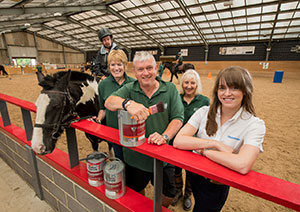
A popular North East horse-riding school specialising in therapeutic riding sessions for people with disabilities has been given a new lease of life thanks to a generous donation from AkzoNobel Ashington. The Pegasus Centre, which is home to the Morpeth group of the Riding for the Disabled Association (RDA), received over 100 litres of specialist paint from the manufacturing giant, including Dulux Trade Weathershield Exterior High Gloss, Dulux Trade Weathershield Exterior Flexible Undercoat, Dulux Trade Weathershield Smooth Masonry Paint and Cuprinol Ultimate Garden Wood Preserver to refresh its indoor arena and stable block ahead of hosting a major regional competition. Having been selected by the RDA to host the 2019 Northern Regional Championships earlier in the summer, staff and volunteers at The Pegasus Centre set about preparing for the event, writing to a number of local businesses to seek support for the rejuvenation of the Centre ready to welcome riders of all ages and abilities from RDA groups across the North East and Cumbria. One of the trustees at Morpeth RDA, had read about another project that AkzoNobel had been involved with locally and decided to reach out to them about the possibility of supplying some paint. “We’re very fortunate to have such a fantastic facility here in Morpeth but in order to make the best first impression possible ahead of the competition, we wanted to tidy the place up a bit,” said Sue Thompson, trustee at Morpeth RDA. “While our ground rent for The Pegasus Centre is covered by Active Northumberland, Morpeth RDA is first and foremost a charity, so we rely on fundraising and the generosity of our corporate partners and volunteers in order to maintain the Centre and improve our services for the people we support. “The paint provided by AkzoNobel completely transformed our indoor arena and stables, we were also able to paint the outside of our main barn using special masonry paint which has made a big difference to the overall look of the Centre. Seeing the Centre looking so bright and clean really lifts the spirits of our volunteers but it also has a positive impact on the children and adults that we support with riding and of course, our horses and ponies too.” Established nearly 50 years ago, Morpeth RDA provides therapeutic horse-riding sessions for children and adults aged 8 to 68 who suffer with multiple and complex learning and or physical disabilities. Riders can experience up to 1,000 different beneficial movements with every ten minutes they spend on horseback which not only provides excellent physiotherapy benefits, but also helps to build confidence, which in turn can improve riders’ communication skills. The Northern Regional Championships, which preceded the RDA’s National Championships in which 14 of the Centre’s riders competed, gave some of the Centre’s regular riders the chance to take to the saddle and show off their skills in both the dressage and countryside challenge categories. Competitors of mixed ages and abilities were scored on factors such as control and communication with their ponies as well as competency and skill. Alex Wardle, process engineer at AkzoNobel Ashington, commented: “AkzoNobel believes in the power of colour to transform lives. We are committed to helping community organisations like the RDA, and showing the world AkzoNobel Cares, with donations of paint and volunteering time wherever possible to help uplift communities, change behaviours and make living and working spaces more fun, inspiring and enjoyable. “We were delighted to make a donation of paint to the Morpeth RDA group and we’re thrilled that the makeover has been so well received by staff, volunteers and the people who use The Pegasus Centre.” AkzoNobel is the world’s leading manufacturer of decorative paints and coatings, with household brands including Dulux, Dulux Trade, Cuprinol and Hammerite. Opened in September 2017, AkzoNobel’s £100 million site in Ashington is regarded as the world’s most advanced and sustainable paint manufacturing facility. For more information about AkzoNobel, visit www.akzonobel.com or for more details about Morpeth RDA, visit www.morpethrda.com.
A deal which could transform the learning disability sector

Tech and care industries unite to unveil case for a deal which could transform the learning disability sector. A new report is being launched in Parliament today setting out the case for a deal for the learning disability sector, focusing on realising the potential of technology to boost investment and transform the way care is delivered. National learning disabilities charity, Hft, supported by Tunstall Healthcare, produced the paper outlining the key arguments for an economic partnership with the government as part of the UK Industrial Strategy – a long term plan for the future aimed at backing businesses to drive productivity through investment in skills, industries and infrastructure. The report, which is being officially launched at the House of Lords, highlights the challenges faced by a social care sector in financial crisis at a time when demand is growing. Hft and Tunstall believe the successful negotiation of a learning disability Sector Deal would enable effective investment that could unlock the potential of assistive technologies. In turn, this would stimulate innovation and investment in future services, bring financial sustainability to providers within the sector, and ultimately deliver enhanced outcomes for people with learning disabilities. To mark the launch of the paper, more than 100 guests, including MPs, Peers and civil servants, as well as social care providers and telecare organisations, are expected to attend a reception on Monday (15th July) in the Cholmondeley Room, hosted by Hft Chair of Trustees and Liberal Democrat Health and Social Care Spokesperson, Baroness Jolly. Hft Chief Executive, Robert Longley-Cook, will present the need for a Sector Deal, and Managing Director of Tunstall, Gavin Bashar, will highlight the benefits of including technology in services. A person supported by Hft will also speak about the positive difference that assistive technologies have made to the support that they receive. William, 22, from Bedfordshire will be sharing his personal experience of how technology helped him to achieve his dream of living independently in the community. He uses a key fob to enter his home, which can be deactivated and replaced if lost, and has a lifeline phone and pendant alarm to use to call for help in the event of an emergency. William, who has autism, said: “I feel safe and secure knowing I am only one button away from calling anyone at any time.” The event also marks the official launch of Hft’s new Virtual Smarthouse. The online house showcases examples of assistive technology which different vulnerable groups can use around their home to improve their independence and quality of life, and increase their safety. On the day, attendees will be invited to pledge their support for the Sector Deal and have the opportunity to be involved in shaping what that would look like. Robert Longley-Cook, Hft’s Chief Executive, said investment in the sector is desperately needed. “As it stands, the learning disability sector accounts for around a third of adult social care spend in England and demand is growing rapidly as life expectancy increases. Despite increased demand, local authority expenditure has not kept up, leading to an anticipated funding gap of £5 billion by 2020. “With the funding crisis affecting the sustainability of adult social care, the sector and the government must come together to successfully negotiate a learning disability Sector Deal. “Assistive technology has a key part to play in bridging that gap. Effective investment could transform the way support is delivered to people with learning disabilities and increase their independence, ultimately freeing up staff to focus on more meaningful support. “We believe a Sector Deal will stimulate investment and innovation and ultimately deliver improved outcomes for the people supported by the sector.” Gavin Bashar, UK & Ireland Managing Director of Tunstall Healthcare commented: “We support millions of people around the world, using technology as part of person-centred services to enable independence and freedom. However, not enough people with learning disabilities are currently benefitting from the advantages that assistive technology (also known as telecare) can bring. “Assistive technology can make a positive difference to people with all kinds of disabilities, and in a variety of living environments. As well as managing risks, technology can aid communication, deliver greater privacy and dignity, and give people more control over the way they live their lives. “Tunstall is proud to support the Sector Deal proposal, and its aim of delivering wide-ranging economic benefits and progressing towards a better future for people with learning disabilities in the UK.” To read the report in full, visit www.hft.org.uk/LDSectorDeal
Unique salon for people with learning disabilities opens its doors

Bradford’s first beauty salon exclusively for adults with learning disabilities has opened its doors with the help of celebrity hairdresser, Andrew Collinge. Mirror Mirror is located at The Learning Zone, which is just one of many day opportunities run by national learning disability charity, Hft. Based on Preston Street, the beauty room will offer people a chance to enjoy some pampering ranging from hair styling and hand massages to manicures. For those interested in gaining a flavour of the industry, there will also be opportunities to work towards a professional qualification. Starting from September, a group of six to eight adults with learning disabilities are set to be trained up by qualified beauticians at the service over the course of an academic year. Budding salon managers will gain experience of the day-to-day running of a beauty room, as well as washing, styling and straightening hair, all contributing towards a Level 1 qualification in hairdressing. Plans for the salon have been in place since last year, when staff at The Learning Zone, which offers classes to almost 90 people a day, realised there was a gap in the market for people with learning disabilities to either gain some new hair and beauty skills or enjoy a treatment. The venture was funded with the help of Andrew Collinge and his family, who raised over £10,000 towards the £16,000 project through donations and various fundraising activities including a raffle and golf day over the last year. Further funds were raised by the charity through bag packing initiatives at local supermarkets, a sponsored Mount Snowdon climb and a Christmas concert. The salon officially opened for business on Wednesday (31 July) with a ribbon cutting ceremony where Andrew Collinge and his wife Liz enjoyed some drinks and refreshments with guests including staff and people supported at the service. To mark the occasion, the two-time British Hairdresser of the Year demonstrated how to straighten the hair of Geeta, who is supported at the service. More than 20 guests were able to take a first look at Mirror Mirror, which boasts a range of state of the art equipment including three styling stations, accessible back and front hair washing facilities, two nail bars and a massage chair. People supported at The Learning Zone will have the chance to enjoy some regular relaxation, with treatments like hand massages proven to boost wellbeing. Maxine Kneeshaw, Area Manager at Hft, said: “We’re so excited to be opening Mirror Mirror. People with learning disabilities don’t always have access to the same opportunities as everyone else so The Learning Zone supports them to do something new and expand their skill sets, leading to increased confidence and potentially even employment. Our new beauty room is a great example of this, providing people we support with a stimulating environment where they can learn something new or simply take an hour to relax and feel pampered. “Andrew Collinge and his family have been instrumental in getting this unique project off the ground and we’re so pleased they could be here today to celebrate us opening our doors.” Andrew Collinge said: “It was an honour to have been invited by The Learning Zone to open the Mirror Mirror salon. I love the new salon, it’s light and airy and I’m sure it will be very popular. Congratulations to everyone involved and good luck to the salon team. “Liz and I came away from the The Learning Zone totally inspired by what we had seen and heard.” Hft supports adults with learning disabilities, providing person-centred services ranging from flexible day support to supported living at home – from a few hours a week to 24 hours a day.