Sight Loss Councils Share Stories
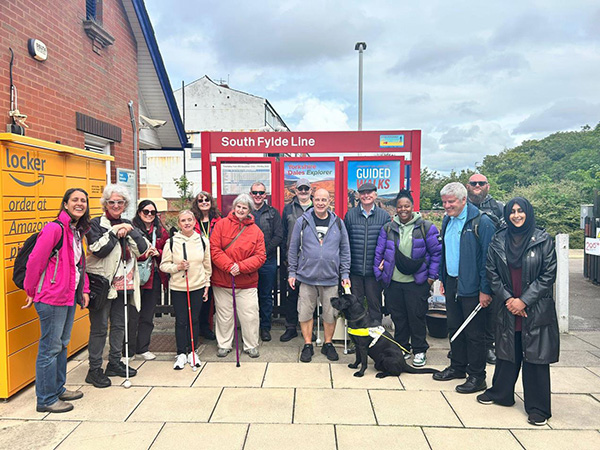
Sight Loss Councils, led by blind and partially sighted (BPS) volunteers, are sharing their rail travel stories as part of this year’s Railway 200 celebrations, marking 200 years since the birth of the modern railway. They are also encouraging others to travel by train to build confidence and independence. Sight Loss Councils (SLCs), funded by Thomas Pocklington Trust, are regional groups led by blind and partially sighted volunteers. These volunteers use their lived experience to shape inclusive services, influence decisions, and improve accessibility in local communities. Access to public transport has been a key priority for SLCs. This follows feedback from blind and partially sighted people during the 2023 Listening Month consultation, where 65 per cent of BPS respondents identified it as a top concern. Blind and partially sighted people – who are unable to drive – are heavily reliant on public transport for daily life, to socialise with friends and get to work. Making transport accessible enables them to be more confident, safe, active and independent. When local transport is not accessible, many risk becoming isolated. How have rail experiences changed for blind and partially sighted people? As part of the Railway 200 celebrations, Birmingham and Black Country SLC member Steve Keith, who is registered blind, shares his personal story of how improvements in rail travel have helped him feel safer, more confident, and more independent – recalling how older train doors could previously be opened before stopping at a station, putting him at risk of walking out of a moving train. He explains: “Modern trains are far more accessible and customer-friendly, especially from a disabled passenger’s point of view. It’s now much easier for me to visit family in Scotland 400 miles away, and to meet friends in Birmingham city centre. “Tactile paving at the edge of platforms has also made a big difference. It might sound small, but knowing I won’t accidentally walk off the edge has a very real impact on how, and when, I choose to travel.” SLC member Mike Wright, also registered blind, has shared his personal story of how he travels by train to go dragon boat racing. He said: “Tactile platform markings, whilst they might seem minor, compared to high-tech innovations I’d argue are one of the most safety-critical features introduced for blind and partially sighted people, alongside central locking train doors.” Passenger assistance has also had a major impact on BPS passengers’ ability to travel independently and safely, alongside improvements in signage and station navigation. Passenger assistance provided by train companies aims to offer assistance with a range of measures, including but not limited to navigating stations, boarding and alighting trains, and finding seats. Steve explains: “Since the introduction of Passenger Assistance, my journeys have become much simpler – and most importantly, safer. A member of staff now guides me around the station and onto the train. Thanks to the passenger assistance app, they can also notify my destination station about where I’m seated. This makes it much easier for staff to find me when I arrive.” Progress and impact As transport has evolved over the past 200 years, so too has accessibility. Since their inception in 2017, Sight Loss Councils have witnessed some positive changes for blind and partially sighted people through their collaborative work with transport operators and wider partners. SLCs have for example: Real-life impact Try a Train events are designed to help participants build confidence in travelling by train, from navigating stations to getting to know the train layout. Alan Rankin, who travelled by train for the first time since losing his sight at a Try a Train event in Lancashire, explained: “I was extremely anxious about going on a train… But this was a massive first step for me, and I’m so glad I went.” Nolene Wright, who also attended the Try a Train event, said: “Not only did it give me an opportunity to chat with other blind and partially sighted people, but it really helped boost my confidence to travel by train in the future.” Carl Martin, Accessibility Lead at Govia Thameslink Railway, said about their work with Sight Loss Councils on increasing access: “Working alongside blind and partially sighted people who have that vital lived experience is so important to us. The power of their expertise in helping us plan and introduce a navigational guiding app across all our stations, along with other initiatives, is invaluable in increasing independent travel.” We need to make rail travel accessible for all But there is still much work to be done and challenges remain. For example, there is a lack of consistency across the country around accessible and easily navigable stations, ticket machines and apps for bookings, and passenger assistance services including for trips that cut across multiple regions. Steve shared: “I’d love to see more staff trained to use the Passenger Assistance App properly. There have been times when my journey was cancelled on the app without explanation, leaving me stranded and unsure how to exit the platform safely.” Sight Loss Councils plan to continue working with operators nationwide to improve accessibility and raise awareness by sharing their lived experiences and expertise as BPS passengers. Steve adds: “I would always encourage other disabled people to share their positive travel experiences too. Sharing our stories can help build confidence and encourages more blind and partially sighted people to explore and enjoy events and new places. And if you’ve had a negative experience, I encourage you to give constructive feedback. Sharing feedback with operators is how they can learn and improve. “This is exactly what the Sight Loss Councils are doing – working in partnership with train operators to make travel safer and more accessible. Everyone has the right to travel independently and safely, and live the lives they want to live.” Learn more about Sight Loss Councils and their work to make transport accessible at www.sightlosscouncils.org.uk
A fantastic partnership for Fox and hound – a support dog
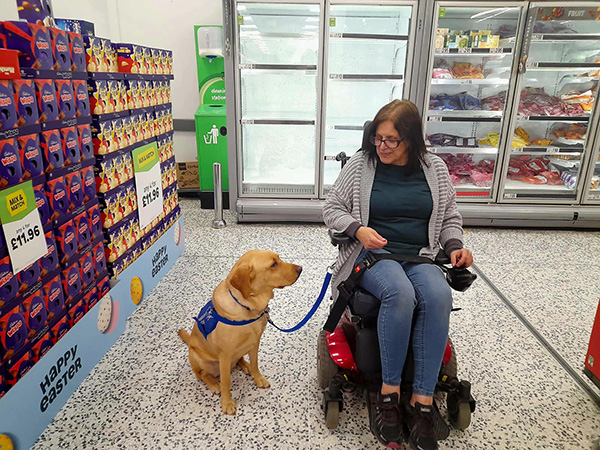
When Grace Fox was younger, she led an active life. A former beauty therapist, she loved to ice skate at her local rink in her spare time. But when she was 22, she developed an eye problem – which was an early symptom of Multiple Sclerosis. “I lost part of the vision in my left eye, which I still haven’t got back,” said the 64-year-old from Brighton, whose mum also had MS. Grace later had two daughters, Adele and Hannah, and was well enough to care for them, but as she got older, she developed problems in both legs and began using a wheelchair 10 years ago. After her husband William passed away, she found herself feeling increasingly isolated. That’s when she looked into getting her pet dog, Lucy, trained as a support dog. Thanks to the national Support Dogs charity, the three-year-old yellow Labrador is opening doors both figuratively and literally for Grace. Now Grace, who lives with Adele and Hannah, feels a lot less isolated at home, and knows her daughters have peace of mind when they go out to work, assured that their mum is in safe paws. “Lucy has made a big difference,” said Grace. “She can help me take off my socks and shoes and another thing she is really good at is touching the footplates on my wheelchair – she knocks them down and I can put my feet up, which otherwise would be really difficult for me to do for myself.” Lucy can even load and unload the washing machine – another fantastic help to Grace. She can also pick up and fetch objects, raise the alarm, open and close doors and push access buttons. “She does fetch help – she can press my Care Link button if I have a fall,” added Grace. And as well as practically, Lucy is also boosting Grace’s sociability. Before her MS, which is secondary progressive, Grace loved being around people. “When I was a beauty therapist, I used to have people come and have home treatments – I was always used to having people around me. “With my MS, it can be very isolating, especially when I stopped driving. “But with Lucy, she brings friends – a lot of people come up and talk to us, especially when they see her in her Support Dogs jacket. “We also take Lucy along to a choir and she loves meeting people there. She also comes to an art group and writing group. She pushes buttons to open doors. She’s also been learning to go to the cinema with me – she comes and sits through the film with me.” The family got Lucy as a pet when she was just 10 weeks old and tried training her themselves. But then Grace heard about Support Dogs, a charity, which trains specialist assistance dogs to help autistic children, as well as adults with epilepsy or a physical disability to live safer, more independent lives, and she was so impressed, she applied for training in late 2023. Grace said: “I saw it in my MS magazine about how wonderful these dogs were and how they could be trained to help you. “What Lucy has done is given me confidence to help me in many aspects of life. “I lost my husband and you lose going out with friends and doing things, she’s now given me the opportunity to try and go out by myself and hopefully get on the bus or go in the car.” The pair began training in November last year and they have recently graduated as a successful Support Dogs partnership. “I was fit and had no idea I would have problems walking or not be able to do things one day – you have got to do everything you can, when you can,” said Grace. “I think what Support Dogs does is brilliant. “It helps disabled people to keep going, to carry on and enjoy life.” To find out more about the incredible work of Support Dogs, please call 0114 2617800 or visit www.supportdogs.org.uk
Cambridge special autism school celebrates first ever GCSE results
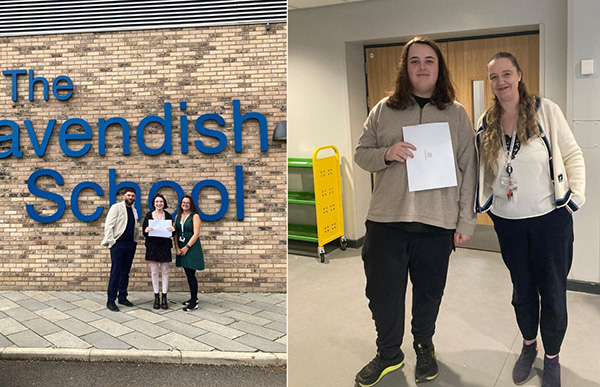
This August, The Cavendish School, Cambridgeshire’s first state-maintained free school for autistic students, is celebrating the “enormous achievement” of its first ever cohort to sit GCSE exams. More than half (54 per cent) of its students, who all have Education, Health and Care Plans (EHCPs), achieved a Grade 4 or higher in English and Mathematics. Nearly 40 per cent (38%) of students at the school achieved a Grade 5 or higher in English and Mathematics, exceeding the 2022/2023 national average of 6.9 per cent for students with an EHCP. Freya C., achieved seven GCSEs, four of which were graded 8 or 9, and will study Biology at The Cavendish School’s Sixth Form. Matthew W., will also continue onto the school’s Sixth Form to study Maths and Science after he achieved two Grade 8s in his Science GCSEs. The school, which opened in 2021 for autistic students in Years 3 to 13, is the first state-maintained special autism school in the world to offer the International Baccalaureate (IB) Primary Years Programme (PYP). The educational framework is rooted in inquiry-based, transdisciplinary learning and develops students’ academic growth and their social, emotional and physical wellbeing. Students build on the skills and knowledge that they develop in Years 3 to 8 during a transition year before commencing their GCSE studies in Year 10. To prepare students for success in their exams, students complete entry-level qualifications from Year 9. A gradual, trauma-informed approach to weekly and end of unit mini assessments also normalises the process of testing knowledge throughout students’ time at the school. Stephanie Smith, Head of School and Director of Autism Education for Eastern Learning Alliance, said she is ‘extremely proud’ of the students’ accomplishment. “Anxiety is common in autistic children and, as such, the exam period can be challenging for them. An important part of their experience at The Cavendish School is to normalise the assessment process and build students’ confidence so that they feel ready to sit their exams. Over the past four years, it has been incredibly gratifying to see our students achieve their personal and academic aspirations, and we are tremendously proud of every single one of them.” This year’s cohort will also be the first to have the option of progressing to the school’s new Sixth Form, which opens in September 2025, where they will be able to pursue an Open University Level One module Qualification. Credits from this module can be used towards further Open University qualifications, or like A Levels, to meet the entry requirements at a variety of universities including Anglia Ruskin University and Goldsmiths University of London. Alongside this, students will also benefit from work or volunteer experience and continued therapeutic Personal Learning Goal (PLG) support. Smith said: “At The Cavendish School, we aim to break down the potential barriers to education facing autistic young people to help our students to become independent, emotionally and socially confident young adults. Qualifications such as their GCSEs are a significant step on this journey and I am look forward to welcoming many of our students back in September, when they join our Sixth Form.” To learn more about The Cavendish School, visit: https://thecavendishschool.org.uk/
Model Disability Award 2025
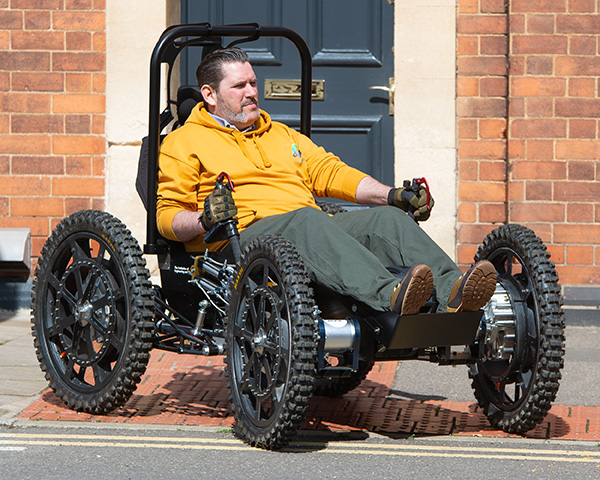
Nick Wilson, 49, from Towcester, aka Disabled Adventurer, has been shortlisted for the Positive Role Model Disability Award at the 2025 National Diversity Awards for his exceptional work promoting disability awareness and accessibility. His mission is simple: to open the world up to make the outdoors and adventuring more accessible for everyone, wherever they are. Whether going up a mountain or his local high street in his wheelchair, Nick shares his journey to show how making the great outdoors accessible to people has the power to change lives. A former Sergeant in the British Army, Nick’s 14-year service included deployments to Northern Ireland, Kosovo, Iraq and Afghanistan. His distinguished Army career ended in 2013 when the culmination of injuries sustained from carrying too much heavy equipment left him physically incapacitated. Nick lives in constant pain from seven prolapsed discs and a degenerative disease of the spine and is unable to sit or stand up for longer than 10 minutes. Compounding this, he has PTSD from his time on the front line. Despite these setbacks, Nick has transformed his personal challenges into a powerful platform for advocacy and change. Rock bottom When he came out of the Army, Nick started a chauffeur business working for himself. “I saw it as my coping mechanism. I worked 16+ hours a day, seven days a week to keep myself busy. But it drove me over the edge,” Nick admits. He started to make bad choices, lost money and was told he couldn’t have contact with his daughter. “I hit rock bottom and attempted suicide in August 2016. I simply saw no point to my life if I couldn’t see my daughter,” he says. Nick spent time in residential rehab for his depression and PTSD and during this period saw a path ahead of him. “When I came out, I started a consultancy dealing with mental health issues for others and founded Talk Mental Health, a charity aimed at supporting men facing challenges. This was important as I knew first-hand that waiting lists are very long – too long – if you have a serious mental health problem.” Vicious circle for disability community “When people think of accessibility they think of infrastructure. Community and social groups are vital for our wellbeing but if you’re disabled it’s much harder to access such things. “In my area there are no disabled community groups and that’s not unusual,” says Nick. “Knowing that disabled people are vulnerable to social isolation leading to depression and suicide, this astounds me. Effectively, it is a vicious circle in which disabled people can quickly spiral downwards.” The risk is very real with disabled people three times more likely to die by suicide than people who are non-disabled. The peace in nature “Getting outdoors is the way I manage my negative thoughts and feelings. However, when reliant on a standard wheelchair, it’s limiting. I want to get off the path – literally,” explains Nick who finds joy by heading into the woods, going across fields and up into the mountains. Working closely with Rock Engineering the all-terrain chair Rock Climber was built to enable Nick to go off-road – and show what can be done with the right support. He has been on many adventures with this wheelchair including being the first disabled person to ascend Snowdon solo. Another design Nick likes is the Quantum all-terrain chair which can go into the woods, over grass and through mud. However, with a price tag of £15-£30,000, such experiences are out of reach for many. “My idea is that places like the National Trust can buy a chair and hire it to visitors so they can access the great outdoors and find the peace in nature,” says Nick. “It may seem a short amount of time someone can spend doing this, but the thrill and happy memories stay for a long time making these experiences invaluable.” Bringing others on the journey Nick is acutely aware how sharing his adventures can help others. He films his escapades and posts them online so that people can share in the thrill and maybe even try it for themselves. “Some of my community can’t physically leave the house but like watching the videos to see my experience,” says Nick. “They tell me they feel good that we’re pushing the boundaries and love to see how much can be done with the right equipment and mindset.” When people struggle to socialise for whatever reason, an online community is the next best thing. Nick considers his community to be an extended family comprising people who care about each other. And with over 15 million views in one year, Nick’s work is clearly resonating with like-minded people. National Diversity Awards “The unsung heroes shortlisted in the National Diversity Awards help us to realise how much goodness and humility there is at the heart of our communities,” says Paul Sesay, CEO of Inclusive Companies and founder of the National Diversity Awards. “The work these people do and the empathy they show is more important than it has ever been. We are living in a time when funding and support are limited which makes community action an invaluable resource on which so many people rely. Indeed, for some, it really is a lifeline.” “If I was fortunate enough to win the Award, it would give me the platform to reach out and help even more people,” says Nick, admitting he needs to manage his PTSD nerves and anxiety to attend the National Diversity Awards in Liverpool on September 19th. “Crowded rooms make me anxious but I’m focusing on meeting disability and community role models that I look up to,” says Nick. Such role models are essential, Nick believes. “Diverse role models help show people what’s possible and instil belief that they can do things, too. “If you can get someone to believe their dream is possible, they can see what tomorrow could bring. And that’s important because thinking tomorrow could bring something good encourages
Heatwaves Autism & ADHD
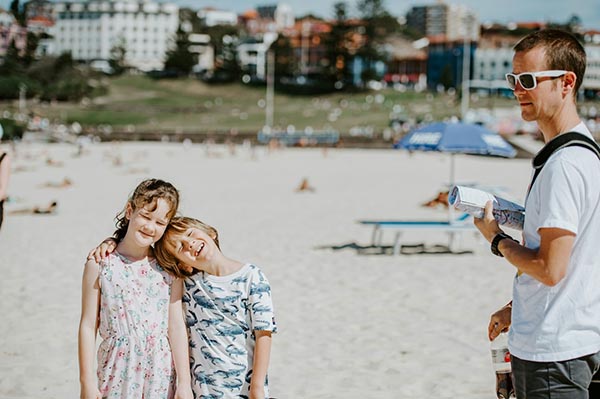
As the UK braces for a heatwave this week with forecasters predicting one of the hottest Augusts on record, the sensory challenges for neurodiverse children with conditions like ADHD and autism become more pronounced. Intense heat, bright sunlight, and crowded outdoor spaces can be overwhelming, turning the prospect of summer fun into a source of stress. Dr. Selina Warlow, Clinical Psychologist and Founder of The Nook Clinic shares practical advice on how small adjustments can help children navigate these sensory hurdles, transforming summer from a challenging season into an empowering one. Whether it is melting ice lollies or sweltering summer clothes, there are things we can do to help: Dr Warlow says: “Summer can be a wonderful time for neurodivergent children, but heat, noise and change can sometimes tip into overload. It’s not about avoiding these experiences; it’s about creating conditions where children can feel safe, comfortable and able to join in. I want families and schools to feel confident making simple adjustments that can turn potential struggles into moments of joy.” Tips for parents: small changes, big difference Plan around the heat: try to schedule outdoor activities for the cooler parts of the day – early mornings or late afternoons. Not only does this reduce the risk of overheating, but it also helps prevent sensory overwhelm from intense sunlight and busy midday crowds. Building in regular shady breaks can keep the day feeling positive and manageable. Create a cool-down kit: a small bag of essentials can help children self-regulate when the heat or environment starts to feel too much. Include things like a handheld fan, a cooling towel or spray, a wide-brimmed sun hat, and noise-cancelling headphones for loud or busy places. If you’re camping or spending long days outside, consider a blackout tent or sunshade to create a calm, darker retreat – perfect for rest or quiet play. Flexible clothing: lighter, breathable fabrics can make a big difference to comfort levels and help prevent overheating. At home or out and about, let children choose clothing that feels comfortable on their skin, as some materials or tighter items may feel unbearable in the heat to children with sensory sensitivities. Hydration hacks: children with ADHD or autism may not recognise early signs of dehydration, so make drinking fun and frequent. Offer water with ice cubes, colourful straws, or in favourite cups and bottles. Freeze small bottles of water or juice overnight for a cool option on hot outings and set regular ‘drink breaks’ as part of the day’s routine. Balance activity with rest: energetic outdoor time can be great for burning off energy, but follow it with calm, cooling indoor play or quiet time in shaded areas. Activities like reading, drawing, or building with LEGO in a cool room can help children reset before the next burst of activity. Use visual planners: heat and changeable summer routines can make the day feel unpredictable and stressful for neurodivergent children. Simple visual planners or picture schedules can help them anticipate what’s coming next, reducing anxiety and building confidence about transitions from indoors to outdoors, or from one activity to another.
LEGOLAND Windsor awarded for autism-friendly service
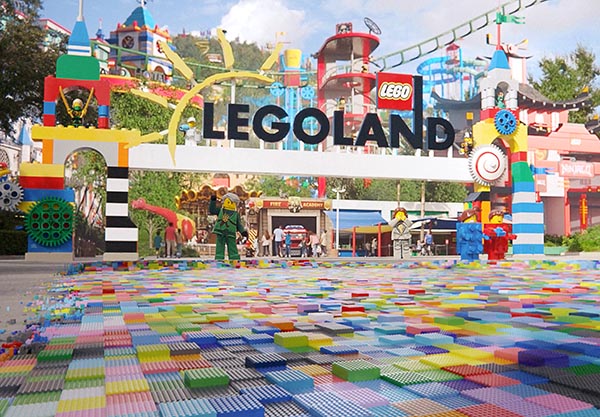
– LEGOLAND Windsor has become the first UK theme park to achieve a national charity award in recognition of its work to provide an autism-friendly environment and inclusive customer service for autistic people. LEGOLAND Windsor, in Berkshire, has gained the National Autistic Society’s Autism Friendly Award, which supports businesses to be more inclusive for autistic people through providing accessible customer services, information and environments. The award recognises the measures LEGOLAND Windsor has in place to support autistic people and their families, including autism training for the park’s staff and reasonable adjustments including: access passes for those who are not able to queue for long times; sensory spaces; ear defenders; flashcards and communication cards; and accessible information about the park. At least one in 100 people are autistic, which means more than 700,000 people in the UK, but many autistic people and their families still struggle to access community spaces, businesses and shops. By meeting the standards set out in the Autism Friendly Award, businesses can ensure they offer an industry approved autism-friendly environment. The award can be adopted by any customer facing organisation, including businesses in the retail, transport, arts, entertainment and leisure industries. Kate McBirnie, Global Head of Accessibility at Merlin Entertainments, said: “At Merlin Entertainments, accessibility means more than just open doors — it means building an inclusive environment where every guest can explore, connect, and fully enjoy the magic of our experiences. We believe that everyone deserves the opportunity to make unforgettable memories, and we’re proud to play a part in making that a reality. Receiving this accreditation is an important milestone for the LEGOLAND Windsor team, and we’re deeply grateful to the National Autistic Society for their support and recognition. But just like any great LEGO build, we’re not stopping here — we’re excited to keep adding new bricks to make our Resort even more inclusive, welcoming, and magical for everyone.” Christine Flintoft-Smith, Head of Autism Accreditation and Projects at the National Autistic Society, said: “It’s fantastic that LEGOLAND Windsor is the first theme park in the UK to achieve the Autism Friendly Award and we congratulate the team on all their hard work to create a more autism-friendly place. It’s so important for theme parks, and all public leisure spaces, to be more inclusive for autistic people and their families, so that everyone can be supported to enjoy a fun day out. “There are lots of changes venues can make, such as autism training for all staff, sensory rooms, clear signs and information, and a range of communication formats. We hope many more theme parks follow LEGOLAND Windsor’s lead and show up for autistic people by becoming a more autism-friendly space, to help create a society that truly works for autistic people. We have lots of information about our Autism Friendly Award and how to provide an autism-friendly environment on our website www.autism.org.uk.” Rachael, Chair of the National Autistic Society’s South Buckinghamshire Branch, said: “Our members find theme parks too busy and noisy and the queues can cause distress and overwhelm. Having a theme park on our doorstep who take in to account the additional needs of our members and their families means we can all hope to visit LEGOLAND Windsor feeling safe, knowing they will support us through our trips there.” The National Autistic Society’s Autism Accreditation Programme is the UK’s only autism-specific quality assurance programme of support and development for all those providing services to autistic people. For more information about LEGOLAND Windsor, visit: https://www.legoland.co.uk/ For more information about the Autism Friendly Award, visit the National Autistic Society website.
Tackle Everyday Barriers to Mobility
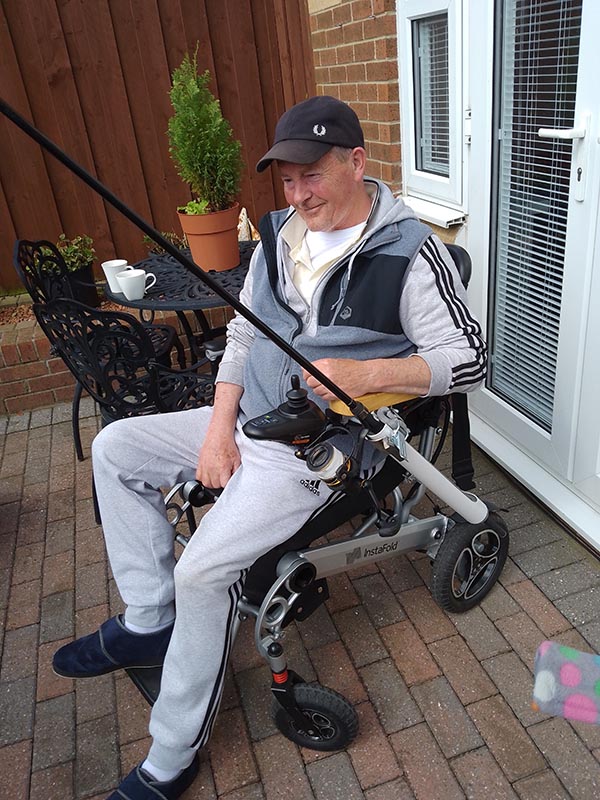
Mobility in Motion is proud to announce a new partnership with REMAP, the national charity that designs and builds custom assistive equipment to improve the quality of life for people who experience short- or long-term disability through infirmity, illness, or aging. Together, the organisations aim to push the boundaries of inclusive mobility, ensuring that more people have access to the tools they need to live independently and confidently. “Mobility doesn’t stop at the car door,” said Matt Fieldhouse, Managing Director of Mobility in Motion. “Our customers often face barriers in many areas of life. That’s why we’re so excited to work with REMAP. Their bespoke approach to solving mobility challenges fits perfectly with our mission to offer solutions that put the person first, whether they’re driving, travelling, working, or just living their day-to-day lives.” REMAP’s team of skilled volunteer engineers has been creating one-of-a-kind equipment for over 60 years, helping thousands of individuals with disabilities overcome obstacles that off-the-shelf products simply can’t address. With this partnership, the charity is poised to extend its reach and impact by getting in front of Mobility in Motion’s customers, ambassadors, and community partners. “We believe in practical, person-centred innovation,” said Sue Boyes, CEO of REMAP. “Working with Mobility in Motion gives us the opportunity to let a wider audience know about our services and how we can support them. This partnership not only helps us reach more individuals in need, but also raises the visibility of our work, which we hope will inspire more people to volunteer their skills and join our incredible network of engineers across the UK” In the coming months, the two organisations will launch a series of collaborative initiatives designed to raise awareness of available adaptations, share inspiring stories from the disability community, and offer personalised support for individuals navigating mobility challenges. These efforts will be grounded in a shared belief: that every person deserves the freedom to move through life with confidence, comfort, and control. About Mobility in MotionLaunched in 2023, Mobility in Motion is transforming automotive accessibility through an inclusive, customer-first approach. By offering tailored solutions, expert advice, and partnering with top manufacturers, the company ensures that travel is safe and accessible for all, while working hard to promote visibility for underrepresented groups in the mobility sector. www.mobilityinmotion.com About REMAPREMAP is a national charity that helps disabled people achieve greater independence and quality of life through bespoke engineering. Volunteers across the UK work with clients and professionals to design and build customised equipment, free of charge, to meet individual needs that cannot be solved by commercially available products.www.remap.org.uk
Superhero Tri Returns
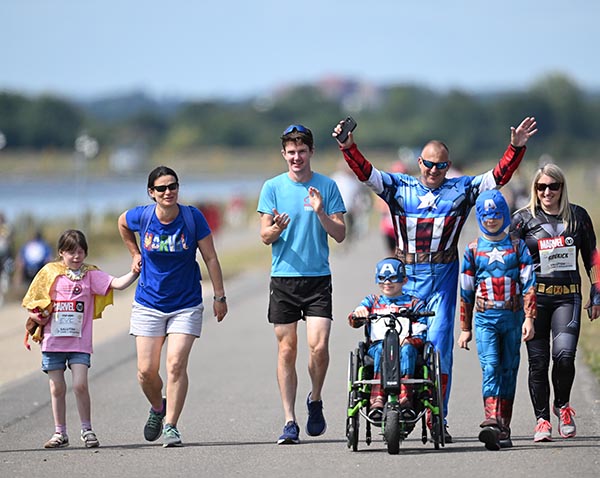
Superhero Tri Returns and Paralympians Turn Out in Force to Support Everyday Superheroes Superhero Tri, powered by Marvel, returns to Dorney Lake, Windsor on Saturday August 16, 2025 A stellar line-up of paralympic sporting heroes who medalled in Paris have signed up to support the 2025 Superhero Tri, powered by Marvel – the UK’s only mass participation sports event for people with disabilities. Among them Paralympic, World and European table tennis champion Will Bayley, Paralympic and World rowing champion Laura Sugar and Paralympic and World cycling champion James Ball will take their place at the start line alongside over 5,000 ‘everyday superheroes’. Now in its eighth year, the Superhero Tri sees ‘Sidekicks’ helping their loved ones complete the course, giving families and friends the opportunity to experience the thrill of participation together. Established by Paralympian Sophia Warner in 2016, Superhero Tri is dedicated to the 16.1 million* people across the UK living with disabilities and offers a choice of three distances: Participants can fly solo and take on all three stages – swim, cycle and push/run – or share the fun with their sidekick teammates to tow, push or pull them around the course. Gadgets, gizmos and costumes galore Absolutely anything goes when it comes to adaptive equipment, gadgets and gizmos to power people round the course. From wheelchairs mounted on surfboards to side-by-side trikes and buggies hitched to bicycles, participants are encouraged to use their imagination. Participants can take as long as they wish with whatever kit they need and Marvel super hero outfits are strongly encouraged with adults, children and even animal supporters wearing masks, capes and costumes. “The Superhero Tri removes all barriers to participation and gives everyone with a disability the thrill of a mass-participation sports event,” says Sophia Warner, Paralympian and founder of the Superhero Tri. “Competing alongside their families and friends, the community spirit shines through as people come together to cover the course. We have families returning year after year to feel the excitement of the day and enjoy being the centre of attention as they show off their amazing sports skills and super hero outfits.” As well as completing the Superhero Tri, visitors will have the unique opportunity to complete their Marvel Avengers Training alongside super heroes Spider-Man and Thor, helping inspire participants to unleash their inner superpowers. Deborah Armstrong, Senior Vice President, Disney Advertising EMEA and Country Manager UK & Ireland said: “Every year it’s fantastic to see all the superheroes have so much fun in a fully inclusive environment at Superhero Tri. Our storytelling and much-loved characters continue to be a force for good, inspiring people to unleash their inner superhero and experience the power of sport. We’re wishing everyone competing the best of luck this year and can’t wait to see all the incredible outfits!” Another highlight will see Clare Balding CBE – a long time Superhero Series supporter who hasn’t missed an event – bestowing the honour of a Golden Cape on seven spectacular Superheroes in recognition of their determination, community spirit or fundraising achievements. Celebrity Team Captains Among the participants will be 30 small teams, each captained by a disability athlete or advocate. Bringing skills as diverse as rowing, cycling, swimming, dressage and shot put, table tennis, wheelchair basketball and paratriathlon, there are 20 celebrity captains new to Superhero Tri this year. This includes Paralympic, World and European table tennis champion Will Bayley, Paralympic, World, European and Commonwealth swimming champion Maisie Summers-Newton MBE, Paralympic, World, Commonwealth and European paratriathlon champion Dave Ellis, Paralympic swimming medallist and European champion Callie-Ann Warrington, Multi-Paralympic swimming and paratriathlon medallist Claire Cashmore and influencers Hannah and Becky Cheetham. Lining up alongside them are 10 Superhero Tri team captains returning to Dorney Lake including comedian and TV presenter Alex Brooker, sports reporter Jordan Jarrett-Bryan and chef and TV presenter Briony May Williams. “Our Celebrity Team captains bring excitement and inspiration to the day,” continues Sophia. “This year we have 20 para-athletes who medalled at Paris 2024 joining us. Most of them were in the crowd at London 2012 and 12 years on achieved their dream, fulfilling the legacy of the London games. Superhero Tri is my legacy for everyday superheroes who I know will be inspired by seeing their Paralympian heroes in action.” Super Supporters Supporting the Superhero Tri headline partner Disney are partners DHL, Everyone Active, Invacare, Pfizer, Salutem, Staysure, Swim England and the Superhero Sport Foundation whose invaluable support make Superhero Tri possible. Find out more and enter here: https://superheroseries.co.uk/superhero-tri-2025
AI Meets Accessibility
As Generative AI tools become more widely available, their potential to support disabled people is starting to receive long-overdue attention. While much of the public conversation has focused on productivity and automation benefits more widely, these technologies are quietly reshaping accessibility, offering meaningful support for people who have historically been excluded from full participation in digital life. More than 1.3 billion people live with some form of disability, according to the World Health Organisation. In the UK, that figure is estimated at 16 million, or around a quarter of the population. Despite advances in inclusive design, many digital services remain difficult to access, especially for people who rely on screen readers, need simplified content, or process information differently. AI isn’t a simple silver bullet, but it is helping to bridge these gaps. And, as with any tool, the way it is applied will determine whether it delivers real progress or simply reinforces existing barriers, as Léonie Watson, Co-Founder at TetraLogical explains. A new way to engage with informationFor many neurodivergent people, consuming large volumes of information can be a real challenge. Long reports, academic and administrative documents are often difficult to process due to issues with focus, language, or executive functioning. Generative AI offers ways to simplify this experience. It can help by condensing documents into clear summaries, rephrasing ideas into plain language, and responding to follow-up questions to clarify areas that weren’t fully understood in the first instance. This turns reading into an active process where users set the pace and shape the content around their own needs. In an era of constant overstimulation and information overloads, this kind of personalisation is fast becoming essential for many. Improving access for blind and low vision usersPeople with visual impairments and low vision face persistent barriers online, especially when content isn’t designed with accessibility in mind. PDFs are a notoriously common problem: many are scanned images or contain layouts that are inaccessible for screen readers. AI tools can now extract meaning from these formats, summarising content and presenting it in more digestible forms. AI also enables ad hoc image description. Whether it’s a photo, or a diagram with no alt text, users can request a detailed summary of what is shown. This extends to everyday content such as restaurant menus, infographics and social media posts, or, put simply, areas where accessibility is often overlooked. Seeing the world in real timeSome of the most exciting developments are happening in real-time visual description. AI tools built into smart glasses or mobile apps can now analyse a live video feed to provide instant feedback about the user’s surroundings. For blind or low vision users, this could mean identifying objects in a room, reading signs while navigating, or simply having a better understanding of what is going on around them in a social setting. There are still challenges here, particularly around battery life, privacy and consistency. But as the technology improves, so too does its potential to support greater independence. Opportunities and Limitations Despite their promise, AI tools should not be seen as a replacement for inclusive design. Nor should their outputs be taken at face value. AI systems can and do make mistakes: image descriptions can include hallucinations with confident but incorrect details, and document summaries may contain factual errors or even fabricated content. This means users must approach AI outputs critically and treat AI as a helpful assistant, not a final authority. For some, this adds a layer of digital literacy to the accessibility equation. For designers and developers, it’s a reminder that AI should support, but not sidestep, the core principles of accessibility. Designing with care The role of AI in accessibility is likely to grow, but only if it’s developed and applied with care. Recent UK research found that over a third of disabled people are concerned they will be left behind as AI becomes more widely used in healthcare and public services. Many also fear that if disabled people are not involved in the design process, these tools will fail to meet their needs. When the dust settles on the hype around AI, it will not be just about what this technology can do, but also about who it is built with, and how it is made available. Used thoughtfully, AI can support greater equity. But it must be developed alongside a commitment to accessible standards, inclusive practices, and real user involvement. Put simply, inclusion doesn’t happen by accident. It takes planning, listening, and a willingness to challenge assumptions. AI can help open doors, but it’s up to us to make sure everyone is invited in.