Expert Tips from The Spine MDT

Keeping Your Back Healthy This World Spine Day Each year on 16th October, people around the world come together to mark World Spine Day – a global initiative that raises awareness about spinal health and the importance of keeping our backs strong and pain-free. Supported by the World Federation of Chiropractic, the campaign highlights how crucial it is to stay active, adopt healthy habits, and prevent spinal problems before they take hold. In 2025, the theme of World Spine Day continues to emphasise movement, resilience, and education – encouraging people of all ages to take small but meaningful steps toward better back health. And for those getting older, that message couldn’t be more relevant. As we age, our backs start to remind us of the years spent gardening, working, and driving. For many people in their fifties and beyond, this can include the arrival of stiffness, aching, or morning soreness that wasn’t there before. You might notice discomfort after a long car journey or a twinge when getting out of bed and assume it’s simply part of getting older. While ageing inevitably brings a little stiffness, most back pain is a normal part of getting older. With the right approach, you can stay active, mobile, and strong well into later life. Anthony Ghosh, Spinal Neurosurgeon and Founder of The Spine Multi-Disciplinary Team, has the ethos that motion is medicine and keeping your spine moving is the best way to protect it. Anthony shares eight expert-backed tips for maintaining a healthy, happy spine as we age. 1. Don’t Panic About MRI Findings If you’ve ever had a spinal scan, you may have seen words like “degeneration” or “disc changes.” These findings can sound alarming, but they’re actually a normal part of ageing. Many people with these changes have no pain at all. 2. Posture Doesn’t Cause Pain It’s tempting to blame bad posture for back or neck problems, but research shows posture alone isn’t usually the culprit. What matters most is movement variety. If you sit for long periods, change positions often, stretch, or take short movement breaks. 3. Stay Active Prolonged rest can actually slow recovery and stiffen joints. Gentle, regular movement helps your spine stay supple and your muscles stay strong. 4. Strength Training is Safe Strong muscles provide natural support and protection, reducing the risk of injury. With the right guidance, resistance training is safe and highly effective at any age. If you’re new to strength training, start light and seek advice from a physiotherapist or trainer experienced with older adults. 5. Sitting Isn’t the Problem Many people worry about sitting too much, but sitting itself isn’t harmful; staying in one position for too long is. Set reminders to stand, stretch, or walk around every 30–60 minutes. A few minutes of movement can make a huge difference to how your back feels. 6. Keep Your Hobbies Whether it’s gardening, golf, or hiking, staying engaged in the activities you love is key to both physical and mental well-being. You may just need to adapt how you do them. 7. Know the Red Flags Most back pain improves with time and gentle movement, but a few symptoms require urgent attention. Seek medical help immediately if you experience: These can signal a serious underlying issue that needs prompt care. 8. Motion is Medicine Above all else, remember this: the more you move, the healthier your spine will be. Movement nourishes your spinal discs, strengthens muscles, and keeps your joints flexible. Back health after 50 isn’t about slowing down; it’s about moving smartly and confidently. The Other Common Culprit It’s not just the lower back that needs attention. Neck and shoulder pain are incredibly common as we age, with studies suggesting up to half of people over 60 experience persistent symptoms. Much of this isn’t due solely to wear and tear, but rather how we use our bodies in modern life. Prolonged screen use, phone scrolling, or carrying heavy bags on one shoulder all contribute to muscle imbalance and strain. Exercises That Help The good news is that regular, targeted exercises can help strengthen your back and ease tension. Try these simple moves (ideally guided at first by a physiotherapist or osteopath): A few minutes a day can make a real difference. Keeping People Moving World Spine Day is a reminder that spinal health matters at every age. For those over 50, it’s an opportunity to celebrate what your body can still do and to take simple, proactive steps to protect it for the future. With the right knowledge, confidence, and care, you can continue doing gardening, golfing, walking, or simply enjoying daily life without fear of movement. Website: http://www.spinemdt.com Youtube.com/@spinemdt All socials: @spinemdt
Government accused of “ambulance chasing” disabled people
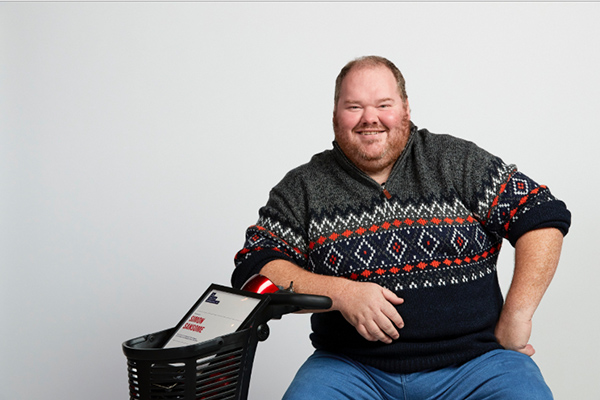
The Government is facing backlash from disability campaigners over plans to place Job Centre staff in GP surgeries, a move critics say is intrusive, discriminatory, and “turns the state into ambulance chasing” targeting disabled people. The policy, part of a new back-to-work initiative, will see Job Centre advisers based in doctors’ surgeries to “help patients access employment support sooner.” But disability advocates argue it risks intimidating vulnerable patients and blurring the line between healthcare and welfare enforcement. Ed Balls was quoted on GMB, saying this will stop people visiting the doctor’s surgery for treatment. Snowball, the UK’s leading disability-access platform, founded by Simon Sansome, has condemned the plan as a “shocking failure of understanding.” Founder Simon Sansome said: “Instead of chasing disabled people to their doctors, the Government should make Job Centres accessible. Disabled people don’t need to be cornered in GP waiting rooms, they need access, fairness, and real opportunity.” Snowball met with the Disability Minister last year to discuss introducing the Snowball Accessibility Scheme in Job Centres, a system designed to rate, improve, and standardise accessibility nationwide. The company even submitted a formal tender to the Government to deliver the work, but the proposal was ignored. Sansome added: “We offered a fully developed accessibility framework that would have made Job Centres fit for everyone. Instead, the Government has gone for a headline-grabbing shortcut that risks humiliating disabled people in the one place they should feel safe, their GP surgery.” During recent discussions on GMB about welfare reform, Work and Pensions Secretary Pat McFadden MP stated: “Job Centres are not suitable for everyone.” Sansome responded: “He’s right. Job Centres are not for everyone, because they’re still not accessible to everyone. Until those changes are made, this entire policy is built on inequality.” Campaigners say the move could create fear and confusion among disabled people, many of whom already feel unfairly treated by the benefits system. Sansome said: “People go to their GP for care, not a career consultation. If the Government really wants to help, it should start by making its own services inclusive, not by turning GP surgeries into Job Centres.” The app is available for download on both Apple and Android devices ● Website: www.snowballassessment.com ● Apple App Store: Snowball Community – Apple ● Google Play Store: Snowball Community – Android
NHS Veteran Aware accreditation
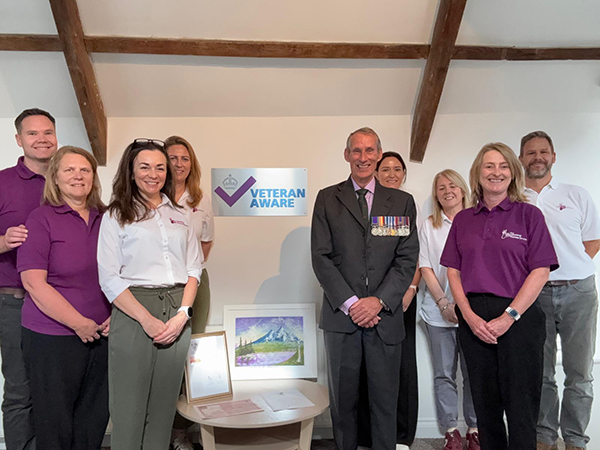
The Occupational Therapy Service (TOTS), a leading and well-respected independent occupational therapy company, has been awarded NHS Veteran Aware accreditation in recognition of its training to support the Armed Forces community. Delivered by the Veterans Covenant Healthcare Alliance, NHS Veteran Aware is an accreditation programme designed to help healthcare providers understand and meet the needs of serving personnel, reservists, veterans, and their families in the UK. TOTS identified this initiative as aligning with its values so applied for training to enhance its intervention for military charities, case management companies, the NHS and local authorities. This accreditation proves that the service it provides meets national standards and has proven competency in terms of social value, intervention and inclusion. Lucy Leonard, occupational therapist and Director of The Occupational Therapy Service, commented: “For me, the visit was a proud moment but also a challenge. Pride that our team has done the work to reach this point; challenge because it reminds us to keep learning and adapting. It’s not about a plaque on the wall, it’s about how we approach every assessment, every recommendation, and every conversation so that veterans and their families get the right support and opportunities to live full, independent lives.” Servicing for over 40 years in the British Army, retired Lieutenant Colonel Guy Benson was invited to the TOTS headquarters to unveil a plaque which illustrates the new TOTS accreditation. Guy is the National Programme Director and Team Leader of the NHS VCHA and National Training and Education Programme. One of the most moving moments was sharing a painting given to our Director Samantha Shann, by a Ukrainian veteran she met earlier this year. Guy added: “The Occupational Therapy Service, who recently joined the Veterans Covenant Healthcare Alliance (VCHA), are absolutely brilliant. This is a well led, professional and compassionate organisation who are making a real difference and playing their part in ensuring that the Armed Forces community do not face inequalities, unwarranted variation or disadvantage in the provision of healthcare. These are ordinary people, delivering the extra-ordinary and as such are playing their part in making the UK the best place in the world to be a veteran.” Lucy sums up Guys visit by saying: “It was inspirational to meet Guy and hear about his past military experiences and commitment to improving care for fellow veterans. He was very humble and a real leader We’re grateful to Guy for giving his time, for sharing his experience so generously, and for encouraging us to keep going.” www.theotservice.co.uk
World Sight Day: Blind Veterans UK praise for Surbiton care home
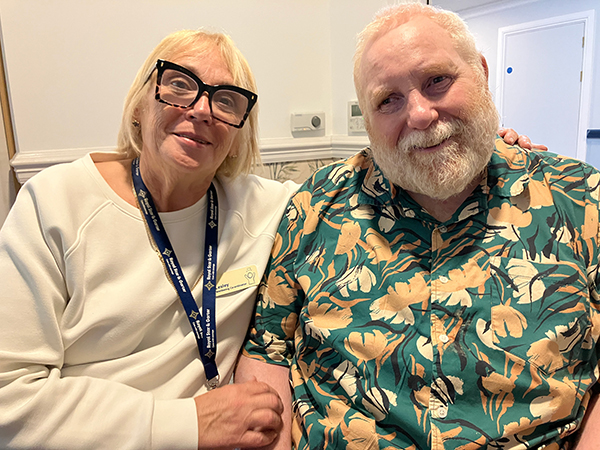
A care home has been praised for the care and support it is providing a blind RAF veteran on World Sight Day. Staff at Royal Star & Garter’s Surbiton Home invited Blind Veterans UK to give them support and advice after former RAF policeman Jeremy Sellwood became a resident. According to Jed, as he is known, and his family, it has helped him to settle in and enjoy life at the Home. The praise for Royal Star & Garter comes on World Sight Day, 9 October, and during World Blindness Awareness Month, which is running throughout October. Royal Star & Garter provides loving, compassionate care and support for veterans and their families, living with disability or dementia, through its Homes in Solihull, Surbiton, High Wycombe and Worthing. It also provides services reaching into the community, including Lunch Clubs, Day Care and a national Telephone Friendship Service. Blind Veterans UK supports anyone who has served in the Armed Forces and is now living with significant sight loss. Jed lost his sight after sustaining a serious head injury in 1987, aged 25. It happened while he was based at JHQ (Joint Headquarters) Rheindahlen in West Germany, and he was off-duty at the time. With the support of Blind Veterans UK, he was able to live independently for more than 20 years. However, a series of falls resulted in Jed, now 63, coming to Royal Star & Garter in 2024. It was after moving in that the Home’s dedicated Wellbeing Team reached out to the sight loss charity. Wellbeing Coordinator Lesley O’Driscoll said: “The team haven’t had to support someone who is totally blind and we wanted advice and to know what we can do to help his wellbeing.” Blind Veterans UK provided a box of activities and advised on the set-up of Jed’s room. A case worker also meets Jed each month and Lesley added: “We’ve definitely been able to improve the support and wellbeing we provide Jed since contacting Blind Veterans UK.” Jed said: “I think it’s excellent that Royal Star & Garter got in contact with Blind Veterans UK. It’s refreshing to see two organisations working together this way. Staff here always go the extra mile for every single resident.” Jed’s sister Kim said: “Blind Veterans UK has been supporting Jed for a long time, so I was thrilled when Royal Star & Garter reached out to them to help with the support they can provide him.” Mark Wheeler, from Blind Veterans UK said: “We are proud to have been supporting Jed for many years. It was fantastic to work with Royal Star & Garter to share our expertise and support them to provide the best care possible. It’s great to see two veterans’ charities working together for Jed’s benefit and we’re grateful that staff at the Home reached out to us. It’s good to know that Jed is now receiving such wonderful care and that he is happy.” Speaking about Royal Star & Garter, Jed added: “This place feels like home, it’s absolutely fantastic. Everybody’s friendly and helpful, and I feel lucky to be here.” Royal Star & Garter in Surbiton is also welcoming new residents. For more information on this, its other services or to work at the Home, go to: www.starandgarter.org/surbiton
(NCAT) appointed a new Chief Executive Officer

The National Centre for Accessible Transport (ncat) is pleased to announce that Emma Partlow has been appointed as its new Chief Executive Officer. Emma joins ncat from her role as Director of Engagement and Policy at Transreport, where she played a central role in developing inclusive transport solutions globally. Emma possesses extensive expertise in both accessibility and transport, having devoted her career to enhancing travel experiences for disabled people. She was named among the UK’s most influential Disabled People in the Shaw Trust Disability Power 100 (2024) for her significant impact on the transport sector, and her leadership has driven advancements in both technology and policy to make travel more equitable. Emma’s leadership style is characterised by a distinctive combination of personal experience and deep expertise in global policy and legislation in relation to accessibility. Throughout her career, she has championed co-production, ensuring that disabled people are central to the decision-making processes that impact their lives. By integrating her lived experience with rigorous, evidence-based research, Emma has consistently worked to dismantle systemic barriers and challenge entrenched attitudes, resulting in meaningful and measurable improvements in accessibility. Her inclusive and collaborative approach has been key to driving progress in accessible transport and influencing industry practices on a global scale. Keith Richards, Chair of the ncat Board, said: “Emma’s appointment marks a pivotal moment for ncat. Her deep understanding of the barriers people face when trying to access transport, and her proven ability to build partnerships across sectors will be invaluable as we continue to work with all our stakeholders to collectively push for transport systems that are inclusive for everyone.” As an evidence centre, ncat is committed to commissioning its own high-quality research, as well as gathering and compiling evidence from a very broad range of sources. Its works by explaining how the evidence highlights the barriers that people face, and by convening and enabling key stakeholders and decision-making across UK government, industry, and society to work together to remove those barriers. Its vision is to inform future disability and transport strategy, policy, and practice, contributing to a barrier-free transport system. Emma Partlow, incoming CEO of ncat, said: “I am honoured to be appointed as CEO of ncat at such a pivotal time for accessible and inclusive transport. I look forward to working closely with our partners, funders, and communities to ensure that accessibility is embedded as a foundation, not an afterthought in the design and delivery of transport services and solutions. Through co-produced research and evidence-led approaches, ncat will continue to shape industry decision-making and drive lasting, systemic change.” ncat is funded by the Motability Foundation, a charity that invests in support, transport programmes and research which are critical to giving disabled people in the UK the ability to get around. Lisa Jones, Chief Operating Officer at Motability Foundation, said: “The Motability Foundation believes that all disabled people should be able to make the journeys they choose, and we look forward to working closely with ncat and Emma Partlow as they gather the evidence and insight the sector needs to inform a more inclusive transport system.” Emma will officially assume her role on 24th November 2025.
AccessAble Celebrates 25 Years
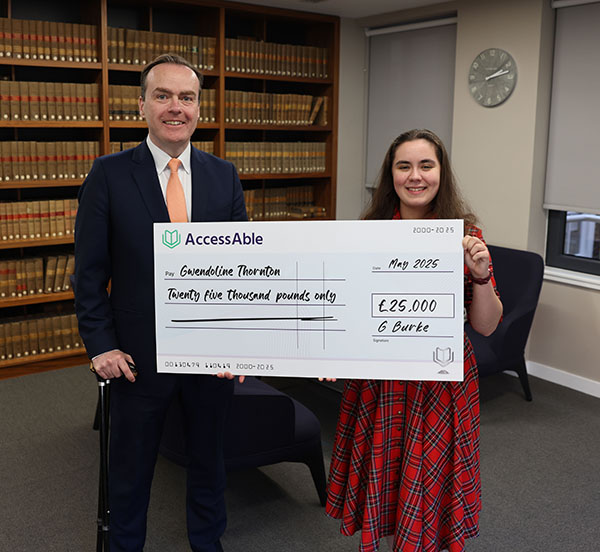
AccessAble, the UK’s leading provider of detailed accessibility information, is celebrating its 25th anniversary with the AccessAble Ignite Awards. For 25 years, AccessAble has been at the forefront of transforming the way disabled people access information about places and spaces. Partnering with over 500 clients and trusted by more than 6.2 million disabled people, AccessAble has become a cornerstone of the accessibility sector. The company’s mission is grounded in one simple principle: to ensure disabled people have the information they need to confidently access the world around them. “Listening to the community is the beating heart of AccessAble. We co-produce our service alongside the people who use it. Authenticity, trust, and meaningful impact are what matters to us. This milestone anniversary is the perfect moment to not only reflect on how far we’ve come but also to celebrate by investing back into the disability community.” said Dr. Gregory Burke, Founder of AccessAble. AccessAble’s Core Values: Community, Co-Creation, and Authenticity What sets AccessAble apart in the accessibility sector is its unique approach to service design. The company has consistently placed community involvement at the heart of its work, ensuring that the solutions it provides are not only relevant but also deeply responsive to the actual needs of disabled people. Central to this approach is its commitment and investment in surveyor-led assessments. Through co-production, where disabled people actively contribute to the design and shaping of services, AccessAble ensures that its offerings are both effective and authentic, truly reflecting the voices of those it serves. In addition to providing critical accessibility information, AccessAble works closely with its clients to offer expert accessibility advice. This ensures that clients not only meet accessibility standards but take proactive steps to create truly inclusive environments. “As an organisation, we’ve chosen to celebrate our 25th anniversary by investing directly into the disability community—because our success is intrinsically tied to theirs,” said Burke. “We believe in empowering disabled entrepreneurs, recognising their contributions, and amplifying their voices through the AccessAble Ignite Awards. This is our way of giving back, and it’s rooted in our values.” The awards will raise awareness of disability innovation in all fields, not just accessibility, providing a platform for disabled entrepreneurs to showcase their work and inspire others. The AccessAble Ignite Award 2025 The AccessAble Ignite Award is designed to give a disabled entrepreneur the springboard for success. The winner receives a 12-month mentorship programme, a cash grant of £25,000 to support their business growth, and the opportunity to build entrepreneurial skills and business aspirations. AccessAble is proud to announce Gwendoline Thornton, founder of Spoonfullness, as the winner of the AccessAble Ignite Award 2025. Gwendoline stood out to the judges with her problem-solving skills, authenticity, and mission to empower disabled people in the kitchen. Her business, Spoonfullness, tackles everyday challenges such as cooking, shopping, and cleaning, while giving people the tools and confidence to take control of their nutrition. The Next 25 Years: Leading the Charge for Accessibility and Empowerment As AccessAble celebrates its 25-year journey, it marks the beginning of an exciting new chapter. The company’s commitment to empowering disabled people and creating a more inclusive world is stronger than ever. “We’re proud of what we’ve accomplished in the last 25 years, but our work is far from done,” said Gregory Burke, Founder of AccessAble. “Empowering disabled people with the right information is at the heart of everything we do. Our mission has always been to ensure that every disabled person, regardless of where they are, has the tools they need to navigate the world with confidence and independence. As we expand our reach both across the UK and internationally, our goal is to continue leading the way toward a more inclusive, accessible future for everyone. We are committed to ensuring that the voices of disabled people are not just heard but are actively shaping the world around us.” www.AccessAble.co.uk
London travel easier for disabled passengers
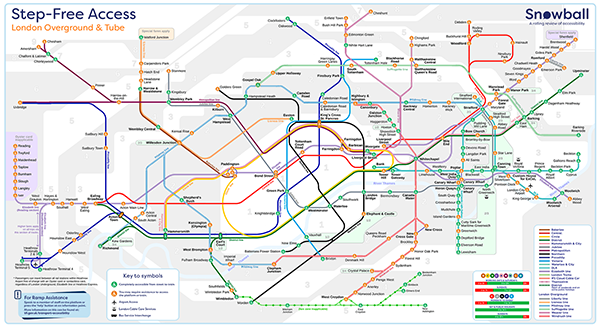
New map integrates iconic design with real-world access data across the capital’s transport network. Snowball, the accessibility app known as the “TripAdvisor for the disabled community,” has launched a new step-free access map for the London Underground and Overground networks, now live within the app. The map builds on the iconic Tube diagram and includes essential accessibility information for every station, helping disabled users plan and navigate journeys across London in just two clicks. Designed specifically as an accessible, step-free travel map, this new version simplifies the journey planning process by using a clear visual system: stations marked in green offer full step-free access from street to train, while stations in orange indicate that some assistance from staff may be required. Developed using Transport for London’s (TfL) open data, and designed in the instantly recognisable style of Harry Beck’s world-famous Tube map, the new feature reimagines one of the most celebrated transport diagrams in the world through the lens of inclusive access. The map includes clear, easy-to-read symbols that show stations with full step-free access from street to train, as well as those that may require assistance to reach the platform or train. It also includes airport access points, interchanges with London’s bus network, and the IFS Cloud Cable Car, offering a complete picture of transport options available to disabled users. Importantly, all station opening times are displayed, allowing users to plan their journeys with maximum flexibility. This new feature sits within the Snowball app, which also includes a traffic light-style accessibility system to rate each station based on real-world experience. These ratings were personally created by Snowball founder Simon Sansome and his team, who visited and assessed every station to ensure accuracy and reflect practical, on-the-ground realities. Simon Sansome, who is a wheelchair user himself, created Snowball to make accessibility accessible. By integrating transport data with real-life insights, Snowball allows users to plan their entire journey, from street to station to venue, within a single app. Users can check access information for both transport routes and destination venues, helping to reduce anxiety and eliminate the need to rely on multiple resources when planning a trip. “The London Tube map has helped millions find their way around the capital, and now it’s doing the same for the disabled community,” said Simon Sansome. “We’ve designed it so anyone can instantly see which stations are fully accessible, which may require assistance, and how to plan with confidence from start to finish.” In the UK, 16 million people are disabled, with 13.2 percent of Londoners identifying as disabled. While TfL continues to improve accessibility across the network, with 93 step-free Tube stations, more than 60 step-free London Overground stations, and full step-free access on the DLR, trams and Elizabeth line, journey planning can still be complex. Snowball aims to simplify this process, offering greater independence and control to disabled passengers across the capital. The new map complements TfL’s existing accessible travel tools, including the TfL Go app and services like Turn Up and Go. By integrating open data into Snowball’s platform, this launch brings together venue accessibility, journey planning, and real-time updates into one user-friendly experience. Snowball is available to download for free on both Apple and Android devices. Snowball is a free mobile app that assists disabled people in finding accessible businesses and services. The app is available for download on both Apple and Android devices Google Play Store: Snowball Community – Android
Dyslexia Awareness Week

Discovery Education Supports Pupils with Dyslexia Through Adaptive, Multisensory Learning Resources Discovery Education, the creator of essential learning solutions used in classrooms around the world, has made available a collection of tools and features within its high-quality digital resources to support pupils during Dyslexia Awareness Week and beyond. Available via Discovery Education’s four award-winning DoodleLearning maths and English programmes – DoodleEnglish, DoodleSpell, DoodleMaths and DoodleTables – these special features and tools engage and empower pupils with dyslexia, whether learning at home or in the classroom. Dyslexia Awareness Week – which begins on 6th October – is an annual event organised by the British Dyslexia Association. This year’s theme, ‘Dyslexia: Raising the Volume’, aims to increase public understanding and shine a light on issues affecting people with dyslexia. Discovery Education’s DoodleLearning programmes incorporate a range of features that are highly supportive for pupils. These include: The DoodleLearning apps combine visual, audio and interactive elements to explore topics in Maths and English Lessons are broken down into small manageable steps, reducing cognitive overload and removing barriers to learning for pupils who struggle with processing speed DoodleLearning has a built-in audio dictation tool, to enable pupils to listen to questions and concept explanations and learn at their own pace DoodleSpell supports spelling through repetition and structured learning, which is beneficial for pupils with dyslexia Doodle’s programmes personalise content based on ability, ensuring that each child is working at the right level. This helps pupils to build confidence without feeling overwhelmed Rewarding effort over ability, Doodle uses stars, badges, streaks and games to motivate pupils and make learning fun Charity Lisko, Discovery Education’s Vice President forInternational Product, Curriculum and Content said: “Discovery Education is proud to support the growth and development of primary school pupils throughout Dyslexia Awareness Week and beyond. We challenge ourselves every day to design programmes that empower teachers to engage every child in their learning journey.” Explore Discovery Education’s award-winning digital learning services at www.discoveryeducation.co.uk Find out more about Dyslexia Awareness Week here.
Groundbreaking Research Project
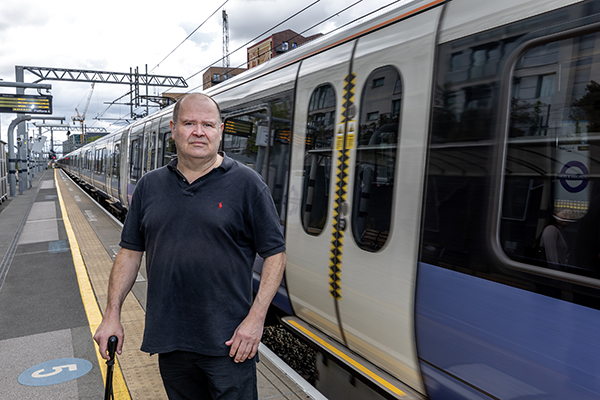
Designability Seeks Six to Eight People with Lived Experience of Disability to Join a Groundbreaking Research Project National charity Designability is inviting six to eight individuals with lived experience of disability to join an exciting new research project as Lived Experience Advisors. Whether you are a disabled person, an unpaid carer, or a parent or carer of a disabled child or adult, Designability wants to collaborate with you on an innovative study focused on disability, independence, and inclusive design. This is a paid opportunity to help inform the design of more inclusive products and services through a better understanding of the everyday barriers that can affect independence for disabled people. The project runs from September 2025 to the end of 2026, and participants can choose how they’d like to be involved. This could be through online workshops, one-to-one chats, or by providing written feedback. The team will work flexibly to support each person’s access needs and preferences. As part of the role, Lived Experience Advisors will contribute to designing research questions and materials, reviewing documents, testing tools, and helping to share the findings. This could include writing blogs, joining events, or creating short videos, with full support from the Designability team. Each Advisor will be paid £25 per hour, with an estimated total of £775 for their time. Any extra activities, like creating blogs or videos, will be paid for separately. If participants receive welfare benefits, they are encouraged to seek guidance, and Designability can offer information and signposting to relevant resources. Jim Bowes, CEO of Designability, said: “Everything we do at Designability is shaped through the voices and experiences of disabled people. Becoming a Lived Experience Advisor for our new research project will help to inform our priorities over the next 3–5 years and support our goal of making accessible design the norm. This is an opportunity to help shape how we work and to share the issues that matter most to you.” Designability welcomes applications from individuals across the UK. To apply, please visit: https://designability.org.uk/news/were-looking-for-people-to-become-our-lived-experience-advisors/ Applications are now open until 20th October. http://www.designability.org.uk/