Keep pavements clear for those who rely on them most
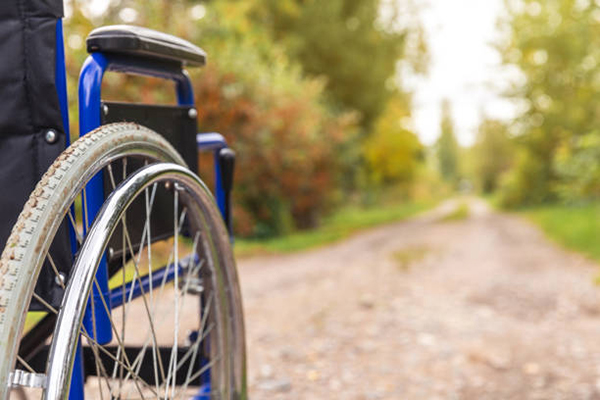
Disabled people will benefit from new local powers being made available to local leaders across England to introduce pavement parking restrictions across their area, helping keep them clear and accessible for everyone who uses them, while allowing exemptions where needed. Blocked pavements can create serious barriers for parents with pushchairs, wheelchair users, blind and partially sighted people, and older people, limiting independence and making everyday journeys harder and less safe. Following a public consultation, the Department for Transport has confirmed that local leaders will be given new and improved legal powers to make it easier to restrict pavement parking across wider areas, rather than relying on the previous approach, where action is often limited to individual streets and requires lengthy, complex processes. Local leaders know their streets best and are best placed to respond to local needs. Under the new approach, local leaders will be able to decide to take action on pavement parking in their area, and they will retain flexibility where they deem pavement parking may still be acceptable. Local Transport Minister Lilian Greenwood said: “Clear pavements are essential for people to move around safely and independently, whether that’s a parent with a pushchair, someone using a wheelchair, or a blind or partially sighted person. “That’s why we’re giving local authorities the power to crack down on problem pavement parking, allowing more people to travel easily and safely and get to where they need to go.” Guide Dogs’ Chief Executive Andrew Lennox said: “After years of campaigning, we welcome the announcement to give councils greater powers to tackle problem pavement parking. “Cars blocking pavements are a nuisance for everyone, but especially dangerous for people with sight loss, who can be forced into the road with traffic they can’t see. Pavement parking is also a barrier that shuts people out of everyday life. When pavements are blocked, people with sight loss lose confidence, independence and the freedom to travel safely. This stops people from accessing work, education and social opportunities. “We look forward to working with the Government and local authorities to ensure these changes are introduced quickly and consistently enforced so pavement parking becomes a thing of the past.” RAC senior policy officer Rod Dennis said: “Our research shows a clear majority of drivers agree that no pavement user should be made to walk or wheel into the road because of someone else’s inconsiderate parking. “These proposals should clear the way for councils to prevent pavement parking where it causes problems, but permit drivers to partially park on pavements where doing so helps keep traffic flowing and doesn’t inconvenience other people.” Mayor of the West Midlands, Richard Parker, said: “Clear pavements matter. For parents with pushchairs, wheelchair users and people who are blind or partially sighted, a blocked pavement is not a minor inconvenience – it can stop a journey altogether and is a risk to people’s safety. “Most drivers want to park safely and considerately, and these new powers help in areas where dangerous parking causes real problems. “Giving decisions to local leaders means solutions that reflect how our streets actually work. It’s a practical step that helps people move around safely, confidently and independently in their own communities.” The Department will set out guidance to help local authorities use these powers in a proportionate and locally appropriate way later in 2026. By putting decision-making closer to communities, the approach supports safer, more inclusive streets that work better for everyone. This forms part of the Government’s Plan for Change, making transport more accessible and inclusive, and supporting growth by ensuring our streets and public spaces work for all. georgia.brown@dft.gov.uk
Inclusive road safety education for autistic people
A new autism and neurodiversity resource is now available to help ensure road safety education is more accessible and inclusive for autistic people. Developed by Co-Pilot in partnership with the National Autistic Society, the resource supports road safety professionals to create learning experiences that recognise and respond to the needs of autistic learners. While the focus is on improving inclusion, understanding autism also plays an important role in meeting legal responsibilities. Under UK equality law, organisations must consider and make reasonable adjustments to avoid disadvantaging disabled people. With at least 700,000 autistic adults and children in the UK, most practitioners will work with autistic children or adults during their careers, including individuals who may not yet have a diagnosis. Autistic people may experience differences in social communication, sensory processing, executive functioning and a greater need for certainty. These differences can shape how they engage with road safety sessions, education materials or learning environments. The new resource features 24 short videos delivered by an expert from the National Autistic Society. Each video explores a different area of difference and provides practical, real-world examples. Supporting written guidance helps professionals design materials, plan sessions and anticipate situations where autistic people may benefit from additional support. A recent example from a local authority’s Active Travel Team demonstrates the value of inclusive thinking. After receiving feedback from a parent of an autistic child, the team reviewed its school walking route guidance and explored clearer mapping, colour coding and quieter alternative routes. These improvements were recognised as boosting accessibility for autistic pupils while supporting more children to walk to school safely and confidently. Ellie Goodman, Trainer Consultant at the National Autistic Society, said: “We’ve designed this resource to provide clear information and practical guidance to enable all road safety professionals to better understand autism and support autistic people. We hope our films and written guidance will support professionals to feel empowered to make often small but important changes to their practice.” This latest addition is another example of the practical, specialist support available through the Co-Pilot Vision Zero Toolbox. Members can access a growing library of tools, resources and expert-led guidance designed to help them strengthen their practice, keep pace with emerging expectations and deliver high-quality services across all areas of road safety. The resource arrives at a key moment, with the Department for Transport’s Road Safety Strategy expected soon. It hopes the guidance will help members feel confident, supported and prepared to embed inclusive, legally responsible practice as expectations evolve across the sector. James Evans, Founder and CEO of Co-Pilot, said: “When we take time to understand autism, we can create learning experiences where more people feel able to take part – and we’re also meeting our responsibilities as professionals. Many autistic people face barriers that aren’t always obvious, and making reasonable adjustments is both a legal duty and simply the right thing to do. “We developed this resource with the National Autistic Society to give practitioners clear, practical support. Our hope is that it helps colleagues reflect on their approach, make small changes that benefit everyone and feel confident they are delivering inclusive and responsible road safety education. With the new Road Safety Strategy on the horizon, this work is more important than ever.”
‘Dash for darts ’25’ smashes Target

Darts is thrilled to announce that this year’s dash for darts ’25 fundraising campaign has not only met its goal, but far exceeded expectations, raising £6,790.57. The award-winning charity has significantly surpassed the original target of £5,000. The dash for darts campaign, in which a dedicated team of 19 runners from across the darts community (staff, artists, trustees, local businesses, and supporters) took part in Curly’s Doncaster City 10K to raise funds, has been hailed as a massive success. This year’s Run Club contributed to their most successful campaign yet, with far more runners and supporters than ever before. Funds raised will directly support darts’ vital creative health and learning programmes across Doncaster including Singing for Memory for people living with dementia, All Aboard for Disabled children and young people and Art Club for all children and young people. darts’ programmes use art to improve life learning and health, working towards a healthier, happier and more connected Doncaster. Fundraising & Development Assistant, Grace Sansom said: “Each pound raised helps us keep providing essential, expert, low-cost or free creative opportunities for people across Doncaster. Thanks to the generosity of our runners, supporters and sponsors, we can continue making a real difference in our community.” Highlights Achieved and exceeded More than six times last year’s number Quotes from Run Club ‘dash for darts was the hardest yet most rewarding thing I have maybe ever done! It was so great to cross the finish line knowing I’d done my best to raise money for a cause that impacts my community so greatly.’ ‘Great achievement & met some amazing people’ ‘The dash for darts was challenging, rewarding and absolutely worth it. I’m proud to have raised funds and awareness for a local charity doing important work.’ ‘Fantastic to see so many people get involved and for the target to be absolutely smashed!’ ‘This was such an energising experience.’ ‘It has been one of the biggest win wins I can ever remember having in education.’ Thanks & What’s Next darts extends a heartfelt thank you to every runner, donor, sponsor and supporter who made dash for darts ’25 possible. Surpassing the fundraising goal is a testament to the power of community spirit, shared values, and belief in the power of the arts. Your generosity ensures that darts can continue delivering high-quality, inclusive creative experiences that improve life, learning and health for people across Doncaster. With fundraising being so tough in the current climate, it is more important than ever to raise local support and much-needed funding. If you are interested in joining 2026’s ‘dash for darts’ Run Club, contact Grace: grace@wearedarts.org.uk For more information about darts, its programmes and upcoming events, or to find out how to get involved or donate, please visit: https://wearedarts.org.uk 01302 493995
Turner Prize win marks new dawn for disabled artists
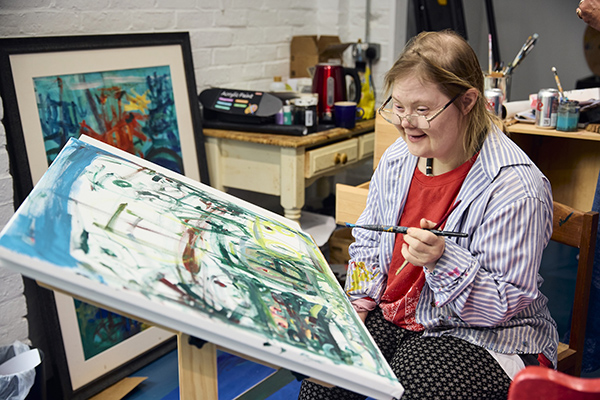
The choice of a learning-disabled sculptor as this year’s Turner Prize winner is ground- breaking news for other artists with disabilities, says the mother of a painter with Down’s syndrome. Nnena Kalu’s historic win this week marks a turning point in the view of art created by practitioners who live outside the traditional view of what an artist should be, says Mari Stevenson, whose daughter Fiona Stevenson creates bold abstract works which reflect her own perception of the world. “Their work can now sit in the mainstream, alongside that of neurotypical, non-disabled artists,” she said. Fiona’s work has been likened to that of ‘outsider artists’ from the surrealist movement by renowned art critic Mark Hudson, who visited her studio in Hertfordshire ahead of its official opening next year. “The surrealists were great champions of what we’d now call outsider artists,” said the Independent’s chief art critic and Guardian and Daily Telegraph writer. Turner Prize winner, Fiona is, in fact, a former member of the organisation at which Nnena has been a resident artist for quarter of a century, with Nnena’s selection suggesting it is an excellent incubator for disabled artists. Mark continued: “Fiona’s work superficially reminds me of certain kinds of art which were going on in the 1950s, particularly the kind based on very intuitive abstract gestural ways of getting paint on canvas, with origins in surrealist automatism. Here the artist doesn’t come with premeditated ideas. They just let everything come from the subconscious.” It is Fiona’s emotional connection with the world which drives her painting. She has worked every day for more than a decade with passion, with her paintings exhibited in New York and London. Tate Britain director and chair of the judging panel Alex Farquharson’s comments have given heart to Mari. “It breaks down walls between, if you like, neurotypical and neurodiverse artists. It becomes really about the power and quality of the work itself, whatever the artist’s identity is,” he said at the ceremony. “So maybe what’s historic about it is it’s one more move to include really great neurodiverse artists in the picture we present of art today.” Mari agrees with Nnena’s artistic facilitator at Action Space, Charlotte Hollinshead, who said: “This is a major, major moment for a lot of people. It’s seismic. It’s broken a very stubborn glass ceiling. This will challenge people’s preconceptions about differently abled artists, but especially learning-disabled artists, an important creative community so undervalued.” Fiona’s studio in Hertfordshire will open in 2026. See some of Fiona’s work, and ask to be added to the private view guest list, here: https://www.fionastevenson.co.uk
How Inclusive Design is Reshaping Mobility and Everyday Life
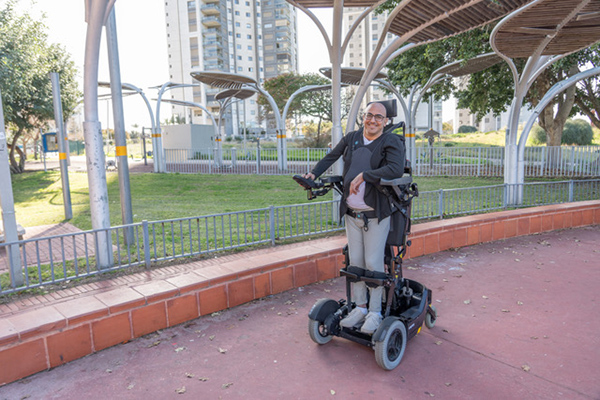
For decades, accessibility in design was defined by compliance. Ramps, elevators, and wheelchair-accessible doors were an afterthought, items to check off a list to meet the regulations. But in the last few years, there has been a shift: inclusive design is no longer just about minimum standards. It is transforming into the expectation, a new design language that does not just focus on accessibility but goes deeper into creating a sense of belonging. This transformation is seen in product design, architecture, and city planning. Cities are redesigning public spaces to welcome everyone, no matter what their ability. Technology companies are incorporating accessibility into mainstream products rather than as an afterthought. And in mobility, one of the most intimate areas of design, the change is particularly dramatic. From Functionality to Empowerment The traditional wheelchair has long been the symbol of accessibility. It provides function, yet all too often in the rigidity of sitting, looking up, and adapting to a world designed for standing. Emerging mobility solutions are shattering that paradigm. Robotic standing mobility solutions, for example, do not just transport a person from place to place. They restore the ability to stand upright and to interact at eye level – a basic human act with profound meaning. Moving while standing is more than just physical health, though there are many benefits to it: improved circulation, reduced risk of pressure ulcers, improved bone density, and many others. Beyond physical health, standing provides dignity, confidence, and autonomy. Being able to shake hands eye-to-eye with another person, access something on a shelf, or navigate through a crowded space without feeling “lowered” changes the way a person experiences their day-to-day life. The New Standard of Inclusive Design Inclusive design is advancing mobility devices from their original purpose, which is compensating for limitations, to the potential of reclaiming natural human experience. It’s a part of an even larger design movement: realizing that accessibility needs to be a priority, not an add-on. A robotic standing mobility solution, for instance, is not a gadget; it represents the notion that everyone deserves access to the richness of the world. What we are seeing today is a culture change that represents broader societal progress. Just as city planners no longer design public transportation without accessibility from the outset, mobility innovators are crafting products with freedom, dignity, and empowerment at their core. Looking Ahead The future of mobility technology holds even greater integration between the human body and assistive devices, devices that learn and adapt intuitively, allowing natural movement across varying terrains and surroundings. The technology demonstrates a world where mobility is not defined by limitations but by possibilities. And that’s what inclusive design is all about: it does not merely remove barriers – it reimagines the way things can be when barriers were never part of the equation from the start. Leading the charge in this societal shift, robotic standing mobility solutions offer not only mobility but a sense of purpose. They remind us that genuine inclusion is not about compliance, but instead about dignity, self-determination, and the power to flourish fully, on equal footing with the world. Lea Waisman Shaler is the CEO of UPnRIDE, the maker of a unique self-balancing robotic mobility device that empowers natural and intuitive movement, enabling seamless transitions between standing, walking, and navigating any terrain. Lea is a mechanical and biomedical engineer with extensive experience in leading and managing all phases of startup development and operations, transforming innovative concepts into market-ready products.
A look at Access Systems for (WAV) with Jubilee
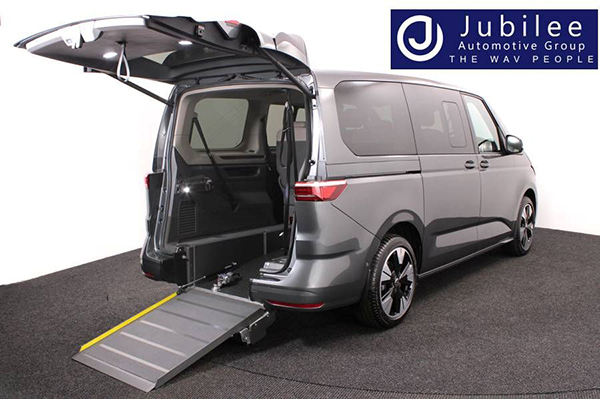
What Exactly is a Wheelchair Accessible Vehicle (WAV)? A Wheelchair Accessible Vehicle (WAV) represents a specialized mobility solution designed for total freedom. These are standard cars or vans that have undergone professional, expert conversion to safely and comfortably accommodate a wheelchair user, whether they are traveling as a passenger or taking the wheel. The key to a WAV lies in its bespoke modifications, such as specialized ramps, mechanical lifts, and re-engineered interiors that streamline the entire process of entering, securing, and exiting the vehicle. WAVs are fundamentally about independence, and they come in numerous shapes and sizes to suit every individual’s precise requirements. Your Guide to WAV Ramps Understanding the specific type of access system available is key to making the right choice, particularly when considering ramps. The choice between a manual, powered, or assisted system depends entirely on the user’s mobility and the caregiver’s strength. Manual Ramps Commonly found in smaller or mid-sized WAVs, manual ramps are the most straightforward access method. Powered Ramps and Winches For users who require less physical effort during entry, or for heavier power wheelchairs, powered assistance is ideal. WAV Lifts and Platforms When the vehicle floor is higher, or for larger, heavier powerchairs, a mechanical lift is often the most stable and controlled solution. Chairlifts These mechanical devices are designed to smoothly raise or lower the wheelchair and occupant, providing a stable platform for transfer. Specialised Options: Fiorella Lifts are noted for their compact, modern design, folding neatly to maximise interior space when not in use. Underfloor Wheelchair Lifts For maximum cabin flexibility and a clean interior aesthetic, underfloor lifts are innovative and discreet. Finding Your Perfect Match Finding the perfect WAV might seem daunting, but with so many options from simple manual ramps to sophisticated underfloor lifts there’s one to suit every requirement and budget. For more help and advice regarding wheelchair accessible vehicle look at the Jubilee Mobility buyers guide https://www.jubileemobility.co.uk/help-advice-and-more/wav-buyers-guide/ Jubilee Automotive Group’s team of ‘WAV People’ are ready to guide you. The Jubilee team are experts at matching people with the right vehicle and committed to making the selection process as straightforward and stress-free as possible. Jubilee Mobility offers nationwide delivery and an RAC Platinum warranty for added convenience. Who is Jubilee Automotive Group? Jubilee Automotive Group provides one of the UK’s most comprehensive selections of WAVs, with over 250 accessible cars in stock and ready for delivery. Backed by over 30 years of experience and a prestigious Outstanding rating on RAC Judgeservice, you can expect truly high-quality customer service from Jubilee. Whether your preference is a newly converted vehicle for private purchase or a quality RAC approved used WAV, they offer a solution. Jubilee’s team are experts at matching people with the right vehicle, committed to making the selection process as straightforward and stress-free as possible. Ready to start your WAV journey? Explore the full range of Jubilee Mobility wheelchair accessible vehicles and advice www.jubileemobility.co.uk or tel: 0121 502 2252
Stories of Accessibility on Broadway

As Broadway works toward embracing Diversity, Equity, and Inclusion, it has also needed to take a hard look at its Accessibility practices. In recent years the term DEI has been amended to include Accessibility (DEIA). While Accessibility falls under the DEI umbrella, it’s important to acknowledge it specifically, because those with physical and neurological disabilities may require accommodations beyond the basic inclusion practices that account for diversity of race, gender, and sexual identities. Despite the statistic that one in four Americans report having some form of disability, the disabled community has historically been one of the most underrepresented groups across most industries. Including the ‘A’ in ‘DEIA’ is a reminder for employers and the public to consider the disabled community when they think about diversity. Like most industries, Broadway has been slow to address its lack of accessibility. Although there has been significant progress in the last decade, there’s still a long way to go to make Broadway theater accessible for audiences off stage, and to improve disabled representation on stage. Advocates for accessibility have increased public awareness of ableism and its detrimental effects not just for those with disabilities, but for society as a whole Many Broadway theaters were constructed in the early 1900s, which unfortunately means they were not designed with today’s standard for accessibility. They typically do not have elevators, which means stairs are the only access to the upper levels. While the main restrooms also typically require stairs to get to, most of the theaters now provide accessible restrooms on the ground floor. The Eugene O’Neill Theatre and Shubert Theatre are notable exceptions where those who require an accessible restroom must use restrooms in buildings across the street. Most Broadway theaters offer accessible seating in the orchestra section, which is on the ground level. Designated aisle seats that are accessible for wheelchairs, and those with limited mobility, are often indicated in the seating chart when you book your tickets. You can also contact the theater before booking to discuss specific accessibility requirements. Many Broadway theaters offer assistive listening devices, audio description devices, and captioning devices. Be sure to check the specific offerings, and whether they need to be booked in advance, on the theater’s website. It’s now common for theaters to provide “relaxed” performances, which are intended to be accessible for neurodiverse audiences. During these performances, theaters relax their rules for audience behavior. They allow the audience to make noise, leave and reenter the theater as often as needed, and they sometimes offer sensory items and fidget toys for audiences to use during the show. You can find a more detailed breakdown of the Broadway theaters and their accessibility in The New York Theatre Guide’s 2024 article. Check out these resources before booking your next Broadway show: Theatre Access NYC: Created by The Broadway League and TDF, this website allows you to filter shows by accommodation requirements, including wheelchair, hearing devices, captioning, sign language, autism friendly performances, and more. TDF Accessibility Membership: This membership is free of charge for theatregoers who are hard of hearing or deaf, have low vision or are blind, who cannot climb stairs or who require aisle seating or wheelchair locations. Seats on the Spectrum: It was just announced that the Theater Development Fund (TDF) has partnered with Roundabout Theater Company and New 42’s Victory Theater to launch a new accessibility initiative called Seats on the Spectrum. The initiative will see more than 100 performances between the two theaters offering accommodations for neurodiverse audiences, with ushers and front-of-house staff receiving additional training to better support these audiences. Just as Broadway has needed to relook at which groups are being excluded from its audiences, Broadway has also needed to relook at which performers are being excluded from its stages. While stories about characters with disabilities are not uncommon, from William Shakespeare’s Richard III to Tennessee Williams’ The Glass Menagerie to Simon Stephens’ The Curious Incident of the Dog in the Night-Time, unfortunately instances of disabled actors being cast in disabled roles have been rare. Instead, we’ve seen Daniel Radcliffe in The Cripple of Inishmaan and Bradley Cooper in The Elephant Man. In film, we’ve seen Dustin Hoffman in Rain Man, Daniel Day-Lewis in My Left Foot, and Eddie Redmayne in The Theory of Everything (2014). The disabled community and its allies have been calling for better representation for disability on stage and on screen. In a New York Times article, Ryan O’Connell, an actor with cerebral palsy and creator of the Netflix series Special, calls Hollywood out for “profiting off the stories of marginalized people without giving them the actual opportunities.” He also impresses that disabled people are more capable than most think; he’s tired of seeing disabled people infantilized. In the same article, Madison Ferris, who has used a wheelchair since she was 19, discusses her performance in a revival of The Glass Menagerie at the Belasco Theatre in 2017. She describes the audience’s shocked reaction to the moment she gets out of her chair and pulls herself up a short flight of stairs – an everyday activity for her, but one that surprised audiences who didn’t expect her to be able to do it. The tendency for producers and directors to underestimate disabled actors is a barrier to actors being offered more roles. Anthony Michael Lopez, a disabled actor who starred in Camelot (2023) on Broadway, and is currently performing in the 2024 Broadway revival of Our Town said in an article for Broadway News,“One of the things I’ve had to request [in my career] was that people do not underestimate my ability. If somebody assumes I can’t do something, I have to say, ‘Hey, going forward, I will tell you if I’m not comfortable doing something; you focus on trying to make the play as good as possible.’” At the same time, producers must also be willing to step up and accommodate diversity on their sets. It’s been proven that diversity leads to better performance, and having a successful, diverse team means accommodating differences. In her article “It’s Time to ‘Crip Up’ the Theatre Industry” Abbie Anderson calls for an overhaul of current theater-making practices, and proposes a new, “disability-first” blueprint. She argues that accessibility should be an organic element of all
New Fire and CO Alarm Control Switch
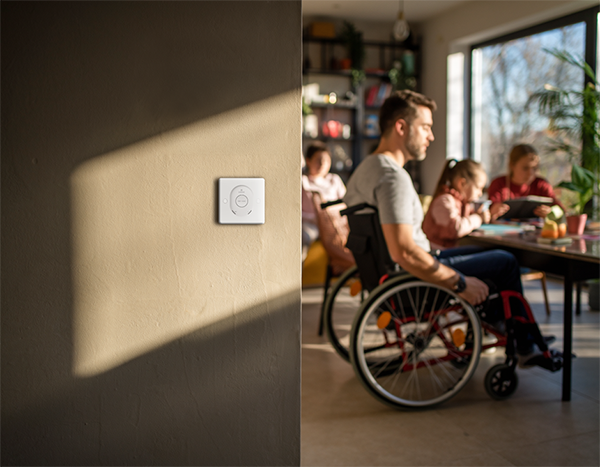
Kidde Safety Europe has introduced a new Fire and CO Alarm Control Switch that enables remote testing and silencing of interconnected Kidde FIREX hardwired alarms, providing a practical solution for properties where alarms are installed in locations that are difficult to access or require regular inspection. The Fire and CO Alarm Control Switch makes the process easy with a convenient Test/Hush button that eliminates the need for physical access to the alarms. This is particularly valuable for elderly or disabled individuals and in properties with high ceilings. It also enhances safety and compliance where alarms are installed in non-occupied areas, such as lofts with photovoltaic (solar) equipment. The solution aligns with BS 5839-6:2019, the British Standard for domestic fire detection systems, which highlights the importance of providing remote testing capability for alarms installed in inaccessible locations. The new control unit features separate visual indicators for fire and carbon monoxide detection to provide a quick and clear identification of the hazard. For simplicity, it also has a single multifunction button. To test the system, users simply press the button, and all the alarms will sound. In the event of an activation, pressing the Test/Hush button will silence all alarms in the system except the initiating device – this allows for easy and convenient alarm source indication. The Fire and CO Alarm Control Switch can be connected into any part of a new or existing Kidde FIREX hardwired alarm installation and can support up to 24 interconnected devices. The switch, which fits into a standard wall back box or standard surface mounted electrical box, should be mounted to a wall in an easily accessible, central location such as a hallway or landing space. It is supplied with a 10-year warranty for long-term reliability. “The safety of residents depends on fire and carbon monoxide alarms being in full working order, and it is imperative that they are tested regularly,” said Brad Taylor, General Manager at Kidde and a 20-year veteran firefighter. “Landlords have a duty to ensure their properties remain compliant, and our new alarm control switch simplifies this process across all Kidde FIREX hardwired alarms, supporting more effective management of life safety devices.” For more information about the RTHL Fire and CO Alarm Control Switch and Kidde’s full range of fire safety solutions, visit: www.kidde.com/fire-safety/en/uk/.
New format of pan-disability football in England
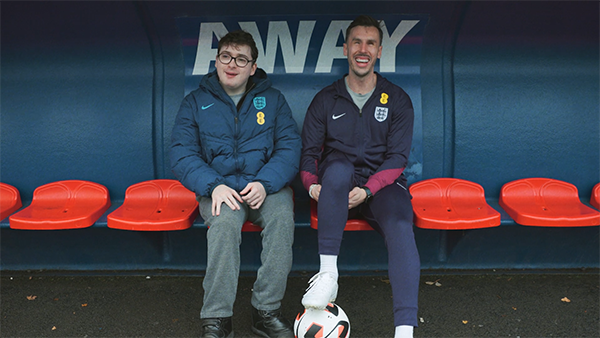
A brand-new format of grassroots disability football for adults has been introduced today by England Football. Launching on International Day of Persons with Disabilities [3 December 2025], Learn to Play Disability is the first-ever tailored sessional football programme available for adults 16+ with pan-disabilities who want to learn how to play football, with coaches trained specifically to lead each session. Amongst the first to experience the new format, BAFTA-winning actor and comedian, Jack Carroll, and England Partially Sighted footballer, Adam Lione, joined players and coaches at West Riding FA near Leeds to take part in the inaugural Learn to Play Disability session. There, they spoke to coaches newly trained to deliver the format about the importance of increasing opportunities in sport for adults living with a disability or impairment. Comedian and actor Jack, who was born with cerebral palsy, noted the impact the new disability-specific format will have for adults looking for a route into football. He said: “You can really see that the demand and desire for this kind of coached football is there, and that England Football are matching that through the introduction of these non-competitive sessions. People are engaging with disability football at different levels, and all levels are now catered for. People living with disabilities will now feel that they’ve got the ability to enter and play football at whatever level they feel comfortable.” An England Para player for the past 14 years, Adam Lione’s first experience of disability football was playing in a pan-disability team at the age of 15. He said: “I’m sure there are so many people who acquired their disability later in life and thought ‘my days of playing sport are done’, or others who have lived with an impairment their whole lives and haven’t quite found that place where they feel comfortable in sport. “This programme is a great initiative and offers a route into football where people can come and be themselves and harness their skills in a safe and supportive environment. I think the coaches will learn so much too, and through the new training will understand how to better engage with and adapt their sessions for the players in from of them.” Until now, the main route into playing football for adults with a disability has been to play competitively by joining an affiliated disability team. With a thriving network of 2200+ pan-disability teams across England, more disabled players are registered now than ever before. Grassroots football has seen a huge growth in both adoption and opportunity in all forms of disability football in England over the past year. The number of players accessing disability football has increased by 9.57% in the past 12 months, with England Football meeting this demand by increasing opportunities across all disability formats by 15.3% in the same period. Two years ago, England Football launched Comets, the first tailored programme of its kind designed for 5–11-year-olds with pan-disabilities. Since 2023, nearly 300 new providers have completed the required training and now offer opportunities for children to play football in a safe and fun environment. Learn to Play Disability aims to build on this success and offer a similar growth in access to flexible and inclusive opportunities for adult participants.