To mark Deafblind Awareness Week (June 21–27, 2026), Percussion Play is highlighting how music and vibration-based therapy can transform the lives of people living with sensory impairments.
Music has long been recognised as a universal language, capable of transcending communication barriers and supporting emotional, cognitive, physical, and social wellbeing. For individuals who are deafblind or living with visual and hearing impairments, music therapy can offer a unique way to connect with the world through vibration, touch, movement, and sensory interaction.
One school in Western Pennsylvania is seeing those benefits first hand.
The Western Pennsylvania School for Blind Children, which supports more than 190 students alongside an adult day programme and childcare centre, has created accessible outdoor music areas using instruments from Percussion Play.
The installations were made possible through the school’s Creative Arts Series programme, funded by donor Ray Wojszynski, which brings music and the arts directly to students. Alongside live performances, the programme has now introduced permanent outdoor musical instruments designed to be enjoyed by current and future students alike.
The school selected instruments including the Harmony Flowers, Petal Drum and Tubular Bells – all chosen for their accessibility and sensory engagement. With approximately 75% of students using wheelchairs, ensuring inclusivity and ease of access was a key priority.
According to Sue Wiedder, Director of Development and Communications at the school, the Tubular Bells became especially meaningful after learning how deafblind students could experience the vibrations produced by the instruments.
“The students that attend our school are visually impaired or blind with additional medical complexities and physical and cognitive disabilities,” says Wiedder. “Some students are non-verbal and rely on adaptive communication devices, so we had to carefully consider which instruments would best support their needs. When Robin from Percussion Play shared a story about a deafblind student enjoying the vibrations from the Tubular Bells, we knew they would be perfect for our students.”
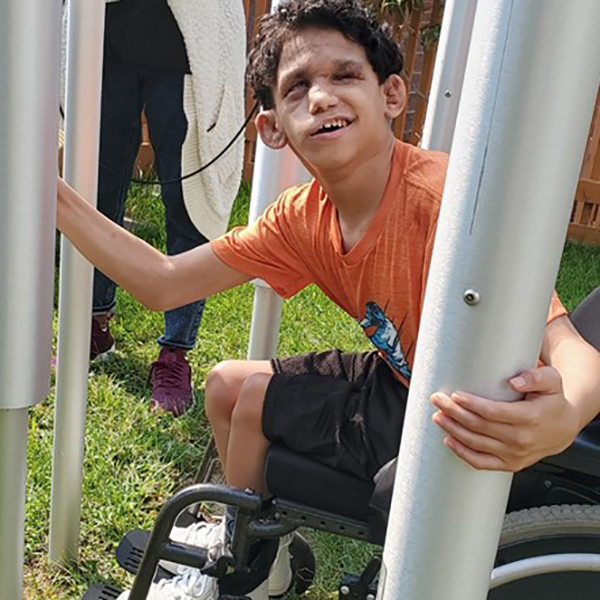
For students like Isaiah, who has profound hearing and visual loss, the instruments offer a new sensory experience that supports communication, movement, and emotional engagement.
Kelly Welsh, a Certified Teacher of the Visually Impaired at the school, explains: “Isaiah is primarily a tactile learner, meaning he experiences the world through touch. He uses tactile symbols, physical prompts and sign language throughout his day. With the Tubular Bells, he is likely responding to both the movement of the bells and the vibrations they create. Isaiah loves movement and sensory experiences, so it’s no surprise he connected with the instruments so strongly.”
The outdoor music areas are now used by teachers, therapists, mobility specialists, and support staff across the school, helping enhance sensory learning and emotional wellbeing for students with complex needs.
“It’s such a valuable asset for our students,” says Wiedder. “The biggest thing is accessibility. Seeing students holding the mallets, striking the bells, smiling and reacting to the sounds and vibrations — that makes it all worthwhile. Music is incredibly powerful.”
Jody Ashfield, Co-Founder and CEO of Percussion Play, says the project highlights the importance of making music accessible to everyone.
“This project is a wonderful example of how music can be experienced beyond sound alone,” Ashfield explains. “For people with sensory impairments, vibration and movement become part of the musical experience. We design our instruments to be inclusive, sensory-friendly and visually engaging so they can be enjoyed by all abilities.”