The choice of a learning-disabled sculptor as this year’s Turner Prize winner is ground- breaking news for other artists with disabilities, says the mother of a painter with Down’s syndrome.
Nnena Kalu’s historic win this week marks a turning point in the view of art created by practitioners who live outside the traditional view of what an artist should be, says Mari Stevenson, whose daughter Fiona Stevenson creates bold abstract works which reflect her own perception of the world.
“Their work can now sit in the mainstream, alongside that of neurotypical, non-disabled artists,” she said.
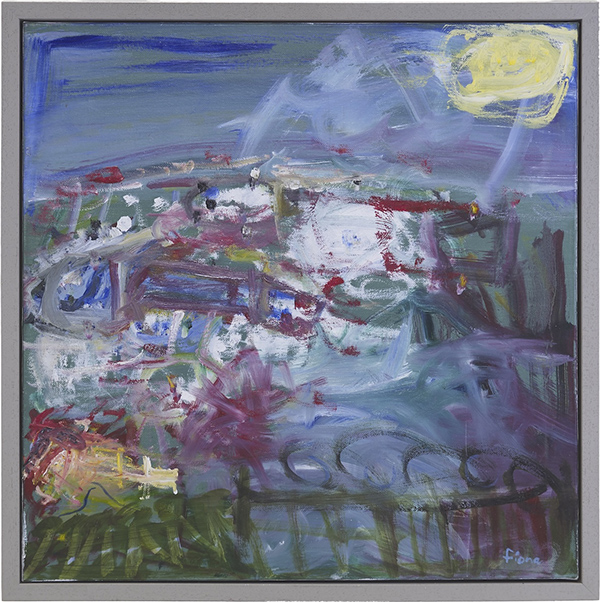
Fiona’s work has been likened to that of ‘outsider artists’ from the surrealist movement by renowned art critic Mark Hudson, who visited her studio in Hertfordshire ahead of its official opening next year.
“The surrealists were great champions of what we’d now call outsider artists,” said the Independent’s chief art critic and Guardian and Daily Telegraph writer.
Turner Prize winner, Fiona is, in fact, a former member of the organisation at which Nnena has been a resident artist for quarter of a century, with Nnena’s selection suggesting it is an excellent incubator for disabled artists.
Mark continued: “Fiona’s work superficially reminds me of certain kinds of art which were going on in the 1950s, particularly the kind based on very intuitive abstract gestural ways of getting paint on canvas, with origins in surrealist automatism. Here the artist doesn’t come with premeditated ideas. They just let everything come from the subconscious.”
It is Fiona’s emotional connection with the world which drives her painting. She has worked every day for more than a decade with passion, with her paintings exhibited in New York and London.
Tate Britain director and chair of the judging panel Alex Farquharson’s comments have given heart to Mari.
“It breaks down walls between, if you like, neurotypical and neurodiverse artists. It becomes really about the power and quality of the work itself, whatever the artist’s identity is,” he said at the ceremony.
“So maybe what’s historic about it is it’s one more move to include really great neurodiverse artists in the picture we present of art today.”
Mari agrees with Nnena’s artistic facilitator at Action Space, Charlotte Hollinshead, who said: “This is a major, major moment for a lot of people. It’s seismic. It’s broken a very stubborn glass ceiling. This will challenge people’s preconceptions about differently abled artists, but especially learning-disabled artists, an important creative community so undervalued.”
Fiona’s studio in Hertfordshire will open in 2026. See some of Fiona’s work, and ask to be added to the private view guest list, here: https://www.fionastevenson.co.uk