I Wonder What it’s Like to be Dyslexic?

A graphic design graduate once labelled lazy by teachers is hoping to publish a stunning graphic novel to help people understand how people with dyslexia see the written word. Sam Barclay, who has dyslexia, graduated from the University of Portsmouth in 2013 with a first class BA in graphic design and a commendation from the International Society of Typographic Design. He went on to work with London based Make Architects, designed road bikes for UK based retailer Wiggle, and has published two graphic design books. Sam says he hopes his new book, I Wonder What it’s Like to be Dyslexic? Will help people understand visually how dyslexics experience the written word. Sam said: “About 17 per cent of the population suffers from dyslexia and I Wonder What it’s Like to be Dyslexic? will help everyone from employers to parents understand visually the personal struggles dyslexia brings. “I was inspired to write this partly because when I was at school, at parents evenings, Mum and Dad were often told by my teachers that I was lazy. Teachers would say ‘What do we do with a boy like Sam?’ and ‘We call him Lazy Bones’. Experiences like this – a common misunderstanding that many with dyslexia will recognise – are included in the book to help fellow dyslexics and parents relate to the struggles they face. “I hope the book challenges myths, creates awareness and ultimately helps stop another kid from being called ‘Lazy Bones’.” Sam’s first book, ‘I Wonder What it’s Like to be Dyslexic?’, published in 2014, received worldwide press attention and was lauded by educators for his typographic experiments in a visually stunning, large-format book. His second book, ‘I Wonder What it’s Like to be Dyslexic?’ was published in 2015. All his books have been funded via crowdfunding. To find out more and to order the book, visit: https://www.kickstarter.com/projects/sambarclay/i-wonder-what-its-like-to-be-dyslexic-iii
Insync Bikes pushing ahead with special needs trike design

Manchester-based Insync Bikes and inventor pushing ahead with special needs trike design A part-time inventor whose design for a special needs trike for children caught public attention earlier this year says progress is being made to bring the design to a global market. Les McMahon and his trike shot to prominence in June when the media reported he is working with designers at Insync Bikes in Manchester owned by India’s Hero Cycles, the world’s biggest bike maker by volume, to perfect the trike he has engineered for his young neighbour. Media reports on the trike included BBC TV North West which has been seen nearly 500,000 times on BBC News’ Instagram with a further 85,000 views on BBC NWT’s official Twitter feed with scores of comments praising Les’ caring gesture. Meanwhile a Manchester Evening News report has received more than 700 likes and 70 comments on the MEN Facebook page praising the idea. Les said the special needs trike, which will be much cheaper than expensive alternatives already on the market, is undergoing stringent testing at Hero’s site. Once plans are finalised, it will be made available in a flat-pack kit or as a downloadable design under Hero’s Insync family bike brand to enable more families with disabled children to enjoy the benefits of cycling. The special needs trike will cost in the region of £500 compared with alternatives that start at around £5,000. Les, from Ellenbrook, Worsley, made the original trike in his garden shed to enable 13-year-old neighbour Lewis Flint to get out on the roads with his parents, Dawn and Andy. Seeing an opportunity to allow even more people to benefit, he knocked on the door of Abhishek Pratap Singh, head of Hero Global Design, and was given ten minutes to pitch his design. Les said: “I talked my way into the office and showed Abhishek my plans for the trike and he said ‘everybody in the office gather around – this is why Hero has come to Manchester, to meet people like this’. I couldn’t believe it.” Lewis, who has an undiagnosed genetic condition, communicates through an aid, has no independent mobility and relies on other people for his personal care. He enjoys rock climbing and skiing, but cycling was the one hobby his family had struggled with. Les’s solution involves a ‘sidecar’ fitted to a bike, with a ramp to roll on the wheelchair. While Lewis is still enjoying his special needs trike, Insync’s designers have recreated it in a computer programme to allow them to make and test alterations before it is rolled out to others. Areas they have concentrated on have included the attachment points, the flatpack design and the width of the vehicle. Work has also been carried out on the advantages of using weight-saving materials and the stability and weight distribution of the outer platform. Les said brainstorming sessions with Insync’s experts had proven useful to address problems such as the width of the special needs trike, which had always been its ‘Achilles heel’. He said: “It might take ten goes for us to get the design right but bearing in mind we want this to go worldwide then we have to get it right. I’ve been amazed with the engagement and the interest we have had since the trike went public, which just shows that something like this is needed for disabled people.” Prior to his link-up with Insync, Les teamed up with the University of Bolton, which incorporated the trike into its engineering degree course for two years. Danny Evans, chief executive of Avocet Sports, the UK subsidiary of Hero Cycles, said they were keen to get the trike just right to benefit more people around the world. He said: “Insync is a family bike brand and we want to support families to improve their health and quality of life through cycling. We were given a lot of confidence in the concept when we first unveiled it to the media in June and saw the story go viral with reports across TV, social media and newspapers. All the public comments online showed us how much goodwill and support there is for this trike in the UK and overseas to help improve the lives of children with special needs. “We have been absolutely blown away by Les’s invention and his enthusiasm for helping Lewis. We now want to translate that and help families with a trike that is affordable. We have been told that the present trike models are way too expensive at £5000 for families with disabled children already shouldering a lot of additional costs. “Our design team are making good progress with Les to develop his original design before we release it to a mass market, and we have already had interest from around the world. Insync Bikes’ partnership with Les matches our outlook and ethos to champion cycling as a force for good.” For an update read this article: Manchester-based Insync Bikes and part-time inventor get backing of global manufacturer for special needs trike
Coffee van run by learning disability charity is a hit

People with learning disabilities have been brewing up a storm at a coffee van run by national charity Hft. Situated at Bradford Foster Square train station, the initiative allows people to gain work experience skills and spend time in their community. Three people with learning disabilities and their support workers are at the helm of the venture, taking on duties including serving hot and cold drinks and refreshments to the city’s commuters and visitors. The van and its budding baristas have proven popular since the project’s launch in June, with many visitors stopping to have a coffee and find out more about the work Hft does locally. As well as boosting the profile of the charity, the scheme offers people with learning disabilities the chance to spend time within their community and develop their confidence and independence, while also building new skills ranging from customer service to communication and problem solving skills. Open from Monday to Friday from 7.30am to 2.30am, Hft’s coffee van serves cakes and croissants alongside a variety of hot and cold drinks. Following a successful launch, the charity is now exploring options to take the van to bigger events and has opened a suggestion box where customers can put forward any new ideas. Malcolm, who works at the coffee van, said: “I enjoy coming to the van, it makes me happy. I enjoy serving people their drinks, collecting their money and chatting to them.” Maxine Kneeshaw, Area Manager at Hft, said: “We’ve been delighted by the public’s response to our coffee van. This initiative is a great way for people we support to experience something new and develop their skills and experience, acting as a stepping stone to valuable new opportunities including paid employment. As the weather gets colder, we’re looking forward to seeing plenty more people popping along to our van for a hot drink and a chat!” Hft currently supports more than 2,500 people with learning disabilities across the country to live the best life possible. This includes supporting people with learning disabilities to live independently in their own homes, providing employment services to help people develop skills and experience for work and helping people to pursue hobbies, make new friends and get involved in their local communities.
OmniServ signs on as PurpleSpace Strategic Partner

OmniServ, the leading provider of assistance for disabled air passengers in the UK, is excited to be a Founding Strategic Partner of PurpleSpace, a networking and professional development hub for disabled employees, network and resource group leaders and allies aimed at supporting employees coping with the experience of ill health, disability or the repercussions of an accident or injury, while also flourishing at work. Sam Saunders, OmniServ’s Head of Innovation & Regulatory Compliance, says: “Employing people with disabilities is the right thing to do in an increasingly responsible, accessible and inclusive business world. But it’s more than just a moral imperative; it also is a logical move for us which strengthens our team. If we’re going to deliver the best possible experience we can for disabled passengers, then disabled employees can contribute particularly valuable skills and insights based on their personal experiences. They have first-hand knowledge of what it is like to travel with a disability, and they can communicate that knowledge to the rest of the OmniServ team. Being a PurpleSpace Strategic Partner will further enhance our understanding of how we can deliver a better service built around real experience.” OmniServ will be participating in this year’s #PurpleLightUp on 3rd December 2019, a global solidarity campaign recognising the economic contribution of people with disabilities. This is held to coincide with and celebratethe International Day of Persons with Disability, which was established by the United Nations in 1992. Kate Nash OBE, CEO and Creator of PurpleSpace, says: “It’s great to have OmniServ on board as a Strategic Partner. They not only have real experience of helping disabled people navigate the airport and airline experience so they can have a holiday like everyone else, they are also committed to extending employment opportunities for disabled people within their own organization.” In March 2018, OmniServ announced plans to achieve Disability Confident Employer status as soon as possible. This is a UK Government-backed programme to encourage companies to invest in supporting disabled employees, whether existing staff or newly recruited ones. OmniServ will see the company launch a range of initiatives aimed at integrating disabled staff across all its operations and ensuring they get the same opportunities as everyone else to grow their careers. As a Disability Confident Committed Employer, OmniServ has committed to: ● Ensuring its recruitment process is inclusive and accessible. ● Communicating and promoting vacancies. ● Offering an interview to disabled people. ● Anticipating and providing reasonable adjustments as required. ● Supporting any existing employee who acquires a disability or long-term health condition, enabling them to stay in work. According to Civil Aviation Authority statistics, UK air travel grew 19% between 2010 – 2017. During the same period of time, the numbers of passengers requiring assistance has grown an incredible 47%. OmniServ is the UK’s leading airline and airport assistance services provider, and provides assistance for People With Reduced Mobility (PRM) passengers at Heathrow, one of the world’s busiest international passenger airports, as well as at Manchester, Liverpool, Edinburgh and Stansted. Every year, it helps nearly 2 million PRM passengers. While many passengers may have visible disabilities, OmniServ recognizes that there are many people too who may have hidden disabilities. OmniServ actively works with a range of charities to ensure assistance is available to those with hidden disabilities too, including autism, impaired vision, hearing problems and medical conditions such as Meniere’s Syndrome or colostomies. Antony Marke, Managing Director of OmniServ, says: “At OmniServ, it is our fundamental belief that every customer, regardless of their assistance needs, has the right to enjoy air travel with comfort and dignity. We support more than1.7 million passengers with every type of disability every year, and look forward to partnering with PurpleSpace to continue vital work to ensure that travel is accessible for everyone, including those with visible or hidden disabilities.”
Devon attractions equipped to welcome more disabled visitors

Three heritage attractions in Devon are now able to welcome more disabled visitors through their doors than ever before. Royal Albert Memorial Museum (RAMM), Kents Cavern and Seaton Wetlands, have introduced a full set of products to help improve accessibility for disabled and Deaf British Sign Language (BSL) users. The products were developed by Heritage Ability, in partnership with each of the sites, to help more disabled visitors enjoy their visit by feeling more inclusive. The written tools help to ensure disabled visitors receive information in a format that aids their understanding, or by proving mobility equipment to help people access outdoor sites they were previously unable to visit. Heritage Ability is a three-year project, funded by the National Lottery Heritage Fund, to support over 20 heritage sites in the South West to become more accessible for people with disabilities and Deaf BSL users. The products were developed after discussions with the disabled community, on specific conditions and the barriers they face when visiting heritage sites. The produced included: BSL Tours, Easy Read Guides, Online Visual Guides, Large Print Guides, as well as Disability Awareness training for staff and volunteers. Seaton Wetlands also received an all-terrain scooter as part of the project. · BSL tours for Deaf BSL users – consist of a number of short film clips, presented by a volunteer BSL signer. The BSL tours are then transferred onto a tablet, which can then be used by visitors as they walk around the site. They are also uploaded to the Heritage Ability YouTube channel for viewing on personal devices. · Easy Read Guides are created to help people with learning disabilities understand more complex information presented at the sites. The guide is written using a simple ‘Easy Read’ format and supported with images to help clarity. The guides also include activities and points of interest. · The Online Visual Guides are also now available to view on each of the heritage site’s website. These guides are primarily aimed at autistic people and visitors with complex needs. They were created to enable visitors to plan their visit in advance, helping to reduce stress and anxiety on the day. · Large Print guides are aimed at people with visual impairments to help them see the information more clearly. These guides use many techniques to help people that suffer from Macular Degeneration or Glaucoma to view the information presented at the sites. · Staff and volunteers at the attractions were also given Disability Awareness training to help them understand how to engage better with disabled visitors. It also enabled them to identify different tools available on site that could help improve accessibility for disabled visitors. The Heritage Ability project also provided an all-terrain mobility scooter (called a Tramper) for Seaton Wetlands, as it has large external areas of parkland. The Tramper was introduced to help visitors with permanent or temporary mobility issues travel around the park and see areas previously inaccessible to them. Elliot Ling, Education Officer at Kents Cavern, said: “It has been great working with the Heritage Ability team over the last three years, seeing first-hand the improvements that they have made in making our site accessible to a much wider range of people. It’s amazing to see people that might not have visited before actually able to engage with the heritage. “We’ve had great feedback from BSL users about being able to use the tablet in the cave. We’ve also had feedback from parents and teachers of autistic children that have praised the Visual Story for helping their children to prepare for their underground visit.” Royal Albert Memorial Museum Manager, Camilla Hampshire said: “We are keen to share the city’s treasures with everyone. The Heritage Ability project has provided expert guidance and the impetus to expand our offer and make RAMM even more accessible to Disabled and Deaf BSL users. It’s all about listening to visitors, consulting experts, finding a balance and providing options to suit the widest possible range of needs. We are committed to this as an ongoing process and grateful to Heritage Ability for being a critical friend, identifying needs, giving sound advice and helping to produce the materials that disabled and Deaf BSL users have asked for.” Heritage Ability is one of the projects managed by Living Options Devon (LOD), a user-led charity, where all of the initiatives are developed or supported by people who have a first-hand understanding of the challenges faced by disabled and Deaf people. Heather Brown, Deputy CEO of Living Options Devon, said: “This is such an important project for LOD. It allows us to help more disabled visitors go to heritage attractions with their family and friends, and just have a fantastic day out. “We will continue to work with our partners around the South West to help disabled people and Deaf BSL users, have the same experience on site as any other visitor. Helping sites to introduce accessible products to help gain understanding or access to areas previously unreachable.” Tim Dafforn, Countryside Team Leader for East Devon District Council (that manage Seaton Wetlands), stated: “We are proud to be part of this project and have seen the improvements on site make such a valuable difference to visitors. The pre-visit information is first class, and we can now offer improved access allowing more people to enjoy their visit. I encourage everyone to visit Seaton Wetlands in the future. It is probably now one of the most accessible nature reserves in the South West. “
Retreat at Ellasfield Opens Accessible Holiday Accommodation

Accessible Holiday Accommodation & Mindfulness Retreat in West SussexKim & Ella’s StoryThe Retreat at Ellasfield is the inspiration of Kim Bryant-Cuddis and is the result of the many battles she has fought on behalf of her daughter Ella, who has cerebral palsy. Kim has opened her own accessible holiday accommodation.Kim knows only too well the problems associated with wheelchair access and inclusion within a holiday setting, as well as the uphill battle to maintain a daily routine whilst staying away from home.It was this that led Kim to install a suitable hoist to allow all Ellasfield guests the opportunity to enjoy the wood-fired hot tubs. In the same way that a fully fitted wet room has been created and their Shepherd’s Hut adapted from ceiling hoist to taps, so people using wheelchairs can function as they would at home.Kim explains, “I have a deep understanding of travel with a family member who has a disability, so if it is required, I am in a good position to assist guests at Ellasfield should an extra pair of hands be needed”.It was also Kim’s experiences with Ella that drew her to Mindfulness.“Living with disability has been a roller-coaster. In the early years I found myself in a state of ‘Fight or Flight’. Constantly battling on behalf of Ella, my mind would get caught in a loop about the future or going over the past, which I could do nothing to change. It was through the practice of Mindfulness that I learned how to deal with negative thoughts, how to take back control and ultimately discovered a sense of wellbeing, happiness and creativity.It was at this point I wanted to share everything that I have learnt, and Ellasfield was created”.Many guests come to stay at Ellasfield that is set in the peaceful Sussex countryside of Billingshurst, to enjoy the lovely surroundings. Others come to learn more about mindfulness or equine facilitated meditation, both techniques that create a reduction in stress and help enable us to adjust emotional and often physical aspects of our lives.Kim prides herself on every aspect of Ellasfield, whether it is providing a surprise plate of freshly made chocolate brownies and fresh strawberries or a personal welcome card with a home-made treat. Ellasfield’s 100% positive reviews on Trip Advisor speak for themselves.“Simply my happy place”, wrote Sasha Alyssia. “There is so much I could say about this little bit of heaven. Two blissful nights of total peace and the only noise was a horse neighing whilst we sat in the hot tub with the twinkly lights around us. It was like a magical garden.Kim our host, could not have been more accommodating and makes the most beautiful yummy breakfasts and delivers to your door. We cannot wait to return. I could not recommend it more. We had the loveliest weekend and the cabin is gorgeous”. Find out more about the Retreat at Ellasfield’s accessible holiday accommodation here: www.ellasfield.com
The Calming Effect of Horses

There are many benefits of horse riding for children with autism, autistic people see, hear and feel the world differently to other people and this can cause considerable anxiety. The rhythmic movement experienced during horse riding has been found to calm this distress and the actual physical contact with the horse may also help to build other relationships and reduce negative reactions. Communication and empathy may also be increased by the interaction with the horse as their excitement of riding encourages them to speak to their horse and they begin to understand that their reactions can have an impact on how the horse behaves. Riding different horses, introducing new activities and the rotation of volunteers that help out during riding sessions can assist with the resistance to change that is often associated with autism. The Calming Effect of Horses on Cameron Branchett Cameron Branchett has riding been since 2011. When he began to get frustrated with his progress, Malvern Riding School, an Accessibility Mark accredited centre, stepped in to help. Here his Dad, Jonathan, tells his story. Cameron’s Story Cameron was diagnosed with Autism Spectrum Disorder (ASD) in December 2006. In 2011, after discovering that the rocking motion on the pelvis when riding a horse released oxytocin that can help calm people, Cameron tried his first riding lesson. The effect on him was immediate. Trying to cope in a main stream school, Cameron was showing symptoms of Tourette’s Syndrome alongside his ASD. All of this stopped every time he sat on the horse. He was hooked and we were amazed that a half hour lesson could have such a profound effect on him. They say certain animals have an affinity with humans and this is certainly the case with every horse Cameron has ridden. He forms a genuine bond with them all and they seem to instinctively understand his needs. The calming effect of horses on Cameron has been absolutely amazing. With ASD comes difficulties, listening to and understanding complex sets of instructions can be challenging at times. Cameron never expressed any desire to be a champion rider, or show jumper, he just enjoyed riding and trotting. However, he began to get frustrated with his own limited progress and was starting to find the lessons troubling. In 2016, he was on the verge of giving up. That’s when we turned to Malvern Riding School. Julie and the staff there are simply wonderful. Within a few months he had mastered his rising trot, something he had never managed in five years! He now canters and jumps with ease and he is so much more confident and enthusiastic about his riding now and determined to become as good as he can be to help him with his dream of becoming an actor. Julie and the staff, have a way of sensing when Cameron is getting a little disengaged with his riding and quickly change the lessons to keep him interested. The way they communicate with him really resonates and he responds well to them. The little things like stopping the horse and talking towards him rather than shouting to his back as he rides past make all the difference. They also know the best way to challenge and support him even when he doubts himself. Accessibility Mark status is awarded to a riding centre that has been approved by the RDA following training and assessment. The close link with the RDA means that it can offer continuous support to the establishment to ensure it provides a first-class experience that aims to be hugely beneficial to riders of varying levels of disability. There are currently 53 Accessibility Mark-approved centres across the country. To find your nearest RDA Group or Accessibility Mark centre visit www.rda.org.uk
Wheelchair-friendly days out that are not to be missed!
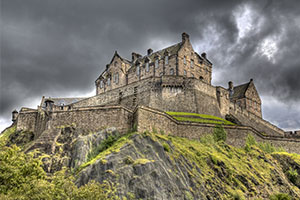
Being in a wheelchair will not stop you from sampling some of the best experiences to be had in the UK. There are many wheelchair-friendly days out to be had where venues are accessible and cater for all visitors. This means that it’s not as difficult as you might think to have a great day out, or even a weekend away. If you are looking for inspiration about trips that you can take here are a few ideas to get you started. See a show in London A London theatre break is a great idea if you enjoy live entertainment. The theatre world has made a big effort to ensure that premises are accessible, as it was reported in 2017 that the majority of theatres have from two to twenty spaces for wheelchairs available. The main reason for the lack of disabled access throughout theatres in the first place was due to the time of which the buildings were designed. Most theatres were constructed during the late Victorian and Edwardian period – times where the disabled were often discriminated against, and because of the history of these buildings, many designers cannot find the permission to create the required facilities. But, new theatres are being designed with these accommodations in mind. Being in a wheelchair should be no barrier if you want to experience the buzz of going to the theatre in London’s West End. It’s a magical experience, no matter which show you decide to see. Take to the slopes at Chill Factor Chill Factor in Manchester is one of the best venues to enjoy snow sports. Do not worry that your wheelchair may stop you from getting the full experience. The folks at Chill Factor have made sure that everyone is included by working with Disability Snowsports UK to accommodate the needs of individuals with any type of disability. You can use the adaptive equipment that is provided while receiving access to specialised instruction and support. This means that you can learn to ski and snowboard and get full enjoyment from your day out. Sample the Titanic story in Belfast You will know the story of the doomed Atlantic liner Titanic. It’s a sad tale, but a fascinating one. The great news is that you can learn more about the vessel, and it’s history, at the Titanic Experience. The venue is accessible for wheelchair users and there is also a loop system in place for anyone that is hearing impaired. This means that anyone can experience the Titanic Story. There is also the opportunity to take in a luxurious afternoon tea, on Sunday afternoons. Spend time exploring Edinburgh Edinburgh is one of the most accessible cities in the UK. This makes it the perfect choice for a day trip or short break if you use a wheelchair. It’s a beautiful city steeped in history and tranquility – it’s certainly worth a visit. You won’t have to worry about getting around this prestigious city, as Edinburgh’s public transport is incredibly accessible for those in a wheelchair, going out of the way to ensure that travel is less challenging for everyone. The airport provides special assistance, while the buses kneel to kerb height for step-free access. During your visit, there are several different attractions to visit including: ● Edinburgh Castle ● The Royal Mile ● The Royal Botanic Garden ● The Scotch Whisky Experience ● The Edinburgh Fringe Festival Spend time at the beach UK beaches may not be quite as inviting as those abroad, but they still have their own special appeal. If you are thinking of visiting a beach in a wheelchair, you should choose one that you know is going to be accessible. For instance, the beach at Broad Haven in Pembrokeshire is a good choice as you can use one of the all-terrain wheelchairs that are provided – just remember to book before you travel. Other beaches that are a good choice for wheelchair users include: ● Whitmore Bay in South Glamorgan ● Port Stewart Strand in Northern Ireland ● North Berwick Beach in Scotland ● Boscombe Pier Beach in Dorset Explore Beningbrough Hall Beningbrough Hall is a National Trust property and, like many of the Trust’s properties, it’s accessible for wheelchair users. It’s a beautiful place to visit, with a large country house and stunning gardens to explore. You can take a look around the galleries at the Hall – you can even learn how to make your own art while you are there. Outside the Hall are woodland walks which provide the perfect opportunity for kids to let off steam, and there’s a restaurant on site where you can explore local seasonal delights created with local produce. It’s an ideal venue for a day trip that appeals to all the family. Get some excitement at Avon Tyrrell Avon Tyrrell is an adventure centre in the New Forest, and there are more than 40 different activities available to try. All of them are accessible to everyone as there is a range of different special equipment provided. This means that there is no reason to miss out on any of the excitement. There are also accessible activities available in the wider forest area, including horse riding and wheelchair friendly trails. This means that you can visit the New Forest with your family, or a group of friends, and everyone can experience the fun. Whatever needs you have, there are places in the UK that you can visit. There are also organisations that arrange trips and holidays that are specifically aimed at people who have accessibility needs. Take a look online and you will find many trips that you are certain to enjoy.
Jenni Meredith discusses the hidden disability Blue Badge extension
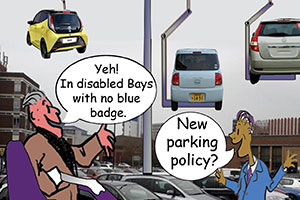
UCan2 Jenni Meredith warns that although the legislation is changing, there’s more to be done if everyone who needs a Blue Badge is to receive one – and find somewhere to park! Some of you reading this, will have taken part in last year’s consultation about extending the Blue Badge scheme to those with hidden disabilities. But most of us know from public dialogues in other fields, such as planning or health care changes, that the consultation process is merely an exercise. It gives civil servants experience in producing forms, creating charts of the results and providing statistics for the press department, but almost always the opinions of the public are ignored, unless of course those opinions coincide with what the consulting authority wanted to hear. Too cynical a view? Well, perhaps. In any case, this consultation was slightly different. The overwhelming response was positive. We’ve only just begun… However, in widening the eligibility for a blue badge the Department for Transport will also need to plan for more on-street parking spaces and presumably to issue new guidelines to increase the mandatory percentage of disabled parking bays in private car parks, such as those at supermarkets, hospitals, galleries and museums, etc. Plus, there is likely to be more abuse of the system if non-disabled drivers think they can get away more easily with parking in a disabled bay, claiming a hidden disability — ‘Oops! Forgot the blue badge’, or ‘…It’s in the post’. In May at a Gloucestershire car park, not one but two cars parked in disabled bays when the car park was otherwise almost empty. Why do some people behave so arrogantly and with such disregard for others? In the same week in Liverpool two women came to blows over who should be parked in a disabled parking bay – and neither of those two had a disability. It’s not just the general public who abuse the scheme either. One Government Minister, in his efforts to be re-elected, was caught blocking a disabled parking bay with his campaign posters. That was in Australia, so at least it’s not only in England that we suffer from ignorant MPs. Is technology the answer? One solution, pictured in the cartoon, could kill two birds with one piece of technology. You wouldn’t be too keen to find your car hanging in the air if you unlawfully parked in a disabled bay, would you? Technologies exist to stack cars in a sort of rotating pile, so that the driver merely needs to drive into one spot and the car is then moved along a vertical conveyor belt, something like the London Eye, to one of the upper positions. But these are mainly used at ports, shipping cars to other destinations. It seems feasible in that situation where the cars are all empty. Combine this with self-parking cars and you might have a solution for disability parking. A blue badge holder could park really close to the entrance of, say a supermarket, then command the car to go and park anywhere in a stack. When the owner exits the store, all they would have to do would be to summon the car with their key fob and it would arrive at the entrance within minutes, ready to be manually driven again. I suppose we need to wait for the teething problems to be ironed out on this technology, and for the price to drop too. But I like the idea of a car behaving rather like a faithful work-horse. Let’s not pass the buck In Wales, people with certain hidden disabilities have been eligible for a blue badge under an extension of the scheme since 2014.The Welsh Government ruled that people with cognitive impairments including autism could successfully apply for a blue badge. However it’s not all good news there either. In reality it has proved difficult for people in certain parts of Wales to convince their local authorities that they are, in fact eligible under the extended criteria. The problem, as usual, lies in the interpretation of words. The Government says local authorities have the responsibility for deciding who is and who isn’t eligible and the local authorities say they are following Government guidelines. It’s a familiar scene of buck-passing and confusion. One authority has an autism team to assist applicants, whilst others refuse applications if there is not ‘sufficient supportive medical evidence’. Maybe when the English and Irish extended scheme finally comes into effect, it will be just such a postcode lottery— hopefully not. Jenni who writes health-related poetry – at wordsart.co.uk • Cartoon by Tony Meredith