The most inclusive fashion show that’s ever been staged

The most inclusive fashion show that’s ever been staged in Manchester is coming to the city ahead of Disability Awareness Month. Aged from 20s-50s, every model is disabled, neurodivergent or chronically ill and all will wear adaptive fashion designs from a young, ambitious Manchester label. RECONDITION was founded in 2025 by Manchester Metropolitan University fashion graduate Ellie Brown. Sixteen models – female, non binary and male – will travel down a specially constructed runway at Aviva Studios on Saturday 27 June 2026. Ellie’s eyes were opened to how unaccommodating fashion can be in 2021, when she badly broke her ankle, which resulted in her using a wheelchair for several months. Each garment in RECONDITION’s denim-centred collection, has been designed with and for disabled people. Adaptations built into the label’s inclusive designs include front pockets on jeans for wheelchair users, ring pull zips for people with reduced dexterity and sleeves with poppers along their full length to help accommodate prosthetic limbs or medical equipment from feeding tubes to insulin pumps. Ellie’s Manchester city centre based company now works alongside a co-design group who all have varying lived experience of disability. This ensures that her designs are truly fit for purpose, whether that’s accommodating stoma bags, providing comfort and practicality for wheelchair users, or offering an easier “on and off” experience for people with reduced grip strength or dexterity. Aaliyah Rice, 24, from Bury, Greater Manchester, is one of the models taking part. Diagnosed with ADHD aged 21, the advertising creative signed up after seeing an open casting call on TikTok. She said she thought it would be “such a fun experience and a chance to meet like-minded people”. She said: “Mainstream fashion on a whole is entirely unaccommodating even for an able-bodied person. Things like sizing and fit are generally a nightmare. I can only imagine the extra layer of hell having a physical disability brings to clothes shopping. “My own personal experience is with clothes that give me sensory issues – things like tags, textures and seams that cause me distress and take my focus away from other things. It makes it more challenging to shop, as most of the clothes that don’t cause me sensory issues aren’t fashionable or stylish and when you don’t feel confident you can’t embrace life the way you want. I’m a strong believer that accessible fashion is fashion for all.” The label’s first catwalk collection includes the popular dark blue denim Reconditioned Jean, which is already on sale and debuts a number of new adaptive designs, including a denim miniskirt, a dress, a jumpsuit, a top and a further new cut of jeans. Research from disability charity Leonard Cheshire found that mainstream fashion in the UK does not meet the needs of three quarters of disabled people. According to government figures, a quarter of people in the UK have a disability – that’s 16.8m people. And in state pension aged people, the figure rises to almost half (45%). Ellie says that RECONDITION’s first major catwalk show, called Disability Pride Catwalk: A Space for Each Other, is “part performance, part social commentary”, and will “reflect on who fashion is for, how access is built (or denied) and what it means to create space collectively”. The purpose-built runway at Aviva Studios features a double height bar, which is inclusive to wheelchair users and people of short stature and acts as a metaphor for how the built environment enables or disables people. Ellie said: “The Disability Pride Catwalk is a safe space for people to celebrate bodies of all kinds whilst enjoying the atmosphere and experience of a runway show. “I also hope the event will provoke useful discussions about how fashion – and society as a whole – can take more accountability for inclusivity.” Disability Pride Catwalk: A Space for Each Other Saturday 27 June 2026 6-8pm The Undercroft, Aviva Studios, Water Street, Manchester, M3 4JQ FREE https://factoryinternational.org/whats-on/disability-pride-catwalk
Abstract artist’s studio wins regional RIBA award
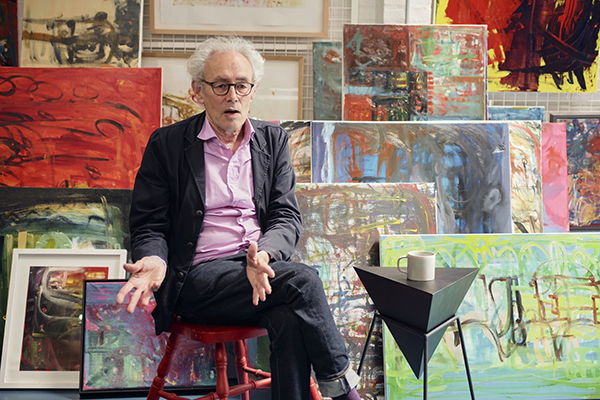
A studio created for an abstract artist with Down’s Syndrome, whose work has been exhibited in New York, London and Manchester, has won a regional RIBA (Royal Institute of British Architects) award. Described as ‘a new cultural landmark’ by RIBA judges, the studio – designed for Hertford-based Fiona Stevenson, will be considered for several other regional RIBA awards, its national award and, ultimately, potentially the coveted RIBA Stirling Prize. The studio was designed by Edward McCann of London-based Edward McCann Architects Ltd, whose work has featured on TV’s Grand Designs and who compares Fiona’s work ethos and approach with his own. “Fiona is an intuitive artist who practices abstract expressionism in a pure sense. Her works are pared down to intuitive mark making. I think a lot of the decisions and responses at the early stages of the project were intuitive. This obviously gets formalised within a design process, but at its start I think there is an intuitive root which is shared with Fiona’s work.” RIBA East jury chair, Julian de Metz, said: “The jury agreed that this is a highly accomplished small project. It demonstrates how careful reuse, intelligent handling of light, and a restrained material palette can combine to create architecture of real quality, even at a small scale. Calm, purposeful, and quietly joyful, this project offers a compelling model for how small buildings can do a great deal with very little. “It responds directly to its landscape. It reaches confidently into the tree canopy, drawing diffused daylight down and funnelling it deep into the studio below. This simple but artful manipulation transforms the interior, creating a painting and display space that feels calm, generous, and animated by subtle shifts in light throughout the day. A simple, wide window at ground level gives the artist a vista onto a calm, Japanese-inspired garden. “At night, the building takes on a quieter but equally compelling presence, its polycarbonate upper windows emitting a gentle glow among the trees, much like a beacon. This moment of warmth and visibility adds intrigue to an otherwise private building.” Hertfordshire is clearly becoming a cultural focal point in 2026, with East Hertfordshire District Council s all-day multi-arts hub BEAM also winning a RIBA East award. Fiona Stevenson’s studio will be officially launched later this year, with invitations to the private view to be issued in the coming months. Those wishing to add their names to the guest list can contact Fiona, and see some of her work, here: https://www.fionastevenson.co.uk
Support Dogs instructor has a passion to make life better
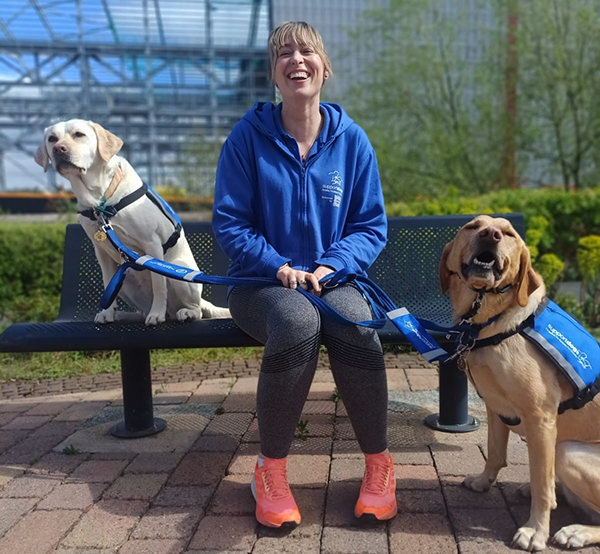
For the past five years, Jancis Taylor has been helping to change lives. She does this via the training of assistance dogs, as an instructor with the national Support Dogs charity, which trains and provides these incredible dogs to help autistic children, as well as those living with epilepsy or a physical disability. The charity’s disability assistance programme helps people with a wide range of challenging conditions, including Multiple Sclerosis (MS), to live safer, more independent lives. But Jancis has more understanding of the condition than most – she was diagnosed with MS seven years ago. She shared her experience ahead of World MS Day, on Sunday, May 30, which focuses on accurate and early diagnosis. The 35-year-old was diagnosed after three years of being monitored following an incident where the right-hand side of her face became numb. Jancis was referred to hospital by her GP and, following a scan, what was initially thought to have been a mini-stroke was confirmed as MS. But Jancis has not let her condition affect her ability to do her job. She said: “I have the condition, but it doesn’t define me, and I am able to manage it. “I don’t have very good dexterity, for instance, and I have days were I’m more uncoordinated than others. It affects my writing and I do have off-balance moments. Although there are little things that I can’t do, I try not to let it affect me.” She added that another symptom is that when she’s walking her own dogs, she can get ‘drop foot’, which is where a disruption between the nerve pathway and the brain can cause the foot to catch or drag along the ground. Jancis says: “I do get frustrated and annoyed at myself because I can’t do things I want to, but I’m also conscious that it may affect someone else with MS differently. Quite a lot of our clients have MS and some are aware of my condition.”Support Dogs’ disability assistance dogs help with a wide range of tasks tailored to clients’ needs, such as dressing and undressing, loading and unloading the washing machine, opening doors and raising the alarm. They enable clients to lead more independent, active and safer lives. Jancis explains: “Understanding the huge difference these dogs can make to people living with MS, really helps to motivate me and I strongly encourage anyone struggling with the symptoms of MS to look into whether a support dog would be a good option for them.” She added that it also helps to talk about her condition. Fiona Marshall, who has MS and recently qualified as a Support Dogs partnership with her pet Labrador, Gromit, said: “I find it quite reassuring to confide in Jancis – it’s like we can compare notes.” To find out more Support Dogs’ disability assistance programme, please visit www.supportdogs.org.uk or call 0114 2617800.
Allied Mobility Official Accessibility Partner for Glasgow 2026
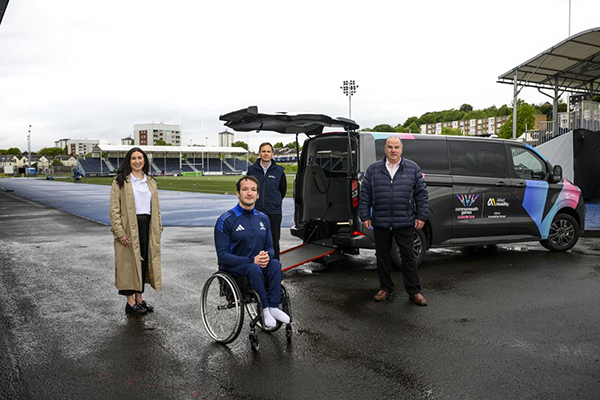
Allied Mobility, the UK’s leading wheelchair accessible vehicle manufacturer, has been announced as the Official Accessibility Partner for Glasgow 2026 Commonwealth Games, reinforcing the Games’ commitment to inclusivity. Allied Mobility will provide a fleet of their wheelchair accessible vehicles (WAVs) for competing Para athletes when the Games return to the city from 23 July to 2 August, hosting 10 days of electric sporting events and the largest Para sport programme in Games history. The Games will unfold across an eight-mile corridor, staged within four iconic venues where Allied Mobility will also support with funding for dedicated signage to highlight accessible routes to spectator areas. Alongside Allied Mobility’s Official Accessibility Partnership, sister company Mobility Solutions will also be providing a range of wheelchairs and electric scooters for public use at the Games. Both are part of Glasgow-based employer, Allied Vehicles Group, which employs over 800 staff in the city and across Britian and Europe. The partnership was announced at one of the Games’ venues, Scotstoun Stadium, with Allied Chairman, Gerry Facenna and Managing Director Peter Facenna as well as Jade Gallagher, Chief Operating Officer at Glasgow 2026 who met Commonwealth silver medallist Sean Frame who is set to compete for Team Scotland in the T54 1500m. Para Athlete, Sean Frame commented on the partnership: “Allied Mobility being involved in the Games and supporting disabled athletes is absolutely amazing and it will be invaluable to the athletes selected to compete. It will make it so much easier and less stressful not having to worry about transferring out of our day chairs as we have to do in normal cars. It will also make it a more relaxing and enjoyable experience when travelling to different venues during the games. “These are my second games representing Scotland and I am very excited and very proud to get to compete in my home city of Glasgow.” Jade Gallagher, Chief Operating Officer, added: “Accessibility is central to our venue planning for Glasgow 2026. We’re hosting the largest Para sport programme in the history of the Commonwealth Games and we need our operations to match that ambition. “Para athletes and visitors across Glasgow will benefit from Allied Mobility’s partnership and expertise in accessibility, helping in part to make the Games inclusive.” Gerry Facenna added: “As a wheelchair accessible vehicle manufacturer that has been helping to support the independence of people with disabilities for over three decades, we’re extending our commitment to providing accessible travel at this year’s Games, ensuring Para athletes and Commonwealth Teams can travel comfortably, confidently and with ease to competition venues. “It’s also important that businesses like ours support Glasgow to host fantastic events like this in our great city.” Tickets for Glasgow 2026 are on sale now via www.glasgow2026.com.
New SEN starter kits launched to support foster carers
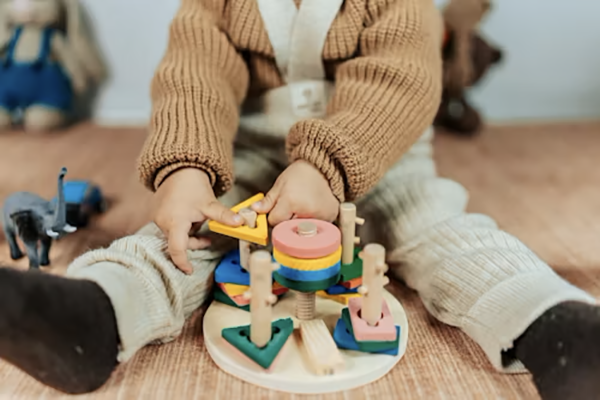
Foster carers play a vital role in providing stability and care for children, yet many can feel underprepared when a young person with special educational needs (SEN) is placed with them at short notice. Through regular conversations with families and carers, Fledglings has identified a recurring challenge: foster carers are often given very little time or guidance on what practical support might help a child settle, particularly where communication, sensory needs or routine are involved. Many children entering foster care have additional needs, and the first few days of a placement can be especially overwhelming. Unfamiliar environments, new routines and heightened emotions can lead to increased anxiety and uncertainty for both the child and the carer. This Foster Care Fortnight, May 11th-24th, Fledglings has developed a new range of Foster Care SEN Starter Kits, designed to provide immediate, practical support from the very first day. A practical starting point for early support Each kit brings a carefully selected range of products that work together to support children in the early stages of placement. The focus is on real-life usability, ensuring everything included can be used straight away, without the need for specialist knowledge or lengthy preparation. The kits are designed to help children understand what is happening, reduce anxiety and uncertainty, and introduce a sense of structure and routine. They also support emotional regulation, helping children feel calmer and more secure in a new environment. Alongside the physical items, each kit includes a digital support pack offering clear guidance for carers. This reflects Fledglings’ approach of combining practical products with accessible advice that can be applied immediately in everyday situations. A flexible approach to meet individual needs Recognising that every child and placement is different, the range has been structured into three tiers: This tiered approach allows foster carers, local authorities and fostering organisations to choose the level of support that best suits each individual child and situation. While not intended as a one-size-fits-all solution, the kits offer a valuable starting point, helping carers feel more confident and better equipped during those crucial early days. They also provide a scalable, ready-made solution for organisations supporting multiple placements. Lisa Spann, Managing Director at Fledglings, said: “We regularly hear from foster carers who want to provide the best possible support, but feel unsure where to start, particularly when a child has additional needs and arrives with little notice. Those first few days are so important in helping a child feel safe and settled. “These kits have been created to offer something practical and immediate. They are not about overwhelming carers with theory, but about giving them simple tools they can use straight away to support communication, reduce anxiety and begin to establish routine. Our aim is to help both carers and children feel more supported from the very beginning.” Learn more about the kits and the support available here. Foster carers, organisations and local authorities can explore the full range of kits here: https://www.fledglings.org.uk/collections/foster-care-sen-starter-kits
LEVEL Centre Public Open Exhibition 2026 entries are open now…
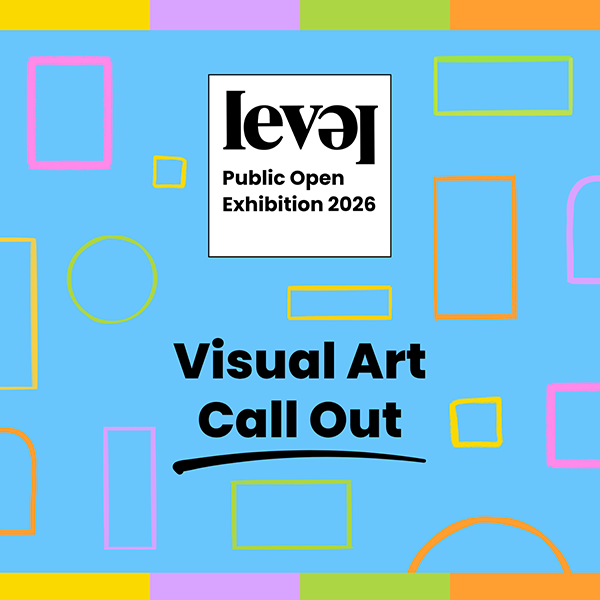
Reminder! Don’t miss out on your chance to exhibit at LEVEL Centre this summer in the 2026 Public Open Exhibition, sponsored by Peak Village and Turners Art Supplies! The deadline for entries is Tuesday 26 May 2026 at 12 noon. An annual event, the Public Open Exhibition is a wonderful opportunity to showcase your art and maybe even win a prize! Running throughout summer, the exhibition celebrates ‘The Art That Difference Makes’, and LEVEL needs your work to make that happen! They’re looking for the best contemporary 2D visual art from across the UK, produced by *disabled, learning disabled, and/or neurodivergent artists. Interested in entering? You must be a *disabled, learning disabled and/or neurodivergent artist or group based anywhere in the UK. Submissions must be 2D but you decide the format – pencil, acrylic, watercolour, oil painting, paper art, printmaking, calligraphy, embroidery, textile, photography, digital print – let your creativity flow! The deadline for entries is Tuesday 26 May at 12 noon. To find out more and enter, visit www.levelcentre.com/public-open-exhibition-call-out-2026 or head to the LEVEL Centre homepage www.levelcentre.com *By using the term ‘disabled person/artist’ we aim to include those who identify as being disabled, learning disabled, people with profound and multiple learning disabilities, D/deaf, neurodivergent and/or autistic and those experiencing chronic illness, mental health conditions, and more. We understand that different people prefer different terminology. You don’t have to prefer the term ‘disabled person’ to apply.
Extant returns to Edinburgh Fringe Festival
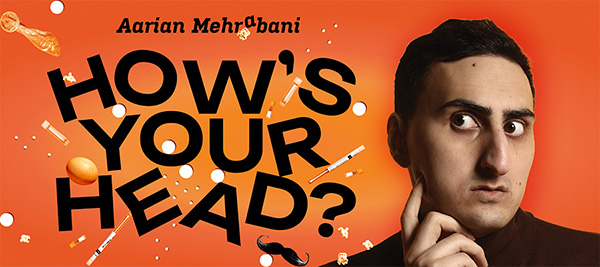
Extant, the UK’s leading professional performing arts company of blind and visually impaired artists, will return to the Edinburgh Festival Fringe this summer building on the success of its landmark 2025 programme. The company will present three ‘Enhance’ shows alongside a new showcase, in partnership with Underbelly as principal venue partner. Through this programme, Extant marks a significant step forward in embedding accessibility across the festival while raising the profile and visibility of visually impaired-led work. In its second year, the programme signals a sustained shift across the sector. Extant is driving change by championing accessibility not as an add-on, but as an integral part of creative practice. This momentum is reflected in rapid year-on-year growth: from an estimated 30–50 visually impaired-accessible shows in 2024, representing less than 1% of the Fringe, Extant’s first year of activity increased that proportion to around 2% in 2025, and projections indicate that as much as 10–12% of the programme for 2026 will now be accessible to visually impaired audiences. Thanks to this scheme, Underbelly and ZOO have committed to ensuring every show in their programme is 100% visually impaired accessible by including at least one accessible performance. On top of this, ‘Big Four’ venues Pleasance and Assembly, alongside The Space, have also pledged to significantly increase their provisions. Supported by the Paul Hamlyn Foundation, Enhance shows at Underbelly (17th August) will demonstrate Extant’s unique ‘Enhance post-production’ offer, featuring work from visually impaired artists and collaborators across theatre and comedy, acts will include Jellyfish by Blah Blah Productions directed by Lillith Freeman (And Then There Were None, Lyric Arts; Only Ugly Guys, Open Eye Theatre) and written by Jess Coppen-Gardner (What’s Wrong With Me?-The Musical, The Lion and Unicorn Theatre; Red Flag, Feature Film) and features performer Teddy Walker (Three Sisters and Them, theSpace) and Aarian Mehrabani’s (What’s the F**king Point, FlawBored; Hunting Alice Bell, Channel 4) debut stand-up show How’s Your Head. Immersive and tailored Touch Tours provide the principal access tool, including presentation of succinct programme notes which get to the essence of the show, and description of any relevant visual elements. New for 2026, Extant will host a one-off showcase at Underbelly (18th August) to celebrate the breadth of visually impaired-led performance, supported by funding from the Postcode Society Trust, raised by players of People’s Postcode Lottery. The programme will feature some of the UK’s most exciting visually impaired artists working across stand-up, cabaret, dance, theatre and new writing, including Growing Nostalgia by Ebony Rose Dark (Out There, In Here, The Place; Perspective on Visibility: Outside Inside, Control Shift Network), VIP (Visually Impaired Papa) by Tom Skelton (Adventures of the Improvised Sherlock Holmes, Just the Big Room; Aaaand Now For Something Completely Improvised, Pleasance Dome) and work from Neil Skene (Breakneck!, Aberdeen Comedy Festival, Cabaret in the Dark, C ARTS), alongside All There Is To See by Shashank Sharma (The Bloody Wedding, TIA Theatre Company; A Winter Tale at Shimla, Agastaya Cine Dreams LLP), Half Lights Project by Holly Thomas (Half Light, The Place; CRUNCH!, Velcro Collective) and An Evening with Tito Bone by Amelia Cavallo (Into The Woods, Royal Exchange Manchester; Beauty and the Beast, Theatre Royal Stratford), serving as both a platform for artists and a focal point for wider engagement with accessibility at the Fringe. Alongside its performances, the company is working with the Fringe Society to deliver targeted workshops on low-cost access interventions. It will also share new guidance through venues and networks to help hundreds of artists embed accessibility into their practice. Extant will be working with partners Sight Scotland and Visually Impaired Creators Scotland to connect with local visually impaired communities and audiences. Artistic Director Extant, Dr. Maria Oshodi comments, Extant has always been a force driving industry change towards higher standards and access for visually impaired people. We’re delighted to continue disrupting the status quo at Edinburgh Fringe in 2026, by increasing the number of accessible shows tenfold over the past two years, providing bespoke training and ‘Enhanced’ access options, and not least in platforming the very best of visually impaired talent at our showcase event! Underbelly’s Head of Programming, Marina Dixon, adds We’re delighted to be working alongside Extant at the Edinburgh Festival Fringe to make Underbelly’s programme more accessible for visually impaired audiences. Extant do vital work in this field, and this partnership marks an important step in strengthening how Underbelly supports both artists and audiences. https://extant.org.uk/
Sight Scotland Trains Polling Officers
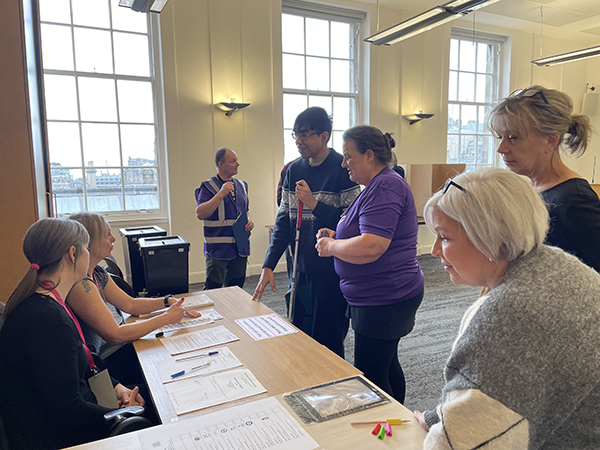
Ahead of Scotland’s Parliament elections on 7 May, Sight Scotland and Sight Scotland Veterans partner with the Electoral Management Board for Scotland to deliver accessible voting training to all Returning Officers and more than 900 polling staff, ensuring visually impaired voters can cast their vote independently and in secret. Visually impaired voters face a range of barriers at polling stations, with a lack of staff training and confidence consistently highlighted as a major issue. Voters report that polling station staff do not always know how best to support blind and partially sighted people, leading to inconsistent use of accessible voting aids and uncertainty about the support available. This is compounded by physical barriers such as poor lighting, unclear signage and challenging layouts, as well as information about candidates and voting procedures not always being provided in accessible formats. Many visually impaired voters are also reluctant to ask for help if it risks compromising the secrecy or independence of their vote. Working in partnership with the Electoral Management Board for Scotland, Sight Scotland has helped develop a training video for polling station staff, setting out the support they are required to provide to visually impaired voters. Members of Sight Scotland’s Policy Group and rehabilitation team played a central role in shaping the content, ensuring it reflects both lived experience and professional expertise. Colette Walker, co-chair of Sight Scotland Policy Group, who is visually impaired and took part in the training video, comments: “As the election approaches in two weeks, Sight Scotland and the Electoral Commission are highlighting a major push to ensure every blind and partially sighted person can exercise their democratic right to a private, independent vote. “Every adult has a democratic right to cast their vote in privacy. By breaking down these long-standing barriers, we are ensuring that visually impaired voters in our communities finally have the same say as everyone else. We hope to see a record turnout of blind and partially sighted voters in two weeks’ time, casting their vote, having their say in politics.” Sight Scotland Policy Group member, Hussein Patwa, adds: “I was delighted to be involved in producing training videos that will be shown to polling station staff across Scotland before the parliamentary elections on 07 May. Featuring myself and other visually impaired people, they demonstrate, in real life, practical examples of the correct sighted guiding technique, how to assist with navigating around the polling station, providing clear explanations to aid with orientation and the procedure to be followed for those who wish the presiding officer to help mark the ballot paper on their behalf. “I am positive this will make a real difference to visually impaired people’s experience at polling stations, encourage those who haven’t done so before to try voting in person and increase confidence for both voters and polling staff alike.” Malcolm Burr, Convener of the Electoral Management Board and Returning Officer for Comhairle nan Eilean Siar, comments: “Returning Officers and Electoral Registration Officers put in place a range of measures to support voters with visual impairment. We want everyone to be able to vote independently and in secret. We have large print ballot papers, magnifiers, additional lighting, tactile voting devices, audio versions of the ballot paper and can help the voter fill in the paper if necessary. “Members of the visually impaired community told us that a fundamental problem was staff at polling stations did not know how best to support blind and partially sighted voters. The video we have filmed with the help of Sight Scotland and Sight Scotland Veterans is being used by Returning Officers across Scotland to train their hundreds of polling staff showing how to greet, guide and offer suitable assistance. “Our polling staff are the public face of the election and the lessons in this video will help them as they prepare to welcome voters with visual impairment into the polling places on 7 May.” Watch the training video here: https://www.youtube.com/watch?v=frVyMRCI2E8 For more information visit sightscotland.org.uk
The Care & Occupational Therapy Show Returns
Exeter, UK – 23 June 2026 – The Care & Occupational Therapy Show, the South West’s largest and most established event dedicated to the care sector, is set to return for its 8th year on 23 June 2026 at Westpoint Arena, Exeter. Bringing together care professionals, occupational therapists, suppliers, and industry leaders from across the region and beyond, the event continues to serve as a vital platform for learning, networking, and innovation within the care community. Over the past seven years, The Care & Occupational Therapy Show has grown significantly, earning its reputation as the leading care-focused exhibition in the South West. The 2026 event promises to be its most comprehensive yet, featuring a diverse range of exhibitors showcasing the latest products, services, and solutions designed to improve care delivery and outcomes. Attendees can expect a full programme of expert-led seminars and workshops, offering valuable insights into current challenges, emerging trends, and best practices across the care and occupational therapy sectors. Topics will include workforce development, person-centred care, assistive technology, and regulatory updates. The event provides a unique opportunity for professionals to connect, share knowledge, and explore new approaches that enhance both care provision and patient wellbeing. Event Highlights Include: Extensive exhibition featuring leading care suppliers and service providers Educational seminar programme led by industry experts Networking opportunities with professionals from across the care sector Latest innovations in occupational therapy and assistive technologies With free attendance for care professionals, The Care & Occupational Therapy Show remains committed to supporting the sector by providing accessible, high-quality learning and development opportunities. Registration details and further information will be announced soon. Media Contact: Pearl Pearce-Smith Marketing Director pearl@rpmevents.co.uk About The Care & Occupational Therapy Show The Care & Occupational Therapy Show is the South West’s largest event dedicated to the care sector, bringing together professionals, organisations, and innovators to support excellence in care and occupational therapy practice. https://www.careexhibition.co.uk